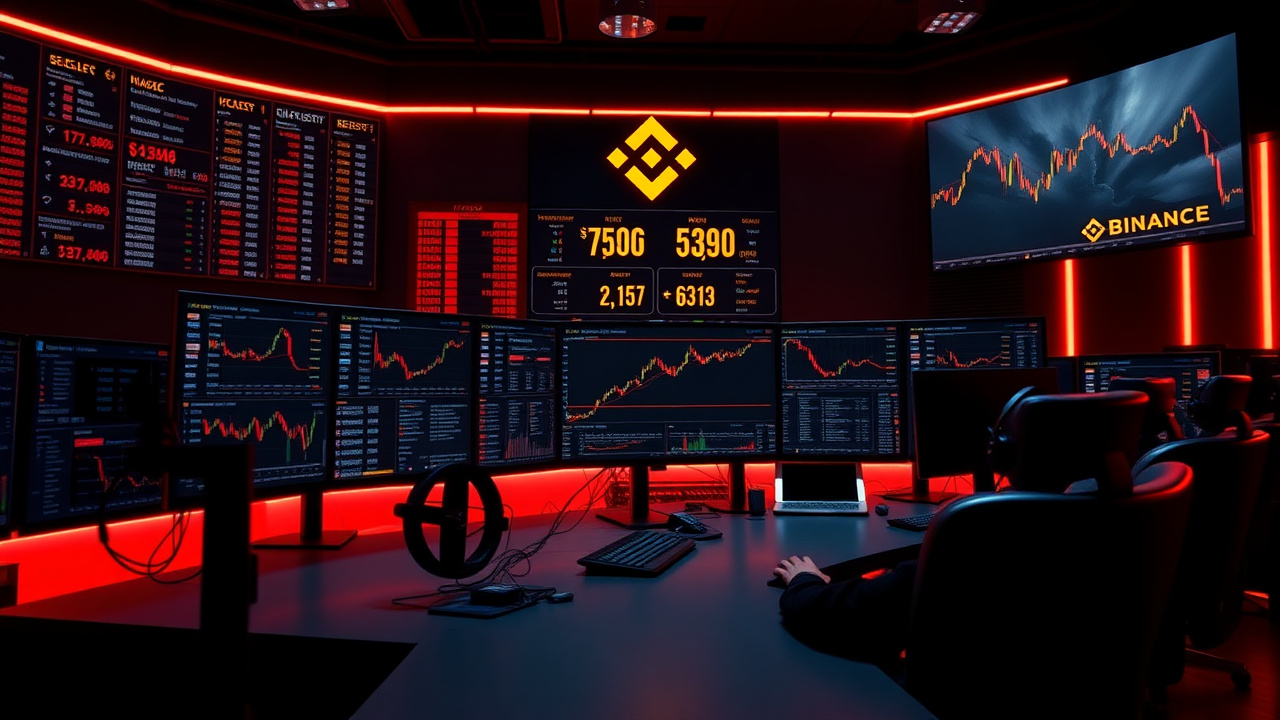
Binance Just Announced Zero Commission Trading For 7,000 U.S. Stocks And ETFs
Executive Summary
- Binance has announced zero commission trading for over 7,000 U.S. stocks and ETFs, expanding its offerings beyond cryptocurrency.
- Richard Teng, Binance co-CEO, highlighted that U.S. stocks make up over half of the global equities market, and this move aims to reduce friction for international investors.
- This development allows users to trade stocks using stablecoins and could reshape the investment landscape for both crypto and traditional assets.
The Stock Market Goes Crypto: Binance’s Bold Move
Binance’s decision to dive into traditional finance with zero commission trading for U.S. stocks signals a bold shift in the trading landscape. This strategic move comes at a time when the global equities market is increasingly intertwined with digital asset platforms, as concerns about inflation, economic stability, and regulatory scrutiny loom large over traditional markets. The announcement highlights Binance’s intention to not merely participate in the market but to redefine it.
According to Fortune, U.S. stocks account for over half of the global equities market, making them a lucrative target for Binance’s expansion strategy. By facilitating access to these stocks for international users, Binance addresses significant barriers that have historically hampered overseas investors. Richard Teng emphasized that the company aims to lower costs and friction associated with international stock purchases, particularly for users outside the U.S.
In a first-of-its-kind offering, Binance plans to allow fractional share purchases starting at just $5. This pricing strategy is designed to attract a broader audience, particularly retail investors who might be deterred by the high costs of traditional stock purchases. The stocks will be arranged by Nest Trading, while Alpaca, a New York-based firm, will handle custody and dividend payments.
This expansion into equities aligns with Binance’s broader vision to become a “multi-asset financial super app,” capable of servicing a diverse range of financial needs. As traditional finance and cryptocurrency converge, Binance aims to position itself at the forefront of this evolution.
The Race to Converge: Competing with Coinbase
As Binance expands into stock trading, it finds itself in competition with Coinbase, which has also been diversifying its offerings. Coinbase’s ambition to be an “everything exchange” reflects a growing trend among cryptocurrency platforms to embrace traditional financial instruments.
Coinbase’s recent moves to incorporate stock trading features underscore the aggressive competition in the sector. The firm’s strategy aims to attract a larger user base by integrating various asset classes into its platform. This trend is not isolated; traditional financial institutions are also adapting by offering blockchain-based products, further blurring the lines between crypto assets and conventional investments.
The convergence of these two sectors raises critical questions about market dynamics and regulatory frameworks. As Binance and Coinbase vie for market share, both companies are navigating a complex landscape shaped by evolving consumer expectations and regulatory scrutiny.
Tokenization: The Next Frontier in Stock Trading
Binance’s introduction of tokenized shares is a pivotal development that could reshape the trading landscape. The company plans to allow users to create synthetic versions of stocks by converting traditional equities into digital tokens on its BNB blockchain. This innovative move indicates a contrarian approach to stock trading, offering numerous advantages over conventional methods.
By implementing tokenization, Binance aims to enhance transaction speed and liquidity. Unlike traditional stock trading, which often involves lengthy settlement times due to reliance on intermediaries, blockchain technology enables near-instantaneous transactions. This shift could significantly improve the user experience, particularly for high-frequency traders and those seeking to capitalize on market fluctuations.
However, the concept of tokenized stocks is not without its detractors. Critics argue that such innovations could introduce risks and uncertainties into the already complex U.S. equities market. Regulatory bodies like the SEC and CFTC are likely to scrutinize these developments closely, assessing the implications for market integrity and investor protection.
Recent announcements indicate that both the New York Stock Exchange and Nasdaq are exploring the incorporation of tokenization technology, suggesting a cautious but growing acceptance of these innovations within traditional financial markets. This evolving landscape could lead to a paradigm shift in how stocks are traded, with the potential for greater democratization of access to financial markets.
Challenges Ahead: Regulatory Scrutiny and Market Risks
Despite the advantages offered by Binance’s new trading model, significant challenges remain. The introduction of tokenized stocks raises questions about regulatory oversight and the potential risks associated with these innovations. Given the SEC’s history of closely monitoring the cryptocurrency sector, it is likely that the agency will scrutinize Binance’s offerings to ensure compliance with existing securities laws.
The regulatory landscape surrounding tokenization is still evolving, and Binance’s foray into this space could prompt further regulatory action. Analysts from Glassnode have pointed out that regulatory clarity is essential for the long-term viability of tokenized assets. Without clear guidelines, the market risks becoming a breeding ground for uncertainty and potential fraud.
Additionally, the potential for market manipulation and volatility associated with tokenized assets cannot be overlooked. The rapid pace of innovation in the cryptocurrency space has often outstripped regulatory responses, leaving investors vulnerable to sudden changes in market dynamics. This reality poses a significant risk for users who may be unfamiliar with the complexities of tokenized trading.
The introduction of zero commission trading and tokenized shares could lead to increased competition among exchanges, but it could also create a race to the bottom in terms of fees and profitability. As companies like Binance and Coinbase battle for market share, the potential for unsustainable business practices emerges, raising ethical questions about the long-term health of the industry.
The Future of Trading: What This Means for Investors
The implications of Binance’s zero commission trading and tokenized shares extend far beyond the immediate landscape. These developments could fundamentally alter how investors engage with both crypto and traditional assets. The potential for increased accessibility and reduced costs may democratize investment opportunities, particularly for retail investors who have historically faced barriers to entry.
By allowing users to trade stocks using stablecoins, Binance is effectively bridging the gap between digital and traditional finance. This integration could attract a new wave of investors who are more comfortable with cryptocurrency than with conventional stock trading. The ability to use stablecoins like USDC and USDT for stock purchases represents a significant step towards mainstream acceptance of cryptocurrency as a legitimate form of payment.
However, investors should exercise caution. The rapid evolution of financial technologies can lead to market instability, and the introduction of new asset classes often brings with it a degree of risk. As Binance and other exchanges continue to innovate, investors must remain vigilant and informed about the potential pitfalls associated with these developments.
Moreover, the growing trend of tokenization may lead to regulatory challenges that could impact the market. As the SEC and other regulatory bodies adapt to these changes, investors should be prepared for potential shifts in the regulatory landscape that could affect the viability of tokenized assets.
The Bottom Line
Binance’s zero commission trading and plans for tokenization signal a new era for both cryptocurrency and traditional finance. As the lines between these two worlds blur, the potential for innovation and disruption increases. Investors should consider diversifying their portfolios to include tokenized assets, taking advantage of potential benefits while remaining aware of the associated risks.
While the push for zero commission trading and tokenized shares is commendable, the complexities of regulatory compliance and market dynamics must not be overlooked. As the industry evolves, the need for transparency and accountability will become increasingly critical.
Investors must remain vigilant, adapting to the changing landscape while capitalizing on the opportunities presented by this new paradigm. The future of investing is unfolding, and those who fail to adapt may find themselves left behind in a rapidly evolving market.
Methodology and Sources
Related Articles
- The Disturbing Truth: Trump’s Influence Could Trigger $3.24 Trillion in Bitcoin Pump and Dumps
- The Shocking Truth: Trump’s Crypto Policy Could Propel Bitcoin to $180,000
- How The Clarity Act Is Paving The Way For Coinbase’s $1 Trillion Stablecoin Market
[!CAUTION] Risk Warning & Disclaimer: The content provided is strictly for educational and informational purposes. It does not constitute financial, legal, or investment advice. Trade at your own risk and consult a certified professional.
, “publisher”: { “@type”: “Organization”, “name”: “NovumWorld”, “logo”: { “@type”: “ImageObject”, “url”: “https://novumworld.com/images/logo.png" } } }
