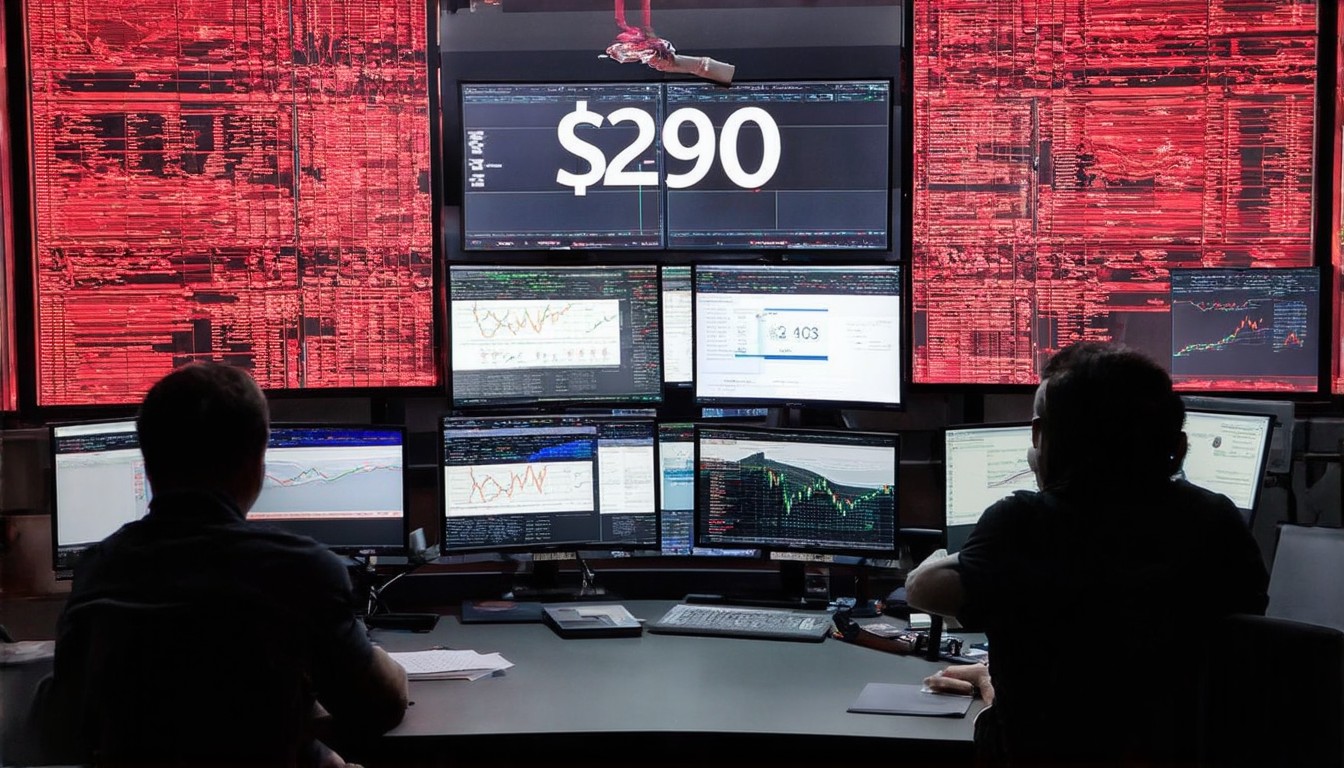
$290 Million DeFi Hack Exposes Critical Flaws And Leaves Investors Reeling In Fear
Executive Summary
- The recent KelpDAO exploit resulted in a staggering $290 million loss, exposing critical vulnerabilities in DeFi protocols.
- According to a report, DeFi protocols lost over $142 million to hacks in Q1 2026 alone (source: DefiLlama).
- Investors must exercise heightened caution and conduct thorough audits before engaging with DeFi projects to mitigate risks.
The $290 Million Wake-Up Call
The recent KelpDAO exploit has unveiled significant shortcomings in the security frameworks of decentralized finance (DeFi) projects, shaking investor confidence and underscoring the urgent need for robust smart contract audits. The incident, responsible for an astonishing $290 million loss, serves as a stark reminder of the vulnerabilities prevalent within the DeFi ecosystem. It wasn’t merely an isolated incident but part of a larger trend where smart contract vulnerabilities have cost DeFi projects approximately $1.4 billion in 2024 alone.
Named Entity: Dennis Taului, a Blockchain Consultant, emphasized the necessity for genuine audits, advising investors to verify the auditor’s credentials through independent sources rather than relying solely on the project’s assurances. Such advice is crucial; the crisis reveals that even supposed security measures can be inadequate or misleading, leading to catastrophic financial repercussions for many stakeholders.
The KelpDAO exploit specifically targeted a vulnerability within the rsETH adapter bridge, impacting major players like Aave, which faced nearly $200 million in borrowed wETH and an estimated $177 million in unrecoverable bad debt. This incident not only highlights the risks associated with specific protocols but also raises questions about the broader DeFi infrastructure’s reliability.
The Illusion of Security in Audits
Despite the proliferation of smart contract audits, many DeFi projects have failed to secure their contracts adequately, leading to catastrophic losses. The illusion of security that these audits provide is often shattered by the reality of their execution. Amanda Tuminelli, CEO and CLO of the DeFi Education Fund, pointed out that over 300,000 scam tokens have been created, defrauding 2 million investors. This statistic highlights the scale of the problem and the potential for deception within the DeFi landscape.
While audits are intended to ensure the integrity of smart contracts, the reality is that many auditing firms may lack the necessary expertise or diligence to uncover critical flaws. The KelpDAO incident serves as a case study in the failure of these audits, prompting a call for more rigorous and transparent auditing processes. Investors must now be more discerning than ever, focusing not only on whether a project claims to have been audited but also on the credibility and track record of the auditing firm.
Moreover, the average hack size in Q1 2026 reached $8.4 million, illustrating the financial impact of these vulnerabilities. As the DeFi ecosystem burgeons, with a total value locked (TVL) in lending protocols reaching $55 billion in 2026, the stakes continue to rise. This growth further complicates the landscape, as more capital attracts not only innovation but also malicious actors seeking to exploit weaknesses.
The Overlooked Risks of Rug Pulls and Exit Scams
While hacks dominate headlines, the prevalence of rug pulls and exit scams remains a silent yet significant threat in the DeFi space. According to Marc Zeller, founder of the Aave Chan Initiative, phishing attacks account for over 60% of DeFi asset losses. This staggering statistic underscores the need for heightened awareness among investors, who must remain vigilant against not only technical vulnerabilities but also human deception tactics.
Rug pulls occur when developers abandon a project, taking investors’ funds with them. Common red flags include a lack of transparency, anonymous developers, promises of unrealistic returns, and insufficient audits. Many investors may overlook these signs in the excitement of new opportunities, only to be left stranded when a project collapses. The KelpDAO incident illustrates this risk vividly; while it was primarily a hack, the underlying dynamics of trust and transparency in DeFi projects remain under scrutiny.
The fallout from such events can have far-reaching implications. Investors grow skeptical, leading to decreased participation in new projects and a general contraction in the market. This cycle of distrust can stifle innovation and deter potential investors, creating a challenging environment for legitimate projects striving to build sustainable solutions within the DeFi landscape.
The Regulatory Landscape: A Double-Edged Sword
The evolving regulatory environment can offer some clarity but also introduces new complexities and uncertainties for DeFi projects. The U.S. Securities and Exchange Commission (SEC) has made moves to provide guidance, notably releasing staff statements that offer a conditional safe harbor for decentralized exchange (DEX) front-ends and self-custodial wallets. While this may create a framework for compliance, it also raises questions about the practical implications for DeFi developers and users.
As regulatory bodies like the SEC continue to scrutinize the DeFi sector, the potential for enforcement actions looms large. The Digital Asset Market Clarity Act (CLARITY Act) and the Guiding and Establishing National Innovation for U.S. Stablecoins Act (GENIUS Act) are key proposals expected to advance in 2026. These legislative efforts reflect a growing recognition of the need to balance innovation with investor protection, yet they also introduce uncertainty that could stifle growth.
The dual nature of regulation poses a challenge for DeFi projects. On one hand, a clearer regulatory framework can enhance legitimacy and attract institutional investment, which as of March 2026 reached $62.9 billion, representing 34% of the total DeFi value. On the other hand, the fear of overregulation may deter innovation, causing projects to relocate to more favorable jurisdictions or abandon development altogether.
The Ripple Effect on Investor Sentiment
The KelpDAO hack has left investors reeling, questioning the viability and security of DeFi investments moving forward. The total losses related to DeFi hacks have reached over $137 million by March 2026, marking a concerning trend that has heightened apprehension among both retail and institutional investors. This sentiment shift is palpable, as even the most promising projects may struggle to regain trust after a major incident.
Investor confidence, crucial for the growth of the DeFi sector, is now under siege. The perception that DeFi is riddled with risks can lead to a reluctance to engage with new projects, ultimately hindering innovation and development. As projects vie for attention and funding, the need for transparency and security measures will become paramount.
In a market where the average loss per hack is significant, the financial repercussions can deter even the most risk-tolerant investors. The psychological impact of these incidents can create a risk-averse environment, where potential gains are overshadowed by the fear of loss.
The Bottom Line
The DeFi landscape is fraught with risks, and the KelpDAO hack serves as a cautionary tale for investors. The staggering $290 million loss underscores the vulnerabilities inherent in the sector and the need for rigorous audits and due diligence before engaging with any DeFi project. As the market matures, stakeholders must prioritize transparency, security, and accountability to foster a healthier ecosystem.
Investors are advised to conduct thorough due diligence and only invest in projects with verified, reputable audits to protect their assets. The combination of smart contract vulnerabilities, rug pulls, and regulatory uncertainty creates a volatile environment that demands caution. In the unpredictable world of DeFi, a conservative approach may be the most prudent strategy moving forward.
The ongoing evolution of DeFi presents both opportunities and risks. As the market continues to grow, the lessons learned from incidents like KelpDAO will shape the future of decentralized finance, emphasizing the importance of security, transparency, and regulatory compliance.
In this complex landscape, the need for investor education and awareness is paramount. As DeFi protocols evolve, so too must the strategies employed by those looking to engage with them, ensuring that financial engagements are made with a clear understanding of the associated risks.
Methodology and Sources
Related Articles
- Wisconsin Missed $4M In Staking: Is Lorenz
- SEC’s Groundbreaking No-Action Position Could Change Crypto Trading Forever
- $33 Trillion Staked: Crypto And Banks B
[!CAUTION] Risk Warning & Disclaimer: The content provided is strictly for educational and informational purposes. It does not constitute financial, legal, or investment advice. Trade at your own risk and consult a certified professional.
, “publisher”: { “@type”: “Organization”, “name”: “NovumWorld”, “logo”: { “@type”: “ImageObject”, “url”: “https://novumworld.com/images/logo.png" } } }
