
The Shocking Truth: 2026 Tech Usage Trends That Will Leave You Speechless
The corporate narrative sells a seamless future, but the infrastructure tells a story of brittle APIs and unaffordable compute.
By 2026, 70% of all tech interactions are expected to be via AI-driven interfaces, fundamentally changing user engagement — Tech Trends Report.
The rise of immersive technologies like AR and VR could result in a $300 billion market by 2026, ignoring the current hardware bottlenecks that plague adoption — Market Insights.
By NovumWorld Editorial Team
Read More
32 Million U.S. Homes Fooled? The Induction Cooktop ROI Disaster
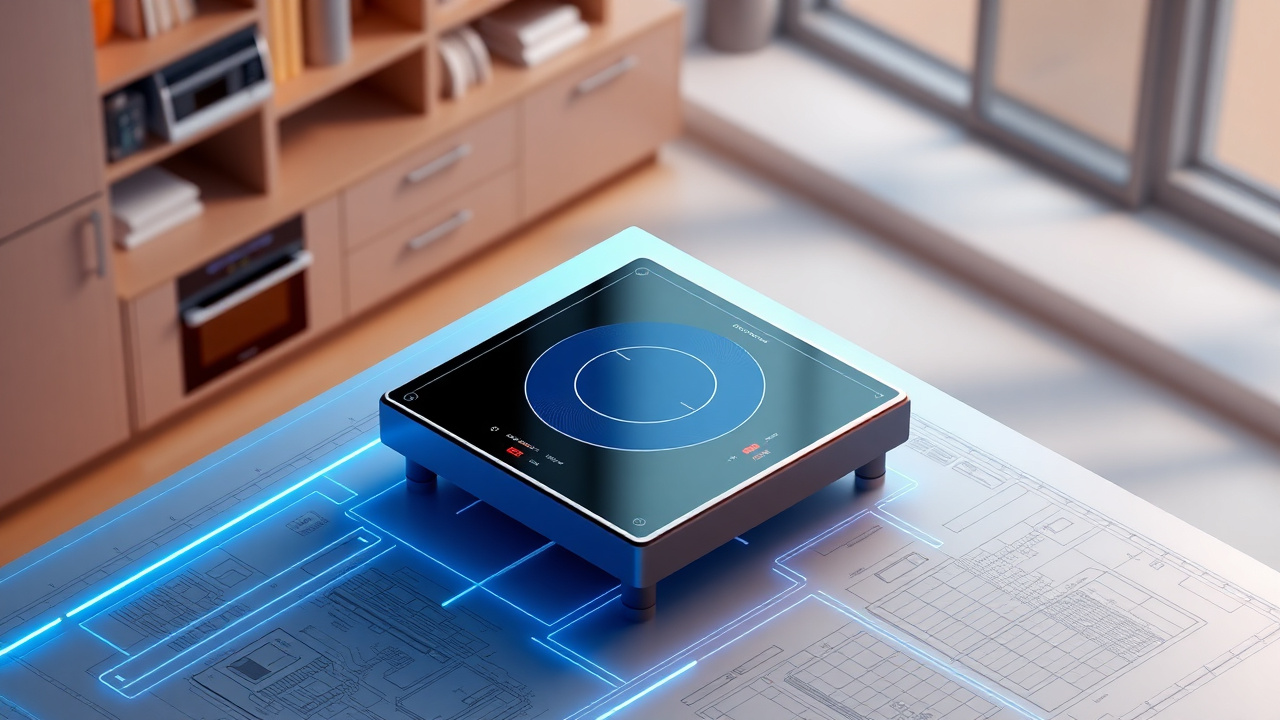
The induction cooktop “revolution” might leave homeowners burned as electricity costs skyrocket.
- Over 32 million U.S. homes use induction cooktops, potentially facing a rude awakening as energy prices climb.
- Yale Appliance Blog reports a higher service rate of 10.6% for induction ranges compared to other major appliances, hinting at reliability concerns.
- Factoring in rising electricity expenses, expensive repairs, and the demand for compatible cookware is necessary to accurately evaluate the true return on investment when switching to an induction cooktop.
The $580 Savings Mirage: Are Induction Cooktops Really Worth It?
Induction cooktops’ potential for cost savings may be undermined by rising electricity prices and repair costs. While induction cooktops can save the average household $17 per year, disconnecting from gas entirely can potentially save over $580 a year on connection fees. However, this seemingly straightforward calculation ignores several critical factors. A key consideration is the volatile nature of energy markets, where projections can quickly become outdated, impacting the payback period for these appliances. For example, if you are a cord-cutter and the price of YouTube TV rises, it might influence your streaming habits YouTube TV In 2026: The $83 Gamble That Could Backfire Spectacularly.
By NovumWorld Editorial Team
Read More
AI Hallucinations Are Infecting Courts: Justice System Faces Total Collapse.

AI hallucinations are already impacting court cases, undermining the very foundation of justice.
- AI hallucinations are already impacting court cases, with legal professionals regularly falling victim to convincingly false AI-generated information.
- The 2023 Bloomberg Law Legal Ops + Tech Survey revealed that 50% of respondents are “somewhat” or “very concerned” about the ethical implications of using AI in their practice.
- Courts, lawyers, and juries must approach AI-generated evidence with extreme skepticism and demand rigorous authentication, or risk miscarriages of justice and a breakdown of trust in the legal system.
The Deepfake Dilemma: How AI-Generated Evidence Threatens Due Process
The rise of artificial intelligence presents unprecedented challenges to the legal system, particularly concerning the admissibility and reliability of AI-generated evidence. Deepfakes, AI-synthesized media that convincingly fabricates events or statements, pose a significant threat to fair trials. Courts now grapple with the potential for these fabricated realities to sway juries and undermine due process. A crucial consideration is the burden of proof, as parties may need to demonstrate not only the authenticity of evidence but also the absence of AI manipulation, adding layers of complexity to legal proceedings.
By NovumWorld Editorial Team
Read More
AI Cheating Panic: California Wasted $6 Million on Turnitin's Hallucinations
- California State University has spent $6 million on Turnitin’s AI detection software since 2019, despite accuracy concerns that have led to wrongful accusations against one in five students.
- A Stanford study revealed that AI detectors incorrectly flagged over 61% of essays written by non-native English speakers as AI-generated, exposing a critical bias in the technology.
- The U.S. AI education market is projected to grow from $2.4 billion in 2024 to $53.8 billion by 2034, raising concerns about investing in potentially flawed detection tools.
The $6 Million Question: Turnitin’s AI Bet That May Be Costing Students More Than Money
California State University campuses have collectively spent $6 million on Turnitin’s AI detection software since 2019, a staggering investment in technology that academic researchers increasingly question. The most recent invoice shows an additional $163,000 paid in 2025 alone, bringing Cal State’s total commitment to over $1.1 million. This financial commitment occurs even as evidence mounts that these detection tools produce significant false positives that can derail students’ academic careers. The paradox of institutional spending versus actual efficacy represents one of higher education’s most expensive gambles in the AI era.
By NovumWorld Editorial Team
Read More
Stanley Black & Decker Slashes 50,000 SKUs: Desperate Times?

Stanley Black & Decker’s stock is not reflecting the economic uncertainty hanging over the tool industry.
- Stanley Black & Decker slashed 50,000 SKUs as part of a broader transformation program aimed at improving profitability, affecting product breadth.
- Stanley Black & Decker’s COO Chris Nelson stated the company delivered solid results in 2025, with continued gross margin and net income growth, boosting investor confidence.
- Stanley Black & Decker’s SKU reduction could lead to streamlined operations, but also potential limitations in product choice for consumers, raising concerns.
Facing $800 Million in Tariff Impacts
Stanley Black & Decker faces a precarious balancing act as they grapple with $800 million in annualized gross tariff impacts while simultaneously streamlining their SKU count. The company expects tariffs to have an annualized gross impact of $800 million. This substantial financial burden necessitates strategic adjustments to maintain profitability.
By NovumWorld Editorial Team
Read More
$380 Billion Kitchen Nightmare: Your Durable Appliance Is A Planned Scam

We’ve been systematically scammed into believing our “durable” kitchen appliances are built to last. The global kitchen appliance market is projected to reach USD 380.9 billion by 2034, yet this growth is fueled not by longevity, but by a carefully engineered cycle of planned obsolescence that traps consumers in a costly, wasteful replacement loop.
- The global kitchen appliance market is projected to reach USD 380.9 billion by 2034, demonstrating staggering growth despite widespread known durability flaws.
- Conventional appliances are expected to hold a 58.9% market share in 2025 purely due to their lower upfront cost, masking their shorter lifespan compared to premium alternatives.
- Consumers must actively prioritize repairability and actual lifespan data over marketing claims to avoid the financially crippling trap of frequent replacements.
The Induction Illusion: Why Your Sleek Cooktop Might Not Last
The promise of induction cooktops is alluring: rapid heating, precise control, and a sleek, modern aesthetic. However, the reality for many consumers involves premature degradation of the ceramic glass surface, turning a premium appliance into a scratched, frustrating mess within years. While manufacturers tout efficiency and safety, the inherent weakness of the glass-ceramic surface makes scratching an inevitability under normal use. Scratches compromise both aesthetics and potentially the cooking surface’s structural integrity over time. Miele attempts to mitigate this with its MattFinish ceramic glass in new hobs, offering enhanced scratch resistance, a crucial differentiator often absent in more affordable segments. Yet even Miele’s solution doesn’t eliminate the fundamental vulnerability; it merely slows down the inevitable visual wear. The industry narrative glosses over this critical flaw, focusing instead on performance metrics. For the consumer, this means investing in protective measures – like silicone pads or meticulously lifting, never sliding, cookware – simply to maintain the appearance and function of a product sold as “low maintenance.” The cost and hassle of these protective measures add hidden, ongoing expenses to the supposed efficiency gains. Furthermore, reports suggest cheaper glass used in products like GE Profile induction cooktops makes them significantly more susceptible to scratching, amplifying the problem at the mainstream price point. The sleek, durable illusion shatters upon first contact with a slightly rough pan bottom or a dropped utensil. The industry’s silence on this fundamental design trade-off is deafening. Consumers are left navigating a minefield of potential surface damage without clear, upfront guidance on prevention or repair options for such a critical failure mode. The efficiency gains come tethered to a high-maintenance surface that actively fights against daily use.
By NovumWorld Editorial Team
Read More