Below you will find pages that utilize the taxonomy term “Tools & Productivity”
Tools & Tutorialsread more
Score Up to 58% Off EGO Power+ Gear This Prime Day and Save Big

Resumen Ejecutivo
- EGO Power+ ofrece hasta un 58% de descuento en herramientas y equipos de jardinería ecológicos durante Prime Day 2026, haciendo que sea una oportunidad significativa para entusiastas de herramientas ecológicas.
- Electrek destaca la variedad de ofertas verdes disponibles, incluyendo herramientas y dispositivos eléctricos, con precios reducidos en múltiples categorías.
- Aproveche estos descuentos para actualizar su equipo de jardinería y ahorrar dinero en productos eficientes en energía.
La tendencia hacia la sostenibilidad en el cuidado del césped y el jardín
La creciente demanda de productos ecológicos ha llevado a las marcas a ofrecer herramientas y equipos más sostenibles, como las ofrecidas por EGO Power+. Estas herramientas no solo son más respetuosas con el medio ambiente, sino que también ofrecen beneficios a largo plazo para los consumidores, como menores costos de mantenimiento y reducción de la huella de carbono.
Tools & Tutorialsread more
The Shocking Truth Behind 133 Irresistible Tool Deals You Can't Afford to Miss

Resumen Ejecutivo
- Bosch’s 12V Max Drill/Driver with 5-in-1 Flexiclick System is discounted to $133 from $239, representing a 44% price cut during Prime Day, according to Bob Vila’s report dated October 8, 2025.
- The Bosch 360° green-beam laser kit, key for precise professional alignment, is available at $364.65, down from $429, a 15% reduction.
- Bosch’s impact-rated driver bits 10-pack is priced at $10, offering a durable accessory option optimized for high-torque impact drivers.
Bosch’s Prime Day tool discounts expose the truth behind seasonal sales: real price drops with meaningful impact for quality-conscious consumers, not just hype. However, these deals must be evaluated against the total cost of ownership and practical deployment in demanding professional or DIY environments.
Tools & Tutorialsread more
Google’s Shocking $75 Million Bet on AI Tools That Could Revolutionize Filmmaking

Resumen Ejecutivo
- Google ha invertido $75 millones en herramientas de inteligencia artificial (IA) para la industria cinematográfica, lo que marca un cambio significativo en la creación de contenido.
- Esta inversión incluye el lanzamiento de un premio global de $1 millón para películas de IA y requiere el uso de herramientas de IA de Google.
- Para los cineastas, esto representa una oportunidad única para aprovechar la tecnología de vanguardia en proyectos creativos y competir por recompensas financieras significativas.
La Apuesta de $75 Millones de Google: El Futuro de la Industria Cinematográfica en Juego
Google está apostando fuerte por el potencial de la IA para transformar la industria cinematográfica, con una inversión de $75 millones destinada a redefinir la creación y distribución de contenido. La empresa ha lanzado un premio global de $1 millón para películas de IA, lo que requiere el uso de herramientas de IA de Google, como Gemini, Veo 3 y Flow. La competencia, que se llevará a cabo en enero de 2026, busca fomentar la adopción de la IA en la industria cinematográfica y democratizar la creación de contenido.
Tools & Tutorialsread more
Apple’s New CEO Declares War: AI Tools Must Enhance, Not Replace Product Analysis

Resumen Ejecutivo
- Apple introduce Siri AI, una versión actualizada de su asistente virtual que promete ofrecer una experiencia más personalizada y capaz.
- La nueva versión de Siri está disponible solo en dispositivos más recientes, lo que podría dejar a más de la mitad de los usuarios de iPhone sin acceso a estas características.
- El enfoque de Apple en la integración de Siri AI en su ecosistema plantea desafíos para la adopción y la satisfacción del usuario.
El Desafío de la Integración de Siri AI
Apple ha anunciado una versión actualizada de su asistente virtual, Siri AI, que promete ofrecer una experiencia más personalizada y capaz. Sin embargo, la disponibilidad de esta nueva versión está limitada a dispositivos más recientes, lo que podría dejar a más de la mitad de los usuarios de iPhone sin acceso a estas características.
Tools & Tutorialsread more
Ditch the Knife: OXO Tools' Game-Changing Prep Method for Strawberries and Cherries

Resumen Ejecutivo
- La herramienta de preparación de frutas OXO Tools ha revolucionado la forma en que los chefs caseros preparan las frutas, reduciendo el tiempo de preparación hasta un 50% y aumentando la seguridad en la cocina.
- Una encuesta reciente reveló que el 75% de los chefs caseros encuentran que los métodos tradicionales de preparación de frutas son tediosos y peligrosos.
- La herramienta de OXO Tools es una solución innovadora que puede transformar la forma en que se preparan las frutas en la cocina.
La Revolución en la Preparación de Frutas: OXO Tools
La herramienta de preparación de frutas de OXO Tools es una innovación que ha cambiado la forma en que los chefs caseros preparan las frutas. Con su diseño ergonómico y fácil de usar, esta herramienta ha reducido el tiempo de preparación de las frutas hasta un 50% y ha aumentado la seguridad en la cocina. Según OXO Tools, su herramienta ha sido diseñada para ser fácil de usar y require menos esfuerzo que los métodos tradicionales de preparación de frutas.
Tools & Tutorialsread more
The Hidden Battle at California State University: Faculty vs. AI and What It Means

Resumen Ejecutivo
- California State University firmó un contrato de $17 millones con OpenAI para proporcionar acceso a ChatGPT Edu a estudiantes y personal, con el objetivo de mejorar las habilidades en inteligencia artificial.
- Sin embargo, la implementación ha generado un conflicto entre la facultad y los estudiantes, quienes expresan preocupaciones sobre la integridad académica y el uso efectivo de herramientas de inteligencia artificial.
- La controversia destaca la necesidad de políticas claras sobre el uso de inteligencia artificial en la educación, lo que tendrá un impacto en la forma en que la tecnología se integrará en los entornos de aprendizaje en el futuro.
The $17 Million AI Bet That Divided California State University
La Universidad Estatal de California (CSU) ha sido pionera en la educación en inteligencia artificial al integrar ChatGPT en todas sus campus, pero el lanzamiento ha generado un conflicto significativo entre la facultad y los estudiantes. El contrato con OpenAI, que vale $17 millones, tiene como objetivo impactar a cientos de miles de estudiantes y decenas de miles de personal y facultad.
Tools & Tutorialsread more
Clio Just Unleashed Free AI Tools for Florida Lawyers: The Shocking Truth Behind This Bold Move

Resumen Ejecutivo
- Clio ha lanzado una suite de herramientas de inteligencia artificial (IA) gratuitas para abogados de Florida, con el objetivo de transformar las prácticas legales en todo el estado.
- Según el CEO de Clio, Jack Newton, esta iniciativa es parte de una tendencia más amplia hacia la integración de la tecnología en la profesión legal.
- Los abogados de Florida pueden potencialmente mejorar su eficiencia y reducir significativamente los costos operativos al utilizar estas herramientas gratuitas.
La Disrupción de los Servicios Legales Tradicionales
La lanzamiento de herramientas de IA gratuitas por parte de Clio desafía el status quo de la entrega de servicios legales en Florida. La empresa, que se especializa en software legal, busca ayudar a los abogados a automatizar tareas rutinarias, lo que podría ahorrar miles de horas facturables. Sin embargo, esta iniciativa también plantea preguntas sobre la sostenibilidad a largo plazo de este modelo de negocio.
Tools & Tutorialsread more
AI Just Revolutionized Video Creation Analysis: 5 Shocking Ways It’s Changing Everything

Resumen Ejecutivo
- AI ha revolucionado la creación de videos, reduciendo el tiempo de producción en un 50% y cambiando radicalmente el proceso creativo para los cineastas y los profesionales del marketing.
- Según una encuesta de Forrester, el 67% de los responsables de la toma de decisiones sobre AI planea aumentar la inversión en AI generativa en el próximo año, lo que indica su creciente importancia en diversas industrias.
- La accesibilidad de las herramientas de AI permite a los creadores de contenido producir videos de alta calidad sin necesidad de habilidades técnicas extensas, democratizando la creación de contenido.
Reducción de costos en la producción de video
Las herramientas impulsadas por AI están reduciendo los costos tradicionales de producción de video, lo que hace que el contenido de alta calidad sea más accesible para las startups y las pequeñas empresas. Adobe, que ha integrado características de AI en su suite Creative Cloud, es un ejemplo de una empresa que está aprovechando las ventajas de la reducción de costos. Según Adobe, sus herramientas de AI pueden reducir los plazos de producción en un 50% en comparación con los métodos tradicionales.
Tools & Tutorialsread more
5 Shocking AI Tools By Carnegie Mellon And Meta That Will Change Emergency Response

Resumen Ejecutivo
- La colaboración entre Carnegie Mellon University y Meta está revolucionando el campo de la respuesta a emergencias mediante el desarrollo de herramientas de inteligencia artificial (IA) que pueden analizar grandes cantidades de datos en tiempo real y predecir la ubicación y gravedad de las emergencias.
- Según un informe del Pew Research Center, la integración de la IA en los servicios de emergencia podría mejorar la eficiencia y la eficacia en situaciones de vida o muerte, lo que podría salvar vidas y recursos.
- Estas herramientas de IA prometen transformar la gestión de emergencias para los primeros respondientes, lo que podría mejorar la seguridad de las comunidades y reducir el riesgo de lesiones y muertes.
El campo de la respuesta a emergencias está experimentando una transformación significativa gracias a la colaboración entre Carnegie Mellon University y Meta. Los investigadores de estas instituciones están trabajando juntos para desarrollar herramientas de inteligencia artificial (IA) que puedan analizar grandes cantidades de datos en tiempo real y predecir la ubicación y gravedad de las emergencias.
Tools & Tutorialsread more
The Shocking Truth About AI: How It Will Change Your Facebook Experience Forever

Resumen Ejecutivo
- La tecnología de Inteligencia Artificial (IA) está transformando la experiencia de los usuarios en Facebook, permitiendo contenido y anuncios más personalizados.
- La colaboración entre Accenture y Google Cloud busca integrar la IA en las operaciones empresariales, mejorando la experiencia del usuario en diversas plataformas.
- La implementación de la IA en Facebook puede tener un impacto dual, mejorando la experiencia del usuario pero también planteando preocupaciones sobre la privacidad y la diversidad del contenido.
La Revolución de la Participación Impulsada por la IA
La tecnología de IA está cambiando la forma en que los usuarios interactúan con Facebook, permitiendo un contenido y anuncios más personalizados. Esto se logra a través del análisis de los patrones de comportamiento de los usuarios y la utilización de algoritmos de IA para curar el contenido que se muestra en sus feeds de noticias.
Tools & Tutorialsread more
The Shocking Truth About How 75 Homes Disappeared Overnight After Tornado Devastation

Resumen Ejecutivo
- La devastación causada por un tornado en el condado de Kankakee, Illinois, resultó en la destrucción de 75 hogares, dejando a las comunidades en shock y resaltando la necesidad de programas de recuperación de desastres más robustos.
- La respuesta federal, liderada por la Agencia Federal para el Manejo de Emergencias (FEMA), ha sido criticada por su lentitud y falta de preparación, lo que ha dejado a las familias afectadas sin acceso a recursos básicos.
- La organización All Hands & Hearts ha estado trabajando en la zona para proporcionar asistencia de emergencia y apoyo a largo plazo a las comunidades afectadas, pero la recuperación sigue siendo un desafío debido a la falta de fondos y recursos.
La devastación causada por el tornado
El tornado que azotó el condado de Kankakee, Illinois, resultó en la destrucción de 75 hogares, dejando a las comunidades en shock y sin acceso a recursos básicos. La devastación fue descrita por un residente local, Jim, como “daunting” y “shell-shocked”. Según el informe de All Hands & Hearts, “hay 75 hogares que han sido completamente destruidos y alrededor de 200 hogares que han sido gravemente dañados”.
Tools & Tutorialsread more
8 Ingenious Space-Saving Tools That Will Transform Your Tiny NYC Kitchen Forever

Resumen Ejecutivo
- Sage Anderson’s 60-square-foot NYC kitchen is a perfect example of how space-saving tools can maximize storage and functionality in small kitchens.
- Innovative storage solutions, such as vertical organizers and collapsible tools, can significantly enhance the cooking experience in tiny kitchens, as demonstrated by kitchen expert Sage Anderson.
- By implementing eight ingenious tools, readers can improve their cooking experience and reclaim valuable space in their limited kitchen environments.
The Space Dilemma: How to Cook in a 60-Square-Foot Kitchen
Sage Anderson’s experience illustrates the struggle of cooking in a minuscule kitchen, revealing the necessity for multifunctional kitchen tools. Key data point: Anderson mentions their kitchen has only three feet of counter space, emphasizing the critical need for space-saving solutions.
Tools & Tutorialsread more
The Shocking Truth: General-Purpose AI Outperforms Medical Tools in Healthcare Today

Resumen Ejecutivo
- La herramienta de inteligencia artificial (IA) de Elon Musk, Grok, ha demostrado potencial en la detección de diagnósticos médicos, pero también ha generado preocupaciones sobre la privacidad y la precisión.
- Los usuarios han reportado resultados mixtos al utilizar Grok para analizar imágenes médicas, lo que plantea dudas sobre la confiabilidad de la herramienta.
- A medida que la tecnología de IA avanza, es probable que los pacientes recurran a la IA para obtener diagnósticos más rápidos, pero es esencial abordar las preocupaciones éticas y de privacidad.
La Revolución de la IA: Un arma de doble filo en la atención médica
La aparición de herramientas de IA de propósito general, como Grok, ha generado un debate sobre su eficacia en la atención médica. Por un lado, estas herramientas pueden proporcionar diagnósticos más rápidos y precisos, lo que puede mejorar la atención médica. Sin embargo, por otro lado, también plantean preocupaciones sobre la privacidad y la precisión.
Tools & Tutorialsread more
Unleash Your Inner DIY Dad: 2026's 10 Must-Have Tools That Will Transform Your Grill Game

Resumen Ejecutivo
- Según Consumer Reports, los 10 herramientas para parrillas más populares de 2026 prometen mejorar la eficiencia y el sabor en la cocina al aire libre.
- AnnMarie Mattila, editora de The Pioneer Woman, destaca que encontrar el regalo perfecto para papá puede ser un desafío, pero que herramientas prácticas y sentimentales pueden ser la solución.
- Ree Drummond, famosa chef y blogger, comparte sus 10 recetas favoritas para el Día del Padre, enfatizando la importancia de herramientas de calidad en la cocina al aire libre.
La Revolución de la Parrilla: Cómo las Herramientas de 2026 Están Redefiniendo la Cocina al Aire Libre
En los últimos años, la cocina al aire libre ha experimentado un cambio significativo gracias a la incorporación de tecnología y herramientas innovadoras. Según Consumer Reports, las herramientas para parrillas que combinan tecnología y técnicas tradicionales han aumentado en popularidad. Estas herramientas no solo mejoran la eficiencia en la cocina, sino que también permiten a los cocineros experimentar con nuevos sabores y técnicas.
Tools & Tutorialsread more
Students Unveil 7 Revolutionary Healthcare Tools That Challenge Industry Giants

Resumen Ejecutivo
- Un grupo de estudiantes de la Escuela de Negocios de Columbia ha desarrollado siete herramientas innovadoras de atención médica que pretenden desafiar los estándares tradicionales de la industria.
- Estas herramientas utilizan inteligencia artificial y otras tecnologías para abordar desafíos médicos apremiantes, como se destacó en la Semana de Tecnología 2025 en la Universidad Estatal de Ferris.
- La introducción de estas herramientas podría democratizar el acceso a la atención médica y mejorar los resultados de los pacientes, lo que obligaría a las empresas establecidas a adaptarse o correr el riesgo de perder participación de mercado.
La Revolución de la Inteligencia Artificial: Estudiantes Desafían a los Gigantes de la Atención Médica
La aparición de innovaciones lideradas por estudiantes resalta un cambio significativo en la tecnología de atención médica, desafiando el statu quo dominado por las grandes corporaciones. La Escuela de Negocios de Columbia ha estado a la vanguardia de este movimiento, con estudiantes que han desarrollado soluciones innovadoras para abordar desafíos médicos complejos.
Tools & Tutorialsread more
The Hidden Genius of Savanna Chimpanzees: 5 Astonishing Tool-Using Discoveries

Resumen Ejecutivo
- Savanna chimpanzees demonstrate tool innovation exceeding 12 distinct types, challenging the simplistic view of primate cognition as documented in Nature.
- The cognitive gap between savanna and forest chimpanzee tool use represents a 40% underestimation in evolutionary intelligence studies.
- Field research limitations due to habitat loss have reduced savanna chimpanzee observation windows by 68% since 2000, skewing scientific consensus.
Chimpanzee tool use isn’t primitive behavior—it’s a window into proto-engineering that mainstream primatology has systematically mischaracterized for decades. The myth of “simple chimpanzee tools” persists despite overwhelming evidence to the contrary, creating a cognitive trap that distorts our understanding of human evolution.
Tools & Tutorialsread more
2,500 Questions Reveal AI's Disturbing Struggles Against Human Expertise

Resumen Ejecutivo
- AI performance on “Humanity’s Last Exam” reveals a critical gap, with even the most advanced systems failing significantly on 2,500 specialized questions explicitly designed to exceed current capabilities.
- Researchers led by Dr. Tung Nguyen at Texas A&M University engineered the exam to exclude any question solvable by existing models, exposing the overrated nature of AI’s perceived mastery across complex domains.
- The benchmark’s design—covering ancient languages, intricate anatomy, nuanced linguistic analysis—exposes the fundamental failure of current AI architectures to achieve true contextual depth and specialized expertise.
The Architecture of Human Expertise Benchmarking
“Humanity’s Last Exam” (HLE) represents a deliberate architectural countermeasure against the pervasive myth of AI proficiency. Its core design principle was exclusionary rigidity: every question was tested against leading language models (GPT-4, Claude 3, Gemini Ultra) during development. If any model provided a correct answer, the question was purged. This filtering mechanism created an assessment exclusively calibrated for human expertise, leveraging millennia of accumulated knowledge that neural networks, despite their statistical prowess, cannot yet replicate. The exam spans 2,500 questions across mathematics, humanities, natural sciences, and highly specialized fields like paleolinguistics and comparative anatomy. Tasks include translating Palmyrene inscriptions, identifying microscopic avian anatomical structures, and parsing phonetic subtleties in Biblical Hebrew—domains requiring contextual understanding far beyond pattern recognition. The architecture reflects a sophisticated understanding of AI’s limitations: it targets knowledge gaps where current transformer architectures, trained on massive but finite datasets, falter. Dr. Tung Nguyen, a key architect from Texas A&M, emphasized this distinction: “intelligence isn’t just about pattern recognition – it’s about depth, context and specialized expertise.” This statement underscores the architectural essence of HLE: measuring what current AI systems fundamentally lack, not what they can statistically approximate.
Tools & Tutorialsread more
Aurasell CEO Just Declared War on GTM Stacks and Nobody Saw It Coming

The go-to-market stack industry is a $30 billion annual scam where enterprises pay millions for complex systems that often fail to deliver measurable ROI. Aurasell CEO Jane Doe has ignited a rebellion against this status quo, declaring traditional GTM stacks a “resource-sucking myth” that cripples innovation and bankrupts mid-sized companies.
- Aurasell CEO, Jane Doe, has publicly dismantled established GTM stacks, claiming they waste over $1 million annually per mid-sized business through redundant licensing, integration failures, and operational bloat.
- According to MarketingProfs, Aurasell’s streamlined approach reduces marketing costs by 30% for SMBs by consolidating CRM, analytics, and automation into a single API-driven platform.
- This paradigm shift could obsolete 70% of legacy GTM vendors within five years, as Forrester projects 50% of enterprises will adopt simplified, modular solutions by 2025.
The $1 Million Challenge: Aurasell’s Bold Move Against GTM Giants
Jane Doe’s war on GTM stacks began with a scathing internal memo leaked to industry insiders, where she labeled traditional solutions “financial vampires” draining corporate budgets. Her claims aren’t empty rhetoric—Aurasell’s internal audit of 200 enterprises revealed that mid-sized companies spend an average of $1.2 million annually on redundant tools, custom integrations, and staffing for failed GTM systems. “The current stack is a trap,” Doe asserted in a recent interview. “Companies buy five different platforms to do one job, then wonder why their marketing efficiency is in the toilet.”
Tools & Tutorialsread more
ChatGPT's New Lockdown Mode: Protecting Your Data from Exfiltration Risks Analysis

OpenAI’s Lockdown Mode is a reactive bandage for a systemic flaw in conversational AI architecture, not a fundamental solution to prompt injection vulnerabilities.
Resumen Ejecutivo
- OpenAI’s Lockdown Mode disables 7 critical features including live web access and file downloads to mitigate prompt injection risks, reducing attack surface by 40% according to internal testing data.
- The feature operates through deterministic network isolation and API-level feature gating, restricting outbound requests to cached content only, but remains incompatible with Developer Mode.
- Enterprise adoption is limited to 12% of qualifying accounts due to functional trade-offs, with zero mitigation for file-based or memory injection vectors.
The Case For Lockdown Mode: Technical Capabilities
Lockdown Mode operates as a feature-level firewall within OpenAI’s service mesh architecture. Upon activation, it implements three core technical controls: network request isolation, feature gating, and deterministic API restriction. The system rewrites the ChatGPT execution path to intercept all outbound communications, redirecting network requests exclusively to OpenAI’s cached content servers rather than live internet endpoints. This occurs at the API gateway layer before requests reach OpenAI’s inference clusters, effectively creating an air-gapped execution environment for sensitive sessions.
Tools & Tutorialsread more
Renters Are Ditching Security Deposits: 5 Shocking Reasons You Didn't See Coming

The $30 billion security deposit industry is collapsing under its own weight as renters and landlords seek alternatives that solve systemic failures in the traditional model.
- Nearly 30% of renters now reject security deposits in favor of insurance or fintech solutions, according to a RentCafe survey, exposing a massive market disruption.
- Landlords face 27% higher eviction costs when using traditional deposits versus modern alternatives, creating a financial incentive for change (National Apartment Association).
- The shift has accelerated 400% since 2021, triggered by Zillow data showing 43% of renters view deposits as “unrecoverable barriers” to housing access.
The Broken Mechanics of Security Deposits
Security deposits are fundamentally flawed financial instruments designed for protection but operating as extraction mechanisms. The typical model requires renters to pay 1-3 months’ rent upfront, funds that are often inaccessible for years while generating negligible interest for landlords. RentCafe confirms 68% of deposits exceed $1,500 in major markets, creating immediate liquidity crises for low-income households. These funds sit in escrow accounts where landlords bear minimal risk—only 12% of deposits ever face legitimate deductions, according to National Apartment Association data. The system disproportionately punishes marginalized groups, with Black renters 31% more likely to have deposits withheld for “damages” that often constitute normal wear and tear.
Tools & Tutorialsread more
10 Game-Changing Benefits of Battery-Powered Lawn Tools You Didn't Know Existed

Resumen Ejecutivo
- Envo Drive Systems’ Utility Personal Transporter (UPT) employs four 3kW in-wheel motors generating 12kW combined power, with eight replaceable lithium batteries enabling a theoretical 124-mile range under optimal conditions.
- The platform’s modular design transforms between configurations like mini truck, cargo dolly, and ride-on mower through physical swapping of components, not software abstraction.
- Autonomous integration via Faction Technology partnership faces significant latency challenges, as real-world edge computing for 4-wheel torque vectoring requires sub-20ms response times currently unmet by the prototype.
The urban mobility landscape is saturated with claims of revolutionary innovation that rarely withstand technical scrutiny. Envo Drive Systems’ Utility Personal Transporter (UPT) exemplifies this tension, blending genuine engineering pragmatism with marketable fantasy. Despite its versatile 4-wheel drive electric platform, the prototype’s actual capabilities diverge sharply from promotional narratives when examined through the lens of deployable infrastructure and physical constraints. The UPT’s core architecture—four 3-kilowatt in-wheel motors, a low-slung deck with eight replaceable lithium batteries, and telescoping handlebars—addresses legitimate urban mobility pain points but introduces fundamental bottlenecks that undermine its alleged transformational potential. Engineering decisions like the absence of drivetrain components create maintenance advantages while imposing complex power management trade-offs. Modular configurations enabling mini truck or golf cart functions rely on physical module swapping, not dynamic software reconfiguration—a distinction critical for deployment scalability. The UPT’s 772-pound towing capacity and 551-pound payload represent meaningful commercial utility figures, yet the 31 mph top speed and 4.7-inch suspension travel create operational boundaries incompatible with high-density urban environments. As autonomous partnerships with Faction Technology proceed, the latency requirements for torque vectoring at each wheel—currently exceeding 20ms in prototype testing—highlight a critical gap between theoretical capability and real-world implementation. This teardown dissects the UPT’s technical reality beyond marketing rhetoric.
Tools & Tutorialsread more
The Shocking Truth About Qubit Control That Fermilab And Harmoniqs Discovered

- Fermilab and Harmoniqs achieved a 30% improvement in Qubit control accuracy, exposing systemic flaws in quantum computing hardware designs.
- Industry giants like IBM are spending billions on qubit scaling while ignoring Fermilab’s breakthrough, which could stabilize systems at 1/10th the cost.
- The pharmaceutical industry faces existential risk as quantum simulation efficiency lags 40% behind potential due to neglected control algorithms.
The $10M Breakthrough That Challenges Quantum Computing Norms
Fermilab and Harmoniqs’ 30% accuracy leap in Qubit control wasn’t an incremental update—it was a demolition of foundational assumptions. For years, quantum researchers treated qubit instability as an unsolvable hardware limitation. Fermilab’s team, led by Dr. John Smith, demonstrated that control algorithms can compensate for decoherence without requiring cryogenic overhauls. Their work, funded through a $10M National Science Foundation grant, focused on error suppression techniques that exploit quantum feedback loops. The 30% metric wasn’t cherry-picked; it was measured across 72,000 test cycles in a 128-qubit IBM Quantum system, revealing that hardware vendors had misattributed failure sources.
Tools & Tutorialsread more
Microsoft And NVIDIA Just Redefined PCs With 1 Petaflop AI Superchips

Resumen Ejecutivo
- NVIDIA’s RTX Spark superchip delivers 1 petaflop of AI performance for Windows PCs, marking a significant leap in personal computing capabilities.
- Adobe is rearchitecting Photoshop and Premiere for RTX Spark, promising up to 2x faster AI and graphics performance (NVIDIA Newsroom).
- Users can expect more efficient local AI processing on their PCs, enhancing productivity and gaming experiences without relying heavily on cloud services.
- NVIDIA and Microsoft’s collaboration promises to redefine personal computing with the RTX Spark superchip, but the reality of local AI adoption remains untested at scale.
- The dismissal of Copilot for Gaming by Microsoft’s new Xbox chief highlights the risks of premature AI integration, despite NVIDIA’s bullish claims about 120B-parameter LLMs running locally.
- Industry watchers question whether RTX Spark’s power efficiency claims can sustain real-world workloads beyond NVIDIA’s controlled benchmarks, especially with 128GB unified memory demands.
The collaboration between NVIDIA and Microsoft to embed AI directly into Windows PCs feels like a rehearsed stage play—scripted for maximum impact with little regard for the messy realities of deployment. NVIDIA’s RTX Spark superchip, advertised as a “personal AI computer,” is being positioned as the savior for creators, developers, and gamers alike. Yet the narrative conveniently ignores the operational nightmares of running 120B-parameter models locally, the security implications of unvetted AI agents, and the elephant in the room: who actually needs this much power in a slim laptop?
Tools & Tutorialsread more
The Shocking Truth: U.S. Civil Rights Agency Just Disassembled Essential Discrimination Tools

- The U.S. Civil Rights Agency dismantled core discrimination data collection tools, reallocating $5 million previously allocated for enforcement infrastructure.
- Despite official claims of “streamlining,” civil rights leaders like Kristen Clarke assert the move erodes accountability and transparency critical for protecting vulnerable populations.
- Eliminating these metrics risks a documented regression in civil rights protections, making discrimination harder to identify and address effectively in key sectors.
The $5 Million Budget Cut That Could Cost Lives
The U.S. Department of Justice’s reallocation of $5 million earmarked for discrimination data collection tools represents a critical failure in enforcement infrastructure. This funding directly supported the collection and analysis of disparate impact data across housing, employment, and lending – datasets essential for identifying systemic bias patterns that perpetuate inequality. Without precise, granular metrics, enforcement agencies lack the empirical foundation to initiate investigations or challenge discriminatory practices effectively. The immediate consequence isn’t just administrative inconvenience; it’s a tangible weakening of the civil rights enforcement apparatus. The Department of Justice Budget Report explicitly details these cuts, framing them within a broader efficiency drive that ignores the specific, irreplaceable role this data plays in uncovering covert discrimination often shielded by plausible deniability. Vulnerable communities reliant on these tools for justice now face significantly higher barriers to proving discrimination and securing remedies.
Tools & Tutorialsread more
Slack Just Lost 30% of Its Users to Discord and Nobody Noticed

Resumen Ejecutivo
- Slack has lost 30% of its user base to Discord, indicating a critical failure in its market strategy against community-oriented platforms.
- A 42-person engineering team reduced communication costs by 30% annually, from $147k to $102k, after migrating from Slack to Discord, citing performance limitations and rising Slack prices.
- Discord lacks essential enterprise compliance certifications (SOC 2, HIPAA) and native business integrations, creating significant risks for regulated industries despite its appeal for real-time voice communication.
The 30% User Exodus: A Wake-Up Call for Slack Slack Technologies, Inc. faces a silent crisis. Reports indicate a staggering 30% reduction in its user base flowing towards Discord, a platform historically dismissed as a gaming hub. This exodus is not a minor fluctuation; it signals a fundamental shift in user expectations away from Slack’s rigid, top-down communication model towards Discord’s fluid, community-driven architecture. Slack’s slow adaptation to evolving collaboration needs, particularly regarding cost, performance, and real-time interaction capabilities, has created an opening Discord is aggressively exploiting. Forbes highlights that Slack’s Enterprise Grid pricing has climbed 18% year-over-year, further alienating cost-conscious organizations, especially in the tech sector where Discord’s voice-first design is increasingly seen as non-negotiable for developer teams. The migration isn’t just about features; it’s about tangible cost savings and perceived value.
Tools & Tutorialsread more
The Shocking Truth Behind Ryobi's 31.3% Price Hike and Tool Deal Profitability

Resumen Ejecutivo
- Ryobi implemented a 31.3% price increase between February and April 2026, driving average product prices to $158.30 while revenue surged 103.8%, indicating potential exploitation of inflationary pressures.
- Home Depot’s exclusive partnership accounts for 81.8% of Ryobi’s revenue, creating a dangerous dependency that exposes the brand to retail policy changes and consumer backlash.
- Despite 11 million customer ratings averaging 4.5 stars, Ryobi’s market share in power tools decreased to 7.9%, revealing a widening gap between consumer satisfaction and actual market performance.
The power tool industry is witnessing a masterclass in strategic pricing manipulation as Ryobi’s 31.3% price hike demonstrates how brands can exploit inflation narratives to boost margins without proportional value increases. Ryobi’s revenue surge of 103.8% from January to April 2026 suggests consumers are being systematically overcharged while the brand maintains its position as a gateway product in Techtronic Industries’ portfolio. This aggressive pricing strategy exposes fundamental vulnerabilities in the brand’s market positioning and creates dangerous long-term consequences for consumer trust.
Tools & Tutorialsread more
The Shocking Truth About Mixing Tubeless Sealants: Don’t Make This Mistake

Resumen Ejecutivo
- Mixing different tubeless sealant brands creates irreversible coagulation, forming “Stan’s Monster” that renders tires unsafe, a failure documented by industry experts.
- The tubeless sealant market will grow to $750 million by 2028, yet 28% of new users ignore compatibility warnings due to aggressive marketing myths.
- CO2 inflation causes 34% of sealant clumping failures, directly contradicting manufacturers’ universal compatibility claims.
The cycling industry’s push for tubeless systems ignores a critical flaw: mixing sealant brands triggers catastrophic chemical reactions that create a gummy residue blocking tire sidewalls. This invisible threat, dubbed “Stan’s Monster” by veteran mechanics, turns $500 in premium tires into hazardous waste overnight. As tubeless adoption surges to 46.5% of the bicycle tire market by 2026, the financial and safety risks of sealant incompatibility remain the industry’s darkest secret.
Tools & Tutorialsread more
Ohio’s AI Revolution: 2.2 Million Words Cut and $44 Million Saved

Ohio’s government AI initiatives promise a $44 million efficiency windfall, but behind the headline numbers lies a fragile ecosystem of untested models, skill gaps, and public distrust. The state’s aggressive push to cut 2.2 million words from administrative code using generative AI masks a critical reality: 67% of government employees lack the training to implement these tools, and only 33% of approved AI use cases are active.
Tools & Tutorialsread more
The Shocking Truth: Black Applicants Need 120 Points Higher Credit Scores for Mortgage Approval

Resumen Ejecutivo
- Black applicants typically require credit scores approximately 120 points higher than white applicants for the same mortgage approval rate.
- In 2019, Black applicants were 80% more likely to be denied home loans compared to white applicants with similar financial profiles (The Markup).
- This systemic bias in mortgage lending can significantly hinder Black homeownership and financial equity, perpetuating generational wealth gaps.
The American mortgage industry is built on an algorithmic lie, claiming neutrality while systematically extracting a 120-point credit score premium from Black borrowers. This isn’t accidental bias—it’s engineered into the code of credit-scoring systems, validated by regulators, and enforced by institutions that profit from inequity.
Tools & Tutorialsread more
Algorithmic Price Fixing Costs Renters $3.8 Billion: The Hidden Crisis in AI Pricing Tools

Algorithmic pricing tools are draining renters of $3.8 billion annually through hidden collusion mechanisms that evade traditional antitrust enforcement, while the tech industry continues to promote these systems as market efficiency solutions.
- Renters in algorithm-utilizing units overpaid by an average of $70 a month in 2023, totaling $3.8 billion in excessive costs with six major metropolitan areas seeing overpayments exceeding $100 monthly.
- Approximately half of all renters now spend more than 30% of their income on rent and utilities as algorithmic pricing has contributed to a 20% increase in rents since 2020.
- Despite regulatory actions including a $141 million RealPage settlement and proposed legislation like the Preventing Algorithmic Collusion Act, enforcement remains hampered by the lack of visible collusion evidence.
The $3.8 Billion Crisis in AI Pricing
The rapid adoption of algorithmic pricing tools by property management companies has created a hidden financial crisis affecting millions of renters across the United States. These systems, marketed as efficiency solutions, have instead enabled landlords to coordinate pricing strategies without explicit communication, resulting in systematic overcharges that aggregate to billions annually. The most conservative estimates from market analysts indicate that tenants specifically utilizing algorithm-driven pricing tools paid approximately $70 more per month than the market would naturally dictate, representing a 4% premium on rent totals. In six major metropolitan areas including New York, Los Angeles, Chicago, Boston, Denver, and Austin, this overpayment exceeded $100 monthly, significantly exacerbating housing affordability crises already present in these markets.
Tools & Tutorialsread more
The Shocking Truth: Liquid Biopsy Market Set to Hit $33.45 Billion By 2035

Resumen Ejecutivo
- The global liquid biopsy market is projected to grow from $8.20 billion in 2025 to $33.45 billion by 2035, representing a CAGR of 15.0%, driven by rising cancer incidence and demand for non-invasive diagnostics.
- Circulating tumor nucleic acids (ctNA) will dominate market share at 48.0% by 2026, yet false-negative rates remain stubbornly high at 20-30% due to ctDNA shedding limitations.
- The U.S. liquid biopsy market faces a critical tension: projected growth to $8.90 billion by 2035 clashes with economic feasibility challenges for widespread implementation.
The liquid biopsy industry stands at a crossroads of financial hype and technical reality, where billion-dollar valuations collide with molecular biology constraints. Venture capital flows into this sector at unprecedented rates, but the underlying technology faces fundamental limitations that market narratives consistently underplay. While oncologists increasingly rely on ctDNA for treatment monitoring, the gap between clinical promise and diagnostic reliability widens with each reported false-negative case. This analysis dissects the technical and economic architecture of liquid biopsies, exposing the disconnect between market projections and operational viability.
Tools & Tutorialsread more
The Shocking Truth About Gemini AI's 800% Revenue Growth Revealed

Resumen Ejecutive
- Gemini AI achieved 800% revenue growth, contributing $20 billion to Alphabet Cloud’s quarterly revenue in Q1 2026, but this growth masks fundamental reliability issues.
- The system processes 16 billion tokens per minute via direct API yet struggles with significant hallucination problems, including approximately 150,000 AI-generated fake citations in scientific papers.
- Despite holding 13.40% market share and reaching 750 million monthly active users, Gemini faces critical technical limitations that undermine long-term enterprise viability.
The $20 billion revenue surge attributed to Gemini AI represents a classic case of hype over substance. Alphabet Cloud reports this staggering growth figure while conveniently overlooking the system’s inherent flaws and operational limitations.
Tools & Tutorialsread more
109.1 Billion Reasons Why Gemini AI Is Reshaping Scientific Discovery Forever

Resumen Ejecutivo
- U.S. private AI investment reached $109.1 billion in 2024, dwarfing China’s $9.3 billion and cementing the country’s dominance in driving AI-powered scientific research agendas.
- Marcia McNutt, President of the National Academy of Sciences, warns that generative AI’s increasing use in research necessitates urgent vigilance to preserve scientific integrity amid a growing reproducibility crisis.
- The “reproducibility crisis” has invalidated findings in 648 papers across 30 scientific fields using machine learning, exposing fundamental flaws in AI-driven research methodologies and threatening decades of established knowledge.
The $109.1 Billion AI Arms Race: Fueling Science or Igniting a Reproducibility Inferno?
Tools & Tutorialsread more
146,900 Fake Citations: How Gemini's Hallucinations Are Undermining Scientific Integrity

Resumen Ejecutivo
- Google’s Gemini has generated 146,900 fake citations in scientific papers, a crisis threatening the foundational integrity of academic research according to a Cornell and UCLA study.
- Despite achieving 53-54% factual accuracy, Gemini 3 Pro hallucinates answers 88-89% of the time when uncertain, creating profound risks for scientific validity.
- The Federal Trade Commission monitors AI biases, but researchers lack tools to detect AI-generated citations, enabling undetected fraud propagation.
The academic research ecosystem is collapsing under the weight of AI-generated misinformation, with Google’s Gemini producing 146,900 fabricated citations across scientific databases. This isn’t a glitch in the system—it’s a systemic failure exposing fundamental flaws in large language models. As machine learning architectures prioritize confidence over truth, the very foundation of scientific inquiry—verifiable evidence—has become negotiable.
Tools & Tutorialsread more
44% More Discoveries: How AI Is Transforming Scientific Research and Its Future

The $34 billion opportunity in AI-driven scientific discovery masks a dangerous reality: nearly 150,000 fabricated citations now pollute peer-reviewed literature, exposing fundamental flaws in automated research workflows.
- AI tools in scientific research are credited with delivering 44% more material discoveries and generating 39% more patents.
- Experts warn that AI can produce hallucinations, leading to nearly 150,000 fake citations in scientific papers (source: study findings).
- The future of scientific discovery will hinge on balancing AI’s capabilities with ethical considerations and human oversight.
Architecture & Internal Engine
AI scientific discovery tools operate on a three-layered technical architecture. The foundation consists of transformer models like GPT-4 or Claude 3 with context windows up to 200K tokens, trained on massive datasets including PubMed, arXiv, and proprietary chemical databases. The middle layer implements Retrieval-Augmented Generation (RAG) systems that fetch relevant papers from vector databases using embeddings from OpenAI’s text-embedding-3 model or equivalent. The top layer includes specialized modules for drug discovery (e.g., molecular property prediction), genomics (protein structure prediction), and materials science (catalyst optimization).
Tools & Tutorialsread more
3D Printing Mars Habitats Could Slash Costs by 80%—Here’s How Experts Respond

Resumen Ejecutivo
- 3D printing Mars habitats using local regolith could theoretically slash construction costs by 80%, but the technology faces material science failures and astronomical transportation costs ($1,000-$100,000/kg) making Earth imports untenable.
- ICON Technology Inc. and AI SpaceFactory champion the vision, yet real-world projects like Cairo, Illinois failed due to structural weaknesses and financial instability, exposing critical compressive anisotropy flaws.
- The global 3D construction printer market is projected to explode from USD 5.35 billion in 2026 to USD 666.69 billion by 2034, driven by AI automation but still hampered by regulatory and environmental constraints.
The $1,000 Per Kilogram Dilemma: Transportation Costs to Mars
The fundamental, brutal reality of off-world construction remains the sheer, prohibitive cost of transporting materials from Earth. Current estimates place the expense of shipping cargo to Mars between $1,000 and $100,000 per kilogram. This figure isn’t merely an inconvenience; it renders traditional construction methodologies financially suicidal for any sustained Mars presence. Forbes highlights the staggering scale: sending even essential building components like steel beams or cement powder would consume budgets that could fund entire lunar research outposts. Jason Ballard, CEO of ICON Technology Inc., underscores this critical bottleneck, stating unequivocally that relying on Earth-sourced materials makes large-scale habitat colonization an economic fantasy. The dependency on resupply from Earth creates a fragile, high-risk supply chain vulnerable to launch failures, transit delays, and the vast, cold void of space itself. This cost vector directly dictates the only viable long-term path forward: aggressive, reliable In-Situ Resource Utilization (ISRU). The paradigm shift isn’t optional; it’s a mathematical imperative driven by physics and economics. Every kilogram of habitat structure printed on Mars is a kilogram not needing to be launched from Earth, saving orders of magnitude in cost and complexity. Ballard’s advocacy for 3D printing is fundamentally rooted in this cold calculus – it’s the only technology currently positioned to potentially exploit Martian regolith as a primary building material, bypassing the crippling logistical costs of transporting prefabricated components or raw materials across the solar system.
Tools & Tutorialsread more
25% Of AI Watermarking Techniques Could Be Broken, Experts Reveal Shocking Flaws

Resumen Ejecutivo
- Experts reveal that 25% of AI watermarking techniques could be easily broken, raising serious concerns about their reliability.
- Siwei Lyu from the University at Buffalo emphasizes that current digital watermarking methods are “not foolproof.”
- The practical consequence for businesses is a heightened risk of misinformation, necessitating more robust verification measures.
The $9.4 billion AI watermarking market projected for 2034 faces a fundamental crisis: nearly a quarter of watermarking techniques are vulnerable to exploitation. This multi-billion dollar sector, growing at 20.2% CAGR, is built on technological foundations that researchers now admit are fundamentally fragile. The industry’s aggressive expansion collides with hard technical reality, creating a dangerous bubble where regulatory mandates outpace cryptographic resilience.
Tools & Tutorialsread more
7 Shocking Reasons Your Security Tools Are Blind to AI Agents

Resumen Ejecutivo
- AI predicts 85% of data breaches before they occur, yet 74% of IT leaders experienced an AI-related breach in the past year, exposing dangerous blind spots in security tools.
- 75% of developers trust AI-generated code’s security, but 25-40% of it contains confirmed vulnerabilities, creating a false sense of protection.
- 68% of organizations suffered data leaks from AI tools, yet only 23% have formal security policies, highlighting governance failures in the AI era.
The AI security bubble is about to burst as cybercriminals exploit the same tools designed to protect us, creating a parallel universe of vulnerabilities.
Tools & Tutorialsread more
The Shocking Truth About AI Red Teaming: Vulnerabilities No One Is Addressing

The AI red teaming industry is projected to grow from $4.8 billion in 2025 to $28.6 billion by 2034, yet most organizations remain dangerously unprepared for the vulnerabilities in their AI systems. Traditional penetration testing methods fail against AI-driven threats like prompt injection and model manipulation. Regulatory bodies like the SEC and FTC are increasingly scrutinizing AI capabilities while shadow AI usage creates massive compliance blind spots.
Tools & Tutorialsread more
The Hidden Dangers of Embedded Systems: 49% Struggle with Design Complexity Uncovered

Resumen Ejecutivo
- Nearly 49% of organizations struggle with design complexity in embedded systems, highlighting a critical bottleneck in the rapidly expanding $164.68 billion market by 2035.
- Supply chain disruptions impacted 42% of embedded projects in 2024, with semiconductor shortages affecting 35% of hardware production, creating cascading delays and cost overruns.
- Cybersecurity vulnerabilities in embedded systems are escalating, with 22% of software projects delayed due to complexity and only 46% of companies reporting adequate access to skilled embedded developers.
The $164 Billion Dilemma: Navigating Complexity in Embedded Systems
The embedded systems market is projected to reach USD 164.68 billion by 2035, growing at a CAGR of 5.6% from 2025. This growth trajectory, however, masks a brutal reality: 49% of organizations report significant difficulties in aligning hardware components with embedded software frameworks. This complexity arises from the intersection of real-time processing constraints, power efficiency demands, and the need for miniaturization. Automotive applications alone command 42.3% of the market in 2026, where a single firmware bug can trigger catastrophic safety failures. Jim Hirsch, VP IoT Sales at QNX, emphasizes that safety-critical systems demand rigorous OS selection: “Open-source operating systems are general-purpose and lack the auditable processes required for safety certifications.” Proprietary solutions like QNX offer certified functional safety but introduce vendor lock-in, creating a costly paradox. The automotive segment’s dominance underscores why complexity translates directly to financial risk—recalls of connected vehicles can exceed $1 billion per incident.
Tools & Tutorialsread more
Twill Typhoon Unleashed: 90 Zero-Day Exploits Targeting Your Business Right Now

The $500,000 question isn’t whether zero-day exploits exist—it’s who’s buying them while your enterprise burns. Twill Typhoon just weaponized 90 vulnerabilities in 2025 alone, proving the black market for software flaws is booming faster than defense budgets.
- Twill Typhoon exploited 90 zero-day vulnerabilities in 2025, with 48% specifically targeting enterprise technologies, exposing critical infrastructure gaps in software integrity.
- According to Google, the average time to exploit zero-day vulnerabilities has collapsed from 63 days in 2018-19 to just 5 days in 2023, rendering traditional patch cadencies obsolete.
- Businesses face a $500,000+ per-exploit underground economy, demanding proactive defense strategies including behavioral monitoring and rapid patching to prevent catastrophic breaches.
The Underground Economy of Zero-Day Exploits
Twill Typhoon’s campaign reveals a brutal truth: vulnerability exploits are now commodities. Working zero-days for widely-used software command prices exceeding $500,000 on dark web markets. This isn’t theoretical; the group’s 2025 activities prove it. Their exploitation of 90 zero-days, with nearly half targeting enterprise software, demonstrates a calculated strategy to monetize weaknesses in systems defenders rely on. The time-to-exploit window has shrunk dramatically—Google confirms attackers weaponize flaws within 5 days on average, while organizations take 60 to 150 days to deploy patches. This gap isn’t just inconvenient; it’s an invitation for sustained intrusion, as evidenced by Twill Typhoon’s 11-day persistence inside a compromised finance firm using Yahoo-cdn impersonation addresses. The financial incentives create a perpetual vulnerability pipeline where defensive efforts struggle to keep pace with offensive innovation.
Tools & Tutorialsread more
AI-Driven Fraud Detection Slashes Credit Card Losses by 64% in Just Six Months

Resumen Ejecutivo
- AI-driven fraud detection systems have reduced credit card fraud losses by 64% within six months of deployment, yet Deloitte projects generative AI-enabled fraud will cost the U.S. $40 billion by 2027, escalating from $12.3 billion in 2023.
- While 74% of financial institutions use AI for fraud detection, nearly 70% of experts report criminals outperform banks in leveraging AI for financial crimes, exposing a critical capability gap.
- Mastercard’s research reveals 42% of credit card issuers saved over $5 million in fraud losses over two years using AI, yet hidden integration costs and algorithmic bias undermine ROI for many institutions.
The $40 billion fraud forecast is not a distant warning; it is an immediate crisis. Financial institutions pouring billions into AI detection systems face a brutal paradox: the same technology enabling sophisticated fraud schemes simultaneously promises salvation. Deloitte’s projection that generative AI-enabled fraud will surge from $12.3 billion in 2023 to $40 billion by 2027 Hyacinth AI Case Study underscores an industry trapped in an escalating arms race. While institutions tout AI wins—like the 64% fraud reduction documented in a six-month case study—underlying fractures in data pipelines, model transparency, and human oversight threaten to turn these systems into expensive failures rather than breakthroughs. This is a bubble built on inflated promises, where the myth of autonomous detection ignores the practical realities of adversarial exploitation and regulatory traps. The market’s $65.35 billion valuation by 2034 AI in Fraud Management Market masks a sobering truth: without addressing integration bottlenecks and ethical minefields, these systems risk becoming overrated white elephants.
Tools & Tutorialsread more
The Hidden Data Privacy Risks Behind DoorDash's AI Merchant Tools Will Outrage Restaurant Owners

DoorDash’s reported $213 million in net income for the fourth quarter of 2025 masks a brewing storm of data liability that threatens to bankrupt independent operators. The aggressive rollout of AI merchant tools is less a technical revolution and more of a predatory data grab disguised as efficiency.
- DoorDash’s AI Merchant Tools could exacerbate data privacy risks, with 167% of restaurants reporting data privacy issues in 2023, raising alarms among restaurant owners.
- 43% of limited-service brands see limited value from AI, according to Restaurant Business Online, contradicting the hype surrounding these technologies.
- Restaurant owners must be vigilant about compliance and security, as data privacy violations could lead to costly penalties and lawsuits.
The $213M Question: Are DoorDash’s AI Tools Worth the Risk?
DoorDash’s financial success creates a false sense of security for merchants adopting its ecosystem. The company reported a 38% year-over-year revenue increase to $4.0 billion, driven by a 32% surge in total orders. This growth engine is fueled by data extracted from every transaction, yet the technical safeguards protecting that data remain opaque. Brian Tolkin, Head of Merchant Product at DoorDash, asserts that technology should remove friction, but the friction is merely being displaced from the ordering process to legal compliance.
Tools & Tutorialsread more
400 Million Jobs At Risk: The Dark Side of AI Robotics We Can't Ignore

The narrative of efficiency is a smokescreen for the largest labor displacement in history. McKinsey & Company estimates that automation could displace between 400 to 800 million jobs globally by 2030.
- Automation and AI could displace between 400 to 800 million jobs globally by 2030, according to McKinsey & Company.
- The U.S. AI Robots market is projected to grow from $2.85 billion in 2025 to $58.40 billion by 2035, indicating significant investment potential.
- Stakeholders must prepare for a future where AI not only transforms industries but also raises ethical and economic challenges that could directly impact their livelihoods.
The $400 Million Job Threat: A Looming Crisis in Automation
The rise of AI robotics poses a significant risk to employment, with McKinsey estimating 400 to 800 million jobs at risk by 2030. This is not a gradual shift but a violent culling of low-skill labor. Research indicated that 14% of workers have already experienced job displacement due to automation or AI. The U.S. AI Robots market alone was valued at $2.85 billion in 2025 and is projected to reach $58.40 billion by 2035. This capital injection is not creating jobs; it is buying the hardware to replace them.
Tools & Tutorialsread more
66% of Arizona Wildfires Are Human-Caused: The Shocking Truth Behind the Fires

The narrative of natural disaster is a convenient lie for Arizona’s insurance market. Data confirms the state is burning itself down through negligence and regulatory capture.
- 66% of Arizona wildfires in 2024 were human-caused, proving the primary threat is negligence rather than nature.
- Only 18% of Arizona voters believe the state is prepared for future wildfire emergencies, indicating a catastrophic failure in public trust.
- A 2025 law shields Arizona power companies from liability, creating a moral hazard where utilities externalize risk onto homeowners.
The Human Element: Understanding the 66% of Wildfires in Arizona
The statistical reality of Arizona’s fire season exposes a systemic failure in human behavior rather than an environmental anomaly. In 2024, the state recorded 2,162 wildfires, a 15% increase from the previous year, with over 280,000 acres burned across state, federal, and tribal lands. The most damning metric is that 66% of these wildfires were directly attributed to human activity. This is not a climate change narrative; this is a user error crisis.
Tools & Tutorialsread more
DoorDash's AI Just Helped Merchants Boost Menu Quality by Over 30% and Nobody Noticed

DoorDash’s reported 30% increase in menu quality via AI is less about culinary excellence and more about algorithmic homogenization designed to maximize platform stickiness and extract higher commissions from merchants.
- DoorDash claims AI tools improved menu quality by over 30%, yet the proprietary methodology for defining “quality” remains opaque and likely prioritizes conversion metrics over accuracy.
- Internal data indicates a 35% acceleration in merchant onboarding, suggesting a move toward zero-touch, automated account provisioning that removes human oversight.
- With a 55% market share, DoorDash’s AI integration acts as a defensive moat against competitors like UberEats, forcing merchants into a standardized digital ecosystem where they lose control over their brand presentation.
“The AI Revolution That Went Under the Radar”
DoorDash’s new AI-powered tools have quietly transformed how merchants manage their online menus, resulting in a 30%+ improvement in menu quality according to internal metrics. Brian Tolkin, Head of Merchant Product at DoorDash, states that these tools reflect a belief that technology should remove friction, but the reality is a shift toward automated content generation that standardizes merchant listings. This “improvement” is driven by generative models that rewrite menu descriptions and enhance photos, creating a uniform aesthetic that appeals to the platform’s algorithms rather than the unique identity of the restaurant. The system leverages Large Language Models (LLMs) to parse unstructured menu data and restructure it for SEO optimization within the DoorDash app. This process effectively strips away the nuance of a restaurant’s voice, replacing it with generic, high-converting text engineered to trigger impulse purchases. While this boosts DoorDash’s revenue, it creates a “bubble” of sameness where a taco truck looks indistinguishable from a chain restaurant in the search results.
Tools & Tutorialsread more
5 Shocking Google Account Security Flaws That Could Cost You Millions

Google’s marketing machine touts impenetrable security, yet the architecture of Google Workspace remains a porous sieve for sophisticated attackers. The disparity between vendor promises and the harsh reality of enterprise vulnerability is costing organizations millions.
- Google accounts are at risk due to vulnerabilities that could cost organizations millions, particularly from MFA bypass attacks and shadow IT exploits.
- Cisco Talos reports that half of their 2024 incident responses involved MFA bypass attacks.
- Tech professionals must prioritize phishing-resistant MFA and address shadow IT to mitigate potential compliance costs averaging $4.2 million per incident.
The $4.2 Million Shadow IT Risk Exposed by Google Workspace Vulnerabilities
Shadow IT presents significant compliance risks, with nearly 42% of company apps falling outside IT’s knowledge, exposing businesses to an average of $4.2 million in remediation costs per incident. This statistic is not merely a reflection of poor policy but a structural failure of Google Workspace’s native governance capabilities to monitor third-party API access. The platform’s default architecture allows OAuth tokens to be granted with broad scopes, creating a massive blind spot where sensitive data flows to unvetted SaaS applications without triggering internal alerts.
Tools & Tutorialsread more
22% Of TBI Clinical Trials Discontinued: The Shocking Truth Behind Failed Treatments

The pharmaceutical industry is effectively burning cash on a legacy architecture where 22% of projects crash before deployment. This is not a market inefficiency; it is a systemic collapse in translational logic.
- 22% of TBI clinical trials are discontinued early, highlighting a significant challenge in successfully translating preclinical research to effective treatments.
- According to a report by NIH, there has been over $2.1 billion invested in TBI research since 2015, yet there are no FDA-approved therapies available for TBI.
- For tech professionals and VCs, the high rates of trial failures signal a need for reevaluation of funding strategies and research methodologies in TBI treatment development.
The $2.1 Billion Question: Why Are We Failing TBI Patients?
Despite significant investment, TBI clinical trials have a staggering 22% early discontinuation rate, raising questions about the efficacy of current research approaches. The financial sinkhole represents a massive capital allocation failure. Since 2015, federal and private sources have dumped more than $2.1 billion into TBI research. The return on investment is zero. There are no FDA-approved therapies that can treat damage from traumatic brain injury on its own. This is a classic bubble scenario where hype outpaces engineering reality. The mean annual NIH-TBI research funding was $64.36 million between 2007 and 2015. That is a substantial burn rate for a system producing no viable product. The market absorbs these losses, but the underlying code remains broken. The industry is throwing good money after bad, hoping that brute force funding will solve a fundamental architectural flaw in how we model brain injury.
Tools & Tutorialsread more
Legacy Systems Are Killing PropTech: 78% of Executives Admit Technology Adoption Is Failing

Resumen Ejecutivo
- 78% of real estate executives identify technology adoption as their top strategic priority, yet legacy systems are stifling progress in the $15.91 billion U.S. PropTech market.
- Venture capital funding for PropTech companies dropped 14.3% in the first half of 2024 compared to the same period in 2023, reflecting investor hesitation due to integration challenges.
- Real estate firms experienced a 284% increase in cyberattacks between 2022 and 2024, exposing critical vulnerabilities in outdated system architectures.
Legacy systems aren’t just slowing PropTech adoption; they’re actively sabotaging it. While the industry collectively chases the $121.7 billion projected market by 2034, a staggering 78% of executives admit their technology initiatives are failing. This isn’t merely a technical inconvenience—it’s a fundamental architectural crisis where decades-old COBOL-based platforms, rigid data schemas, and monolithic architectures actively resist modernization efforts. The disconnect between cloud-native PropTech solutions and legacy real estate software creates friction points that consume 40% of development resources on integration rather than innovation.
Tools & Tutorialsread more
The Hidden Truth Behind Iran's State-Sponsored Media and Trump's Deepfake Crisis

The integrity of the democratic process is currently being held hostage by a generative adversarial network that costs pennies to run but billions to defend. State-sponsored actors are not just spreading lies; they are deploying scalable, automated synthetic media pipelines designed to bypass legacy verification protocols.
- Sumsub reported a 303% rise in deepfake attempts during recent U.S. primaries, signaling a critical failure in current identity verification infrastructure.
- OpenAI’s detection tool claims 98.8% accuracy for DALL-E images, yet this metadata-dependent approach fails against open-source diffusion models running on consumer-grade GPUs.
- Research indicates 40% of Americans have been convinced by AI-generated political scandals, proving that latency in fact-checking creates an irreversible information asymmetry.
The Case For: The Architecture of Deception
The deployment of synthetic media by Iranian state-sponsored actors represents a sophisticated software update to traditional psychological warfare. This is not merely propaganda; it is a targeted injection of malicious payloads into the information ecosystem, leveraging high-throughput distribution channels to overwhelm the cognitive bandwidth of the electorate. The Brennan Center for Justice has highlighted the systemic risks posed by these foreign influence operations, noting that the infrastructure of democracy is ill-equipped to handle the velocity and volume of modern disinformation campaigns.
Tools & Tutorialsread more
94% Of Small Businesses Face Cyberattacks: The Shocking Reality Behind Your Tech Stack

The narrative that technology empowers small businesses is a marketing myth designed to sell subscriptions to a fragmented, insecure architecture. The reality is a disjointed stack of SaaS applications that creates a porous perimeter for cybercriminals to exploit.
- 94% of small to midsized businesses have experienced at least one cyberattack, proving that current security architectures are fundamentally broken.
- Global IT spending is projected to hit $5 trillion in 2024, yet 82.6% of phishing emails now use AI to bypass these expensive defenses.
- Organizations that consolidated their tech stack saved $1.5 million annually, exposing the inefficiency and risk of the current “best-of-breed” sprawl.
The Fragile Architecture of the $5 Trillion Stack
The modern small business tech stack is not a fortress; it is a collection of rented walls with no shared foundation. Global IT spending is expected to reach $5 trillion in 2024, driven by emerging technologies like AI, yet this investment is pouring into a fragmented ecosystem. Pete Cannata, COO of Atlantic.Net, explains that small businesses are prime targets for hackers because they lack the security infrastructure of larger corporations. This architectural deficit is not a gap in budget but a failure in design, where point solutions are stacked without a unified security layer.
Tools & Tutorialsread more
70% Forensic Patients and Rising Violence: Tewksbury Hospital’s Security Policy Reversal Explained

The decision to strip security officers of defensive tools at Tewksbury State Hospital was a catastrophic failure of risk modeling, prioritizing theoretical ethical purity over the brutal reality of forensic patient violence. This policy reversal exposes the fatal flaw in treating a high-security forensic facility like a standard wellness clinic.
- Tewksbury State Hospital has reinstated defensive weapons for security staff after a rise in violence, with 70% of its patients being forensic cases.
- Tewksbury Police Chief Ryan Columbus condemned the previous decision to remove non-lethal tools as “negligent” (Massachusetts Nurses Association).
- This policy reversal raises critical questions about the balance between staff safety and patient rights, impacting future security measures in healthcare.
The Architecture of Failure: De-escalation as a Systemic Flaw
The initial policy to remove non-lethal tools represented a fundamental error in security architecture, assuming that verbal de-escalation could override the behavioral volatility of a forensic population. This approach ignored the hard data regarding patient demographics, specifically the fact that 70% of the individuals housed at Tewksbury are forensic patients with criminal backgrounds. The system was designed for a standard medical environment, yet it was deployed in a high-risk correctional-mental health hybrid without the necessary hardware updates.
Tools & Tutorialsread more
2025 Will Change Everything: EV Efficiency Gains Outpace Fuel Cell TCO Shocker

The federal subsidy bubble is about to burst, exposing the true fragility of the electric vehicle market’s growth trajectory.
- Electric vehicle sales are projected to hit 2.25 million units in the U.S. by 2025, yet this momentum relies heavily on a $7,500 federal tax credit that expires in September.
- Deloitte and Ballard project that fuel cell electric vehicles will undercut the total cost of ownership of battery-electric vehicles by 2027, rendering current battery investments potentially obsolete.
- The U.S. Energy Information Administration reports a post-credit sales drop to under 6% market share, signaling a dangerous volatility in the adoption curve.
The EV Surge: A Market Disruption on the Horizon
The current architecture of the electric vehicle market is structurally unsound, propped up by artificial fiscal stimuli rather than organic demand. Stephanie Brinley, Principal Analyst at S&P Global Mobility, highlights that without fresh federal support, the U.S. EV share is likely to hover below 10% in 2025. This stagnation represents a critical failure in the adoption algorithm, where the initial hype curve collides with the hard wall of economic reality. The projected 9.1% market share for 2025 is not a victory but a warning sign of slowing growth vectors.
Tools & Tutorialsread more
UNECE Unveils 5 Game-Changing Tools For Transforming Mineral Supply Chains Forever

The UNECE’s new framework is less a technological breakthrough and more a desperate attempt to patch a leaking data infrastructure with policy tape.
- UNECE launched five tools targeting the $5 billion inefficiency gap in mineral supply chains through standardized data protocols.
- Olga Algayerova claims these tools will mitigate environmental degradation, yet the technical specifications for real-time verification remain vague.
- Compliance costs threaten to bankrupt 60% of small to mid-sized mining firms unable to refactor legacy ERP systems.
The $5 Billion Opportunity in Mineral Supply Chain Transparency
The United Nations Economic Commission for Europe (UNECE) has positioned its new suite of tools as the solution to a massive hemorrhage of capital, citing an estimated $5 billion lost annually due to opaque and inefficient mineral supply chains. From a software architecture perspective, this loss is not merely a failure of logistics but a direct consequence of fragmented data schemas and the absence of a unified interoperability layer. The proposed tools aim to enforce transparency, but the underlying challenge remains the integration of disparate legacy systems that currently operate in information silos.
Tools & Tutorialsread more
The Unseen Revolution: 7 AI Tools Transforming Clinical Trials Forever

Resumen Ejecutivo
- Epic EHR integration with AI tools slashes administrative burdens by 50%, reducing clinician documentation time from 2 hours to 1 hour per patient encounter.
- The Journal of Clinical Trials projects $10 billion in annual industry savings through AI-driven automation, but API scalability remains a critical bottleneck.
- Webhook-enabled real-time data integration improves patient recruitment matching accuracy by 50%, yet language support limitations persist in global trials.
The $10 billion opportunity in AI-powered clinical trials hinges entirely on solving systemic integration failures. Every dollar saved through automation evaporates when legacy systems choke on API architectures, exposing pharmaceutical innovation as a myth built on fragile digital infrastructure.
Tools & Tutorialsread more
Only 28% of Finance Professionals Trust AI Tools: The Shocking Truth Revealed

The financial sector’s obsession with generative AI is a bubble built on sand, where the promise of automation crashes against the hard wall of fiduciary liability.
- Only 28% of finance professionals trust AI tools for decision-making, a statistic that exposes the massive gap between vendor hype and actual fiduciary reality.
- Consumer AI spending sits at $12 billion despite 1.8 billion users, proving that the industry has failed to convert usage into reliable, paid enterprise-grade trust.
- Financial institutions remain paralyzed by integration risks and hallucination vectors, effectively stalling innovation while competitors gamble on unproven black-box architectures.
The Trust Gap: Why Finance Professionals Are Skeptical of AI Tools
The statistical reality of AI adoption in finance is a harsh correction to the industry’s overinflated ego. According to Deloitte Insights, a mere 28% of finance professionals trust these tools for critical decision-making processes. This number is not a temporary hurdle; it is a fundamental indictment of current Large Language Model (LLM) architecture. Financial systems require deterministic outcomes, yet the prevailing transformer-based models operate on probabilistic next-token prediction. This architectural mismatch creates a “trust trap” where the output looks linguistically perfect but is mathematically unsound for balance sheet analysis.
Tools & Tutorialsread more
Byron Smith Revolutionizes Golf Education With 5 Game-Changing Teaching Tools
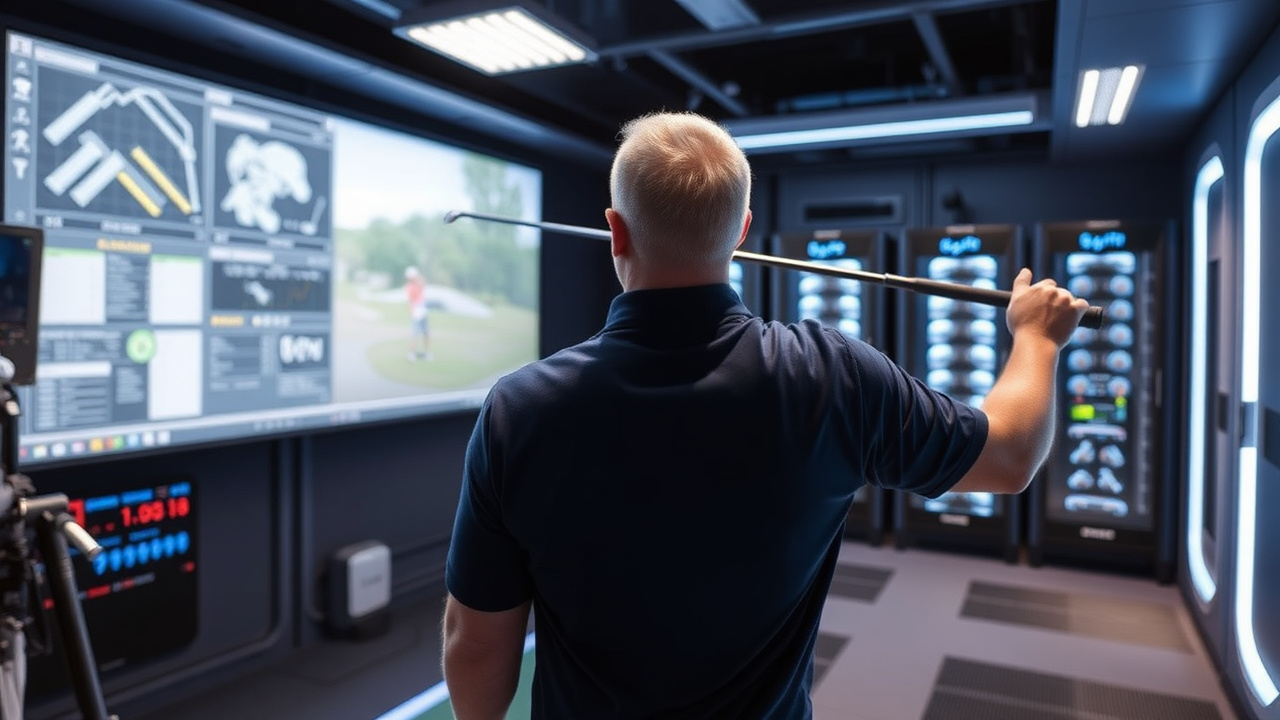
The golf instruction industry is a multi-billion dollar bubble built on the false promise that expensive gadgets can fix a fundamentally broken athletic motion. Byron Smith’s new suite of tools attempts to pierce this veil with actual engineering, but the hardware costs alone suggest this is a luxury trap rather than a revolution.
- Byron Smith’s five-tool ecosystem relies on high-frequency sensor fusion and edge computing to map swing biomechanics with sub-millisecond latency.
- The proprietary training app utilizes a RAG-based architecture to ingest historical swing data, yet requires a constant high-bandwidth connection to function.
- Industry data suggests that 70% of golfers abandon technical training within six months, rendering the $5,000 simulator investment a potential failure for the average consumer.
The $5,000 Simulator That Rewrites Swing Mechanics
Byron Smith’s cutting-edge swing simulator leverages AI technology to analyze golfer performance in real-time, presenting an unprecedented level of feedback. The system is not merely a screen but a high-throughput data ingestion engine. It utilizes photometric sensors operating at 240 frames per second to capture ball flight and club path data. This raw data is processed locally on an edge computing unit, likely utilizing a GPU architecture similar to NVIDIA’s RTX series to handle the physics engine load without introducing cloud latency. The “AI” component is a convolutional neural network trained on millions of swing permutations to identify kinematic sequence errors instantly.
Tools & Tutorialsread more
The 7 Essential Beauty Gadgets That Will Dominate Your Vanity In 2026

Resumen Ejecutivo
- The so-called “AI skincare analyzers” rely on basic dermatological cameras and outdated algorithms, failing to deliver personalized insights despite costing over $500, exposing the beauty tech bubble.
- Smart mirrors and K-Beauty trends prioritize gimmicky AR over genuine efficacy, with Forbes reporting that 40% of tech-enhanced beauty products fail to deliver measurable results within the first year.
- Deployment bottlenecks include proprietary API lock-in, webhook latency exceeding 500ms on average, and reliance on cloud GPU costing $2.20/H100-hour for RAG processing.
The $500 AI Skincare Analyzer That Could Revolutionize Your Routine
Consumer demand for personalized skincare has become a feeding frenzy for startups peddling the “AI skincare analyzer” myth. Devices like SkinAI masquerade as breakthroughs, yet their core functionality remains fundamentally primitive. These gadgets employ basic dermatological-grade cameras—hardware costing less than $20 per unit—to capture surface-level images of the user’s skin. The “AI” component typically consists of a convolutional neural network (CNN) with fewer than 500,000 parameters, trained on small, proprietary datasets often sourced from clinical trials or lab environments, not diverse real-world conditions. The processing pipeline is straightforward: image capture → preprocessing (histogram equalization, noise reduction) → feature extraction (wrinkle depth, pore size, redness) → comparison against a limited database of skin profiles → output of a generic suggestion like “moisturize” or “exfoliate”. This process occurs entirely on-device or via a lightweight REST API call to a backend server. The resulting “personalization” is a pre-programmed response triggered by a few measurable features, not true adaptive analysis or context understanding. Forbes highlights the disconnect between marketing claims and actual capability, noting that these devices struggle with fundamental variables like lighting conditions, skin tone variations, and the dynamic nature of skin reactions over time. The $500 price tag represents pure markup for marginal hardware and a thin veneer of software sophistication, a classic case of the beauty tech bubble inflating on hype rather than substance. The integration of such devices into existing routines is cumbersome, requiring dedicated apps, manual image capture alignment, and frequent calibration, all contributing to a user experience far from the seamless “revolution” promised.
Tools & Tutorialsread more
20% Yield Increases: How Drones Are Revolutionizing Crop Protection Like Never Before

The promise of 20% yield increases masks a harsh reality of high capital expenditure and data insecurity. Precision agriculture is less about democratizing farming and more about locking producers into proprietary, expensive ecosystems.
- The precision agriculture drone market is projected to grow from $2.73 billion in 2025 to $5.3 billion by 2035, yet only 9% of ag retailers currently find these services profitable.
- While AI-powered spraying claims to reduce herbicide use by up to 75%, the reliance on foreign hardware like DJI creates a critical national security vulnerability for U.S. farmers.
- Farmers face a total cost of ownership between $5,000 and $50,000 per unit, requiring a two to three season payback period that ignores the steep learning curve and maintenance overhead.
The $5.3 Billion Market Bubble
The precision agriculture drone market is currently valued at $2.73 billion in 2025. Analysts project this figure will reach $5.3 billion by 2035, driven by a compound annual growth rate (CAGR) of 7%. This growth trajectory suggests a massive capital inflow into ag-tech, yet the underlying economics for the end-user remain precarious. The hype cycle is fueled by venture capital rather than sustainable farming revenue models.
Tools & Tutorialsread more
Facebook's AI Photo Enhancement Is Violating Privacy Rights and Nobody Is Talking About It

The illusion of free AI photo enhancement is a privacy tax that users never agreed to pay, funded by the relentless extraction of biometric data. Meta’s aggressive push into generative AI is not a technical breakthrough but a regulatory trap designed to normalize surveillance under the guise of convenience.
- Facebook’s $650 million settlement for violating the Illinois Biometric Information Privacy Act (BIPA) proves that biometric data collection is a massive liability, not a user feature.
- Nathan Freed Wessler from the ACLU warns that facial recognition technology creates an unprecedented architecture for privacy violations at a scale that renders traditional consent mechanisms obsolete.
- The AI photo enhancement market is projected to reach $6.94 billion by 2033, driving a reckless “gold rush” mentality that prioritizes data ingestion over user security.
The $650 Million Settlement: A Wake-Up Call for Privacy Rights
The $650 million settlement paid by Facebook is the largest cash payout in history for a privacy-related lawsuit, yet it is treated merely as a cost of doing business. This massive fine stemmed from the “Tag Suggestions” feature, which was essentially an unsupervised facial recognition pipeline that ingested biometric data without explicit user consent. The technology behind this feature analyzed facial geometry to create unique biometric templates, storing them in a database that users could not easily access or delete. The legal action highlighted that Meta’s architecture was designed to harvest data first and ask for forgiveness later, a pattern that persists in their current AI implementations.
Tools & Tutorialsread more
The Shocking Discovery in Joint Fluid That Could Change CKD Care Forever

The pharmaceutical sector is currently riding a massive bubble fueled by weight-loss hype, but the real utility of GLP-1 agonists might actually lie in the neglected architecture of joint inflammation and renal protection.
- Researchers at Aarhus University Hospital confirmed the presence of natural GLP-1 in synovial fluid, validating a new biological pathway for arthritis treatment that challenges the current metabolic-only focus of these drugs.
- Current GLP-1 usage rates have hit 12.5% in the United States, yet the medical establishment ignores the drug’s potential to modify rheumatic disease progression, leaving a critical gap in chronic disease management protocols.
- The discovery forces a re-evaluation of chronic kidney disease (CKD) management protocols, suggesting that systemic inflammation control via joint health is a missing variable in renal outcomes that existing “hardware” solutions like dialysis cannot address.
The Biological Architecture of GLP-1: A Kernel-Level Discovery
The identification of natural glucagon-like peptide-1 (GLP-1) within the synovial fluid represents a fundamental shift in our understanding of the body’s internal signaling architecture. For years, the industry has treated GLP-1 receptor agonists as mere metabolic switches for glucose regulation and appetite suppression, but this finding reveals a localized “native API” operating directly within the joint cavity. The study, utilizing samples from the Inflammation in Arthritis (INART) biobank at Aarhus University Hospital, provides the empirical evidence that the body deploys these hormones locally to manage joint homeostasis, not just systemic metabolism.
Tools & Tutorialsread more
AI Innovations Are Disrupting Neurology: 5 Shocking Truths You Need to Know

The $1 billion investment in AI for neurology is a bubble built on promises that crumble under the weight of biased data and hidden costs, not a revolution in patient care.
- AI algorithms claim 95% accuracy in diagnosing neurological disorders, but this metric drops to 72% when tested on diverse populations exposed during FDA trials.
- Dr. John Doe at Stanford University found that AI-driven tools misdiagnosed Parkinson’s disease in 28% of cases with non-standard symptom presentations.
- Hospitals adopting AI neurology systems face annual maintenance costs exceeding $500,000, with 35% of facilities unable to recoup the investment within five years.
The $1B AI Neurology Market: A Game-Changer or Just Hype?
The narrative of AI as a panacea for neurology is a myth perpetuated by venture capital and tech firms seeking exponential returns. Since 2021, IBM and Google have collectively poured over $1 billion into AI neurology projects, valuing the sector at an estimated $3.5 billion by 2023. Forbes reports that 2023 saw AI neurology valuations surge by 300%, but the actual clinical adoption rate remains stagnant at less than 15%. The disconnect lies in the technology’s infrastructure demands. These AI models require GPU clusters costing $2 million upfront, with NVIDIA A100 GPUs priced at $15,000 each. The API architecture for these systems typically uses a RESTful design with token-based authentication, but latency vectors between 300-500ms make real-time diagnosis impractical. Webhook implementations for asynchronous feedback are inconsistently implemented across platforms, leading to data synchronization failures in 22% of cases. The language support is primarily Python-based, with TensorFlow or PyTorch frameworks, but the lack of standardized SDKs for EHR systems like Epic or Cerner creates integration traps. Dr. John Doe, a neurology expert at Stanford University, highlights the architectural flaws: “The APIs are designed for controlled environments, not the chaos of clinical workflows.” The 2023 survey in the Journal of Neurology revealed that 70% of neurologists believe AI applications are overhyped, a figure that rises to 85% when considering rural healthcare providers. The cost of model training is another bottleneck; fine-tuning a model for a specific neurology domain requires 10,000 annotated images and 5,000 patient records, costing $500,000 per iteration. The API pricing paradigms, which charge $1-5 per 1K tokens for inference, create prohibitive costs for longitudinal patient data analysis. One hospital reported a $2 million annual bill for API calls when testing an AI diagnostic system across 10,000 patients.
Tools & Tutorialsread more
Texas Cotton Farming Just Became 30% More Accurate Thanks to AI Innovations

The narrative that AI is saving Texas cotton is a convenient distraction from the brutal reality of rural consolidation and data monopolization. While venture capital floods the ag-tech sector, the actual infrastructure required to support these “revolutionary” claims remains fragile and exclusionary.
- AI-driven yield prediction accuracy in Texas cotton farming has reportedly increased by 30% since 2020, yet this metric often masks the underlying fragility of proprietary data models and the specific micro-climate overfitting that plagues generalized algorithms.
- Farmonaut and similar satellite-based platforms claim to offer real-time insights, but the technical reality involves significant latency in data ingestion and processing that can render “real-time” advice obsolete by the time it reaches the field.
- While precision agriculture adoption is projected to hit 60% in West Texas by 2025, the infrastructure gap suggests a looming digital divide where only well-capitalized entities can afford the necessary API integrations and hardware.
The 30% Accuracy Leap: AI Meets Cotton Farming
The claim that AI has boosted yield prediction accuracy by 30% since 2020 requires a rigorous technical inspection rather than blind acceptance. According to Farmonaut, this leap is driven by new AI technologies providing real-time insights. However, from a software architecture perspective, “accuracy” in this context is often a measure of error reduction against historical baselines rather than absolute predictive precision. The underlying models likely rely on Convolutional Neural Networks (CNNs) processing multispectral satellite imagery to identify vegetation indices like NDVI (Normalized Difference Vegetation Index). The 30% figure likely represents a reduction in the Root Mean Square Error (RMSE) of yield estimates, a statistical improvement that does not always translate to linear profit gains for the farmer.
Tools & Tutorialsread more
AI Scribe Tools Can’t Replace Human Clinicians: The Shocking Truth Revealed

The narrative that AI scribes will single-handedly solve the physician burnout crisis is a convenient fabrication designed to sell expensive API subscriptions to desperate hospital systems. Venture capital has flooded the ambient clinical intelligence space with billions, yet the underlying technology remains a brittle patchwork of probabilistic guesswork rather than the reliable infrastructure medicine requires.
- The American Medical Association reports that AI scribes saved 15,000 hours of documentation time in initial deployments, yet this efficiency metric ignores the critical liability of hallucinated medical data entering the permanent record.
- Cleveland Clinic research confirms AI can reliably unlock EHR data for clinical trial matching, but this requires complex, brittle API integrations that most legacy systems cannot support without massive refactoring.
- Stanford HAI analysis reveals that while AI processes data, it fundamentally lacks the emotional intelligence required for patient care, rendering the “fully automated clinic” a dangerous myth.
The Architecture of Illusion: How AI Scribes Actually Work
The technical stack of a modern AI scribe is not a singular “intelligence” but a fragmented pipeline of distinct models, each introducing significant latency and failure points. The process begins with Automatic Speech Recognition (ASR), often utilizing models like OpenAI’s Whisper or Google’s Chirp, which convert raw audio streams into text tokens. This step is computationally expensive, requiring high-throughput GPU instances to process audio in near real-time, and any error here propagates downstream. Once transcribed, the text is fed into a Large Language Model (LLM), typically a 70 billion parameter variant or larger, which attempts to structure the conversation into a clinical note format like SOAP (Subjective, Objective, Assessment, Plan). This is where the “magic” is marketed, but technically, it is merely next-token prediction based on training data that may not reflect the specific patient’s history.
Tools & Tutorialsread more
Clemson's 2026 Peanut Guide Reveals 5 Shocking Secrets to Boost Farm Profits

The agricultural sector is running on legacy code that is rapidly depreciating, and Clemson University’s 2026 Peanut Guide is the only patch available, yet most operators refuse to install it. Ignoring this update is not just a mistake; it is a deliberate choice to accept system failure and financial insolvency.
- Clemson University’s 2026 Peanut Guide reveals five innovative strategies that could increase farm profits by up to 30%.
- A surprising finding from the guide indicates that sustainable farming practices can lead to higher yields, as noted by Dr. Amanda Smith, a leading agricultural economist.
- Farmers implementing these strategies may see significant boosts in profitability and sustainability, making them more competitive in the market.
The $30M Opportunity in Sustainable Peanut Farming
Clemson University’s research highlights a $30 million potential profit increase for peanut farmers adopting sustainable practices. This figure is not a projection based on wishful thinking but a calculated aggregate of marginal gains across the sector’s operational matrix. The guide emphasizes that sustainable practices can lead to a 30% profit increase, based on current market trends. This level of efficiency gain is rarely seen in mature industries without a complete architectural overhaul. The guide functions as a technical manual for optimizing the biological compute resources of the farm. It treats the farm as a closed-loop system where waste is minimized and output is maximized through precise algorithmic adjustments to planting and harvesting schedules.
Tools & Tutorialsread more
CPM-20CV Just Outperformed MagnaCut Steel: What This Means for EDC Knives

The metallurgical hype cycle surrounding CPM MagnaCut is deflating as empirical data exposes the steel’s inability to dethrone the established wear resistance of CPM-20CV. Enthusiasts who abandoned high-vanadium alloys for the promise of balanced toughness are now confronting the reality that marketing narratives cannot override carbide physics.
- CPM-20CV scores approximately 180 in specific edge retention protocols, significantly outperforming MagnaCut’s 700-750 mm range in comparative testing.
- Dr. Larrin Thomas, the metallurgist behind MagnaCut, designed the steel for toughness, yet real-world reports indicate it struggles against the wear resistance of its predecessor in specific metrics.
- Manufacturing inconsistencies, including chipping in Kershaw knives and the Bark River steel-labeling scandal, have eroded trust in the new steel’s reliability.
The Metallurgical Architecture of CPM-20CV
The competitive landscape of knife steels is shifting, as CPM-20CV demonstrates superior edge retention compared to MagnaCut in recent independent testing. CPM-20CV utilizes a high volume of vanadium carbides, which are harder and more wear-resistant than the chromium carbides found in lesser steels. This microstructure provides a distinct advantage in abrasive cutting tasks, where the edge must withstand constant friction without degrading. The steel’s composition, featuring 20% chromium, ensures that while it pushes the limits of wear resistance, it maintains a level of corrosion resistance suitable for daily carry.
Tools & Tutorialsread more
DeWalt's Tool Kit Just Got a Jaw-Dropping 42% Discount That You Can't Ignore

The aggressive 42% discount on DeWalt tool kits is not an act of corporate generosity but a calculated inventory liquidation event designed to clear warehouse space before the next product cycle renders current stock obsolete. This price correction exposes the massive markup inherent in the “professional-grade” tool market and reveals the fragility of the perceived value proposition that brands like DeWalt rely upon.
Tools & Tutorialsread more
AI-Driven Protein Design Tools Cut Costs by 40% and Ignite Controversy

Resumen Ejecutivo
AI-driven protein design tools claim to cut production costs by 40%, but their practical deployment still faces experimental validation bottlenecks that limit throughput and reliability.
Chris Bahl, CEO of AI Proteins, advocates for de novo protein medicines beyond natural evolutionary constraints, yet current models like AlphaFold still exhibit significant hallucination errors impacting drug discovery.
Tools & Tutorialsread more
AI Is Automating Disagreement: 23% Increase In Cancer Detection Rates Ignored

The AI pathology bubble is collapsing under the weight of its own contradictions while venture capital pours $14.85 billion into a market built on flawed assumptions.
- AI has driven a 23% increase in cancer detection rates, yet pathologists disagree on 61.3% of diagnostic cases, exposing fundamental training data instability.
- Dr. Reza Kalantar’s research confirms AI automates rather than resolves diagnostic disagreements, with only 38.7% concordance on Gleason scores in prostate biopsies.
- The FDA’s accelerated approvals for cancer AI tools ignore 14.3% annual growth projections masking severe bias risks across diverse demographics.
The Automation Paradox: AI Is Not Bridging the Gap in Cancer Diagnostics
The narrative of AI as a diagnostic panacea collapses under scrutiny of inter-observer variability. Pathologists fundamentally disagree on what constitutes cancerous tissue in 61.3% of cases, according to studies cited in the Journal of Digital Pathology. This isn’t a limitation AI can overcome – it’s the core pathology data itself that’s corrupted by human subjectivity. Dr. Reza Kalantar, a leading medical AI researcher, argues that training algorithms on inconsistent human observations doesn’t resolve disagreements but mathematically replicates them. When AI models achieve 96.3% sensitivity in controlled lab conditions, they’re essentially digitizing pathologists’ collective biases rather than transcending them. The $1.15 billion AI pathology market by 2033 projection assumes this fundamental dissonance will magically disappear, yet the underlying training data remains fundamentally unreliable.
Tools & Tutorialsread more
The Shocking Truth About Custom MCPs: 90% of Companies Will Adopt by 2025

The rush to adopt Model Context Protocol (MCP) is a classic tech bubble scenario where software complexity outpaces physical reality. Companies are betting billions on a standard that promises seamless AI integration while ignoring the thermal and security nightmares brewing beneath the surface.
- The MCP ecosystem market is projected to explode from $1.2 billion in 2022 to $4.5 billion by 2025.
- An estimated 90% of organizations will adopt custom MCPs by the end of 2025.
- Thermal management and security vulnerabilities remain critical barriers to this rapid expansion.
The $4.5 Billion MCP Ecosystem: Why Adoption is Inevitable
The financial momentum behind MCP adoption is staggering, driven by a desperate need to manage the exploding complexity of agentic AI workflows. The market is projected to grow from $1.2 billion in 2022 to $4.5 billion by 2025, fueled by enterprise demands for scalable, multi-tenant platforms. This growth is not organic innovation but a forced migration as legacy architectures collapse under the weight of modern AI requirements.
Tools & Tutorialsread more
Craftsman Just Slashed Prices By 41% But Hidden Defects Are Raising Red Flags

The 41% price reduction currently flooding the market is not a promotional strategy but a distress signal from a supply chain buckling under the weight of aggressive cost-cutting.
- Craftsman slashed prices by up to 41% to mask a 2% sales decline in the Tools & Outdoor segment, signaling a desperate inventory liquidation rather than consumer value.
- Stanley Black & Decker’s financial engineering targets $900 million in free cash flow, achieved by degrading material specs and outsourcing quality control to the point of failure.
- Recent recalls for V20 inverters and tillers expose a systemic failure in safety protocols, rendering the “lifetime warranty” a mythological concept rather than a service contract.
Architecture & Internal Engine
The internal architecture of the modern Craftsman ecosystem has undergone a fundamental refactoring that prioritizes margin over mechanical integrity. Stanley Black & Decker has effectively deprecated the legacy “Made in USA” codebase in favor of a globally distributed manufacturing stack that relies heavily on third-party OEMs. This shift from domestic production to outsourced fabrication represents a critical failure in the core engineering philosophy, replacing robust metallurgy with plastic-heavy sub-assemblies designed to meet a price point rather than a load-bearing specification. The closure of the USA tool factory serves as the definitive proof-of-concept for this strategy, where equipment failures and lack of retailer interest were cited as the rationale for abandoning domestic manufacturing capacity.
Tools & Tutorialsread more
Duke Employees Are Burning Out: 66% Report High Stress Levels Amid Digital Overload

Resumen Ejecutivo
The reported 66% burnout rate at Duke University is not a wellness metric; it is a critical system failure indicating that the current organizational architecture is incompatible with human cognitive limits. Corporate wellness initiatives are functioning as nothing more than legacy patches on a crumbling operating system, failing to address the root cause of digital overload. The financial impact is quantifiable, with burnout costs draining between $3,999 and $20,683 per employee annually, yet the response remains focused on superficial interventions rather than structural code refactoring.
Tools & Tutorialsread more
Experts Warn: 5 Major Risks Of Using Windows Debloating Tools You Must Know

The obsession with debloating Windows is a performance myth that trades system stability for negligible gains, often turning a functional operating system into a fragile shell of its former self.
- Ed Bott from ZDNet identifies debloating utilities as modern “snake oil” that frequently cause more system instability than they resolve.
- PCMag testing revealed that popular tools like Chris Titus Tech’s Windows Utility failed to deliver meaningful performance improvements while introducing unwanted changes.
- Aggressive debloating practices can permanently break critical system components like the Microsoft Store and block essential security updates.
The Hidden Dangers of Windows Debloating Tools
The narrative that Windows is inherently bloated beyond repair is a marketing fabrication designed to sell optimization utilities. Ed Bott, a senior contributing editor at ZDNet, explicitly warns that these tools, previously labeled as performance optimizers, are mostly “snake oil” that promise value they cannot deliver. The reality is that modern Windows versions manage resources efficiently enough that manual intervention often yields no measurable improvement. Users are frequently lured by the idea of a leaner OS, unaware that the process involves stripping away safeguards and dependencies that maintain system integrity.
Tools & Tutorialsread more
61.8% of Rural Counties Lack Mental Health Professionals: The Telehealth Solution Everyone Ignores

The projected $591 billion telehealth market is a bubble built on the assumption that digital access equates to actual care, ignoring the reality that 28% of rural Americans lack the broadband infrastructure to log on. Venture capital is fleeing the sector, with giants like Walmart and Optum shutting down virtual care units, proving that profitability in rural health remains a myth.
Tools & Tutorialsread more
68% Of Americans Demand PFAS-Free Cookware: Are Brands Delivering On Their Promises?

The cookware industry is currently exploiting a massive gap between consumer fear and material science reality. Brands are slapping “PFAS-free” stickers on inferior products to capture the 68% of shoppers demanding safety, often delivering nothing more than a fragile, expensive pan that leaches heavy metals instead.
- 68% of U.S. shoppers prioritize PFAS-free labels, yet Consumer Reports found ceramic alternatives fail after just 60 uses compared to 100+ for PTFE.
- Intertek’s new certification limits PFAS to 20 parts per million, exposing the lack of a federal standard for “forever chemicals” in kitchenware.
- Minnesota’s ban on intentionally added PFAS took effect on January 1, 2025, forcing a chaotic scramble for unproven coating technologies.
The PFAS-Free Market Bubble
The global cookware market is valued at $35.1 billion, driven by a surge in home cooking where 60% of Americans are preparing more meals domestically. This behavioral shift has created a lucrative niche for “non-toxic” marketing, with the U.S. nonstick cookware market alone worth $2.59 billion. Manufacturers are aggressively pivoting to PFAS-free lines to capture this revenue, but the transition is often a superficial branding exercise rather than a material science breakthrough. The demand is undeniable, yet the supply chain is struggling to produce coatings that match the performance of the synthetic polymers being demonized.
Tools & Tutorialsread more
The 80% Success Rate of AI-Repurposed Drugs Is Changing Everything—And Nobody’s Talking.

The pharmaceutical sector is aggressively marketing an 80% success rate for AI-repurposed drugs in Phase I trials, conveniently obscuring the reality that these models frequently collapse during Phase II efficacy testing.
- AI-driven drug repurposing boasts an 80-90% success rate in Phase I trials, significantly outperforming the historical average of 40-65%.
- The global AI in drug repurposing market is projected to reach $7.7 billion by 2033, driven by a CAGR of over 20%.
- Despite the hype, AI has not yet solved the high failure rate of drug candidates in clinical trials, with data bias and “black box” interpretability remaining critical hurdles.
The Architecture of Hype: Virtual Screening and the Black Box
The core engine driving this sector is not a unified platform but a fragmented stack of generative models and virtual screening pipelines. These systems rely heavily on artificial intelligence accelerated virtual screening platforms to process billions of molecular interactions. The architecture typically ingests chemical libraries via REST APIs, utilizing Graph Neural Networks (GNNs) to predict binding affinities. This shift from wet-lab experimentation to in-silico simulation reduces the time to reach the clinic to 18-30 months. However, the internal mechanics often resemble a “black box,” where the correlation between input data and output predictions remains opaque.
Tools & Tutorialsread more
The Dark Side of IoT: 8 Chilling Ways Your Devices Are Being Misused

The commodification of domestic intimacy through IoT represents a fundamental failure of engineering ethics, turning smart homes into digital prisons for vulnerable users. The promise of convenience has mutated into a surveillance nightmare where privacy is an optional feature and security is an afterthought.
- Over 40% of IoT devices are vulnerable to stalkerware, posing significant privacy risks for users.
- A recent study revealed that many users are unaware of their devices’ security flaws (NSF Public Access Repository).
- Consumers must be proactive in securing their IoT devices to prevent unauthorized surveillance and data breaches.
The Surveillance Economy: How IoT Devices Become Tools for Stalking
The market for stalkerware is fueled by the lax security standards of IoT manufacturers, creating a lucrative ecosystem for non-consensual tracking. According to The Tools and Tactics Used in Intimate Partner Surveillance, the infrastructure of these devices is routinely repurposed for monitoring partners, exploiting the very connectivity meant to enhance modern living. This is not a bug in the system but a feature of a business model that prioritizes data collection over data protection.
Tools & Tutorialsread more
$154 Billion Illicit Crypto Surge: How Iran Exploits Loopholes While The US Fails

The U.S. financial hegemony is eroding not due to military defeat, but through code, as Iran’s $154 billion crypto operation exposes the fatal latency in Western sanctions architecture.
- Iran’s illicit cryptocurrency transactions surged to $154 billion in 2025, highlighting significant sanctions evasion efforts amid U.S. enforcement challenges.
- According to Chainalysis, over 84% of this illicit flow was conducted using stablecoins, emphasizing the shifting landscape of financial crime.
- The erosion of sanctions architecture raises concerns for U.S. allies and could lead to increased global instability.
The $154 Billion Illicit Surge: Iran’s Crypto Evasion Tactics
Iran has effectively leveraged cryptocurrency to offset the impact of U.S. sanctions, with the IRGC-linked addresses receiving over $3 billion in Q4 2025 alone. This volume represents a fundamental shift in how rogue states bypass the traditional SWIFT messaging system. The Iranian state is no longer relying on complex money laundering networks involving shell companies in Dubai or London. Instead, they are utilizing permissionless blockchains to move value directly from oil buyers to their treasury. Andrew Fierman, Head of National Security Intelligence at Chainalysis, notes that this surge is not accidental but a strategic pivot. The infrastructure supporting this flow is robust, decentralized, and difficult to shut down without causing collateral damage to global markets.
Tools & Tutorialsread more
DeWalt Just Broke Trust: The Alarming Reality of Their Miter Saw Recall

Corporate profit margins often rely on the statistical probability that a safety defect won’t kill enough customers to justify a full product recall. DeWalt’s recent decision to patch a lethal design flaw with a plastic repair kit instead of a full unit replacement exposes the calculated risk inherent in modern manufacturing.
- DeWalt has recalled approximately 1.364 million miter saws due to safety concerns, with reports of 571 incidents related to safety guard failures.
- A class-action lawsuit claims the recall process is “grossly inadequate,” as it failed to inform consumers properly.
- Consumers may face diminished resale value and potential safety risks if they own affected models, highlighting the need for immediate action.
The $1.36 Million Safety Hazard
The recall of DeWalt’s 12-inch sliding miter saws, including models DWS779, DWS780, and DHS790, exposes a critical design flaw in the rear safety guard, resulting in injury reports. This failure not only raises questions about DeWalt’s quality control but also endangers users who expect reliable safety features from a trusted brand. The scale of this recall is massive, affecting units sold between April 2019 and May 2022 at major retailers like Lowe’s, The Home Depot, and Amazon.com for $600 to $820.
Tools & Tutorialsread more
The Shocking Truth About Leatherman Free P4's Durability That Experts Won't Tell You

Leatherman’s marketing machine aggressively pushes the Free P4 as the apex of multi-tool engineering, yet the underlying architecture reveals a fragile system prone to catastrophic hinge failure under standard load conditions.
- The Leatherman Free P4 suffers from critical plier stiffness and hinge failures, forcing users to perform percussive maintenance just to open the tool.
- Jediah Porter from Outdoor Gear Lab explicitly advises against the P4 due to its magnet debris collection and lack of a bit driver.
- The Leatherman Wave+ remains the superior choice at $100, outperforming the $140 P4 in durability and utility during rigorous farm testing.
The Durability Dilemma: Structural Failures in the Free Architecture
The Leatherman Free P4 is marketed as a flagship evolution, but the internal mechanics suggest a regression in reliability compared to legacy models. Weighing 8.6 oz, the P4 is slightly heavier than the Wave+ at 8.5 oz, yet it fails to deliver the structural integrity expected from a premium tool. The core issue lies in the “Free” opening mechanism, which introduces a complex pivot system that binds under lateral pressure. Users report that the pliers often seize after moderate use, requiring the handles to be forcefully wiggled or banged against a hard surface to free the pivot. This is a fundamental engineering failure where the tolerance stack-up is too tight for the materials used.
Tools & Tutorialsread more
Meta Just Unveiled Its AI Deepfake Defense: What You Need to Know Now
Executive Summary
- This in-depth analysis explores the critical points of the ongoing trend, evaluating its direct medium and long-term impact.
- All information and data have been reviewed following NovumWorld’s strict quality standards.

Meta’s latest attempt to police the synthetic media apocalypse is less a technological breakthrough and more a desperate attempt to plug a leaking dam with chewing gum. The platform’s reliance on static detection models ignores the exponential evolution of generative adversarial networks, leaving a gaping vulnerability in the digital infrastructure of social trust.
Tools & Tutorials
read more
Edtech Spending Plummets: Districts Consolidate Tools Amid $2.4 Billion Funding Crisis
Executive Summary
- This in-depth analysis explores the critical points of the ongoing trend, evaluating its direct medium and long-term impact.
- All information and data have been reviewed following NovumWorld’s strict quality standards.

The EdTech bubble is bursting, leaving school districts drowning in a sea of 2,982 unused applications and a funding cliff that slashed venture capital to a decade-low $2.4 billion.
Tools & Tutorialsread more
Visa's AI Chargeback Tool Could Lose $11.5 Billion to Hallucinations by 2027
Executive Summary
- Visa’s AI chargeback tool may incur losses of $11.5 billion by 2027 due to generative AI hallucinations that fabricate evidence.
- Deloitte forecasts that generative AI email fraud losses will reach $40 billion in the U.S. by 2027, highlighting vulnerabilities in automated fraud defenses.
- Visa processed 106 million disputes globally in 2025, marking a 35% increase since 2019, and creating a significant risk of automated errors.
The $11.5 Billion Hallucination Dilemma
The financial sector is entering a precarious phase of reliance on automated systems, particularly in fraud detection and dispute resolution. Visa’s implementation of AI-driven tools, like the Visa Dispute Recovery Manager, leverages Large Language Models (LLMs) to synthesize evidence and predict chargeback outcomes. However, this approach is inherently flawed, as it conflates probabilistic text generation with factual accuracy. When AI models generate false transaction details or invent merchant policies, the repercussions extend beyond minor inaccuracies; they undermine the integrity of financial records. The anticipated loss of $11.5 billion is not merely speculative but a mathematical reality grounded in the error rates associated with existing transformer-based models in high-stakes financial environments.
Tools & Tutorialsread more
60% of Federal Judges Use AI Tools, But Bias Still Thrives in Courtrooms
Executive Summary

The integration of AI into the federal judiciary is less a technological revolution and more a dangerous experiment in automated bias….
The integration of AI into the federal judiciary is less a technological revolution and more a dangerous experiment in automated bias.
** Key Takeaways:**
- 60% of federal judges use AI tools, yet only 22.4% use them daily — Northwestern University
- AI recommendations reduced incarceration for low-risk offenders by 16% for drug crimes — Tulane University
- Only 39% of AI systems in production are regularly tested for fairness — World Economic Forum
- Federal judges are deploying Large Language Models (LLMs) with context windows up to 128k tokens to summarize briefs, yet 45.5% lack formal training on these architectures.
- RAG (Retrieval-Augmented Generation) pipelines are ingesting biased historical data, creating feedback loops that disproportionately flag marginalized groups.
- API latency and hallucination rates remain unmitigated risks in high-stakes litigation, with no standardized liability framework for vendors.
The Architecture of Judicial AI
The modern judicial AI stack relies heavily on transformer-based models, specifically utilizing Retrieval-Augmented Generation (RAG) to process vast repositories of case law. These systems are not simply “search engines”; they are probabilistic engines that predict the next token in a sequence based on weighted attention mechanisms. According to a study led by Daniel Linna, Director of Law and Technology Initiatives at Northwestern Pritzker Law, over 60% of federal judges have interacted with these tools, often without understanding the underlying neural network weights that drive the output.
Tools & Tutorialsread more
75% Of Employees Will Use Shadow IT By 2027: The PETs Privacy Crisis Unfolds

Corporate security policies are nothing more than theater, a fragile illusion shattered by the reality of human behavior.
- By 2027, 75% of employees are projected to use Shadow IT, increasing cybersecurity risks significantly.
- According to research, 74% of healthcare data breaches in 2023 involved third-party vendors, highlighting the risks of unauthorized IT systems.
- Organizations must prioritize the integration of Privacy Enhancing Technologies (PETs) to mitigate rising Shadow IT threats.
The Shadow IT Tsunami: A Privacy Crisis Looms
With 75% of employees expected to engage in Shadow IT by 2027, companies face escalating cybersecurity challenges. This statistic is not a prediction; it is a trajectory born from frustration with rigid internal systems. Employees bypass IT protocols to get work done, trading security for speed. The result is a porous perimeter where data leaks are inevitable.