

59% Asymptomatic: The Next Pandemic Is Already Spreading And Nobody's Talking

59% Asymptomatic: The Next Pandemic Is Already Spreading And Nobody’s Talking.
The “silent pandemic” of asymptomatic transmission poses a greater threat to economic stability than is currently acknowledged.
- A CDC model estimates that 59% of COVID-19 transmission stems from asymptomatic individuals, comprising 35% from pre-symptomatic and 24% from those who never show symptoms.
- Machine learning models can forecast SARS-CoV-2 mutation surges with a prediction error of just 0.1% when projecting 30 days into the future.
- Despite ongoing CDC efforts, persistent asymptomatic transmission and viral mutation rates are a continuing menace to public health and economic stability.
The Asymptomatic Advantage: Why Dr. Jay C. Butler’s “Silent Pandemic” Still Threatens the Economy
The COVID-19 pandemic highlighted the crucial role of asymptomatic transmission in the spread of respiratory viruses. Despite public health measures aimed at containing the virus, the “silent pandemic” of asymptomatic spread continues to pose a significant challenge. Dr. Jay C. Butler, CDC deputy director for infectious diseases, co-authored a study emphasizing the need to control this silent transmission. A CDC model indicated that 59% of all COVID-19 transmission came from asymptomatic individuals. This substantial percentage underscores the difficulty in containing the virus through symptom-based detection and isolation strategies alone.
By NovumWorld Editorial Team
Read More
Barbara Han's 90% Accurate Pandemic Model: Why You Should Fear The Midwest

Barbara Han’s Rodent Risk Model: The $120 Billion Blind Spot Hitting Heartland Supply Chains. A Midwest farm might be your portfolio’s next black swan.
- Barbara Han’s model boasts 90% accuracy in predicting rodent-borne pathogen hotspots, identifying the U.S. Midwest and Central Asia as high-risk areas for emerging zoonotic diseases.
- Zoonotic diseases already result in yearly economic losses surpassing USD 120 billion due to trade limitations, livestock deaths, and decreased productivity.
- Tech professionals, VCs, and Wall Street analysts should incorporate zoonotic disease risk assessments into investment and business continuity planning, particularly focusing on companies with operations in the identified high-risk regions.
Barbara Han’s Rodent Risk Model: The $120 Billion Blind Spot Hitting Heartland Supply Chains
The relentless pursuit of efficiency and yield in agriculture, often lauded by venture capitalists and celebrated in Silicon Valley boardrooms, masks a growing vulnerability: the rising risk of zoonotic disease outbreaks originating in the very heartland of America. Barbara Han, an ecologist at the Cary Institute, has developed a model that pinpoints these high-risk zones with alarming accuracy. Han’s model, boasting a 90% success rate, reveals that the U.S. Midwest, alongside Central Asia, is particularly susceptible to the emergence of novel pathogens carried by rodents. This isn’t just an ecological concern; it’s a multi-billion dollar economic risk that tech investors, supply chain strategists, and Wall Street analysts are dangerously overlooking.
By NovumWorld Editorial Team
Read More
Carnival's Deadly Game: Balcony Sleeping Meets Runaway Autopilot, 56 Fatalities Already

The allure of the open sea masks a troubling reality: onboard dangers are escalating faster than cruise lines can contain them. Carnival is not just a party; it’s becoming a gamble.
- Carnival Cruise Line accounts for 59% (44 out of 74) of reported physical assaults on cruise ships since 2022, signaling a potential systemic security issue.
- Overboard incidents on large cruise ships from 2009 to 2018 resulted in 56 fatalities out of 212 confirmed cases, underscoring the risks of balcony access and intoxication.
- Passengers must demand increased transparency from cruise lines regarding safety measures, especially concerning alcohol consumption and cybersecurity vulnerabilities, to mitigate the rising risks.
Carnival’s Alarming Assault Stats: A Crime Wave at Sea
Carnival Cruise Line’s dominance in onboard crime raises serious questions about passenger safety and the adequacy of its security protocols. While the industry projects a picture of carefree vacationing, the data suggests a darker undercurrent, particularly on Carnival ships. The sheer volume of reported incidents points to potential systemic failures in maintaining order and protecting passengers.
By NovumWorld Editorial Team
Read More
Cruise Balcony Deaths: The Terrifying 40% That Cruise Lines Won't Tell You

Balcony falls account for 40% of all passenger overboard incidents on cruise ships, yet many lines downplay this risk. Your romantic sea-view vacation might be statistically more dangerous than you realize.
- Approximately 28% of people who go overboard from cruise ships are rescued alive (Kherkher Garcia).
- Alcohol intoxication is cited in 60-80% of overboard cases, making the cruise industry’s all-you-can-drink packages a liability they don’t want to acknowledge.
- Cruise lines have saved an estimated $350 million by avoiding mandatory man overboard detection systems on their 300+ ships globally.
The $30 Million Question: Why Cruise Lines Skimp on Overboard Detection
The cruise industry operates on razor-thin margins and artificial scarcity models. With approximately 300 ships carrying 30 million passengers annually, even small cost-saving measures add up to significant revenue protection. When the Cruise Lines International Association (CLIA) claims man overboard incidents are “exceedingly rare” with a rate of 0.0004% between 2009-2019, they’re framing the issue mathematically while ignoring the human cost and their active role in creating conditions where these incidents occur.
By NovumWorld Editorial Team
Read More
In-N-Out's $5.8 Million Secret: Can Anyone Beat The Burger King?
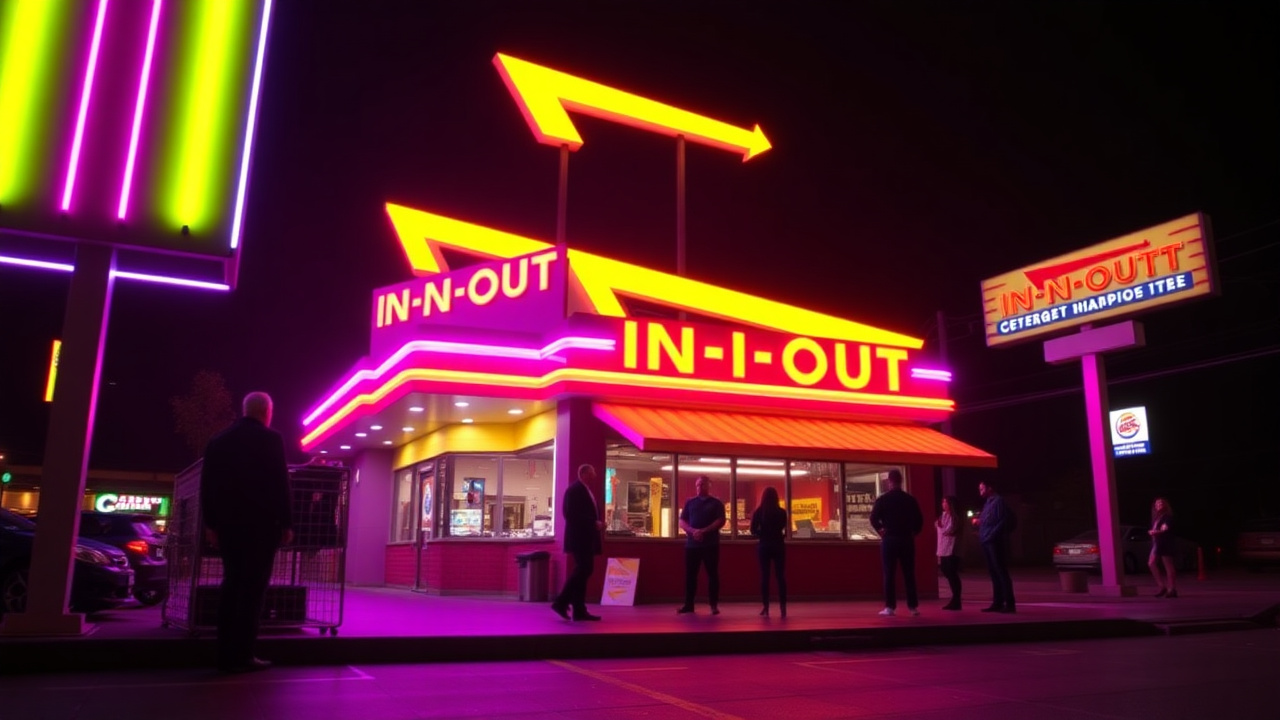
In-N-Out Burger’s cult following isn’t just hype; it’s a masterclass in operational effectiveness. The double-double always wins.
- In-N-Out Burger’s focus on quality and operational excellence yields an average unit volume (AUV) of $5.8 million, positioning it as a major competitor to fast-food giants like Burger King.
- Chris Kempczinski, CEO of McDonald’s, acknowledges the shift towards affordability in the fast-food sector due to rising prices (McDonald’s Earnings Call, 2024).
- Fast-food chains must prioritize supply chain resilience and strategic pricing to maintain profitability and customer loyalty amidst rising costs and market volatility.
The $5.8 Million AUV Question: Is Simplicity Superior?
Can In-N-Out Burger’s streamlined menu and operational model truly challenge the sprawling franchise networks of giants like Burger King, or is its appeal geographically limited? The burger chain, known for its unwavering commitment to quality and a refreshingly simple menu, boasts an average unit volume (AUV) of $5.8 million across its 415 locations as of the end of 2024. This figure isn’t just impressive; it’s a statement about the power of focus in a fast-food landscape often cluttered with endless menu options and fleeting trends. In-N-Out’s success prompts a critical question: has the industry overcomplicated itself, and is there a growing consumer appetite for straightforward, high-quality fast food? The $5.8 million AUV isn’t just a number; it’s a potential blueprint for sustainable success.
By NovumWorld Editorial Team
Read More
PopSockets' $315 Million Mirage: Are Sales Figures Hiding A Sticky Situation?

PopSockets’ $315 Million Mirage: Are Sales Figures Hiding A Sticky Situation?
The truth about PopSockets’ supposed grip on the market may be starting to slip. The company, known for its ubiquitous phone grips, is facing mounting challenges that suggest its seemingly solid success might be more fragile than it appears.
- PopSockets’ reported 2024 revenue of $315 million contrasts sharply with earlier peak revenue estimates of only $3.6 million, raising questions about the company’s true financial health.
- Online sales at PopSockets.com were $8.1 million in 2024, remaining flat year-over-year with projections indicating a potential 10-20% decline in 2025.
- Consumers may face increasing quality and durability issues, as well as saturation of the market, leading to a need for greater scrutiny of the brand before purchasing.
The $7 Million Patent Defense Dilemma
The cost of staying on top can be astronomical, especially when counterfeiters are constantly nipping at your heels. For PopSockets, the battle against knock-offs has turned into a major financial drain, diverting resources that could be used for innovation or product development. This ongoing struggle highlights a significant vulnerability in PopSockets’ business model, raising questions about the long-term sustainability of its current strategy.
By NovumWorld Editorial Team
Read More