5 Shocking Google Account Security Flaws That Could Cost You Millions
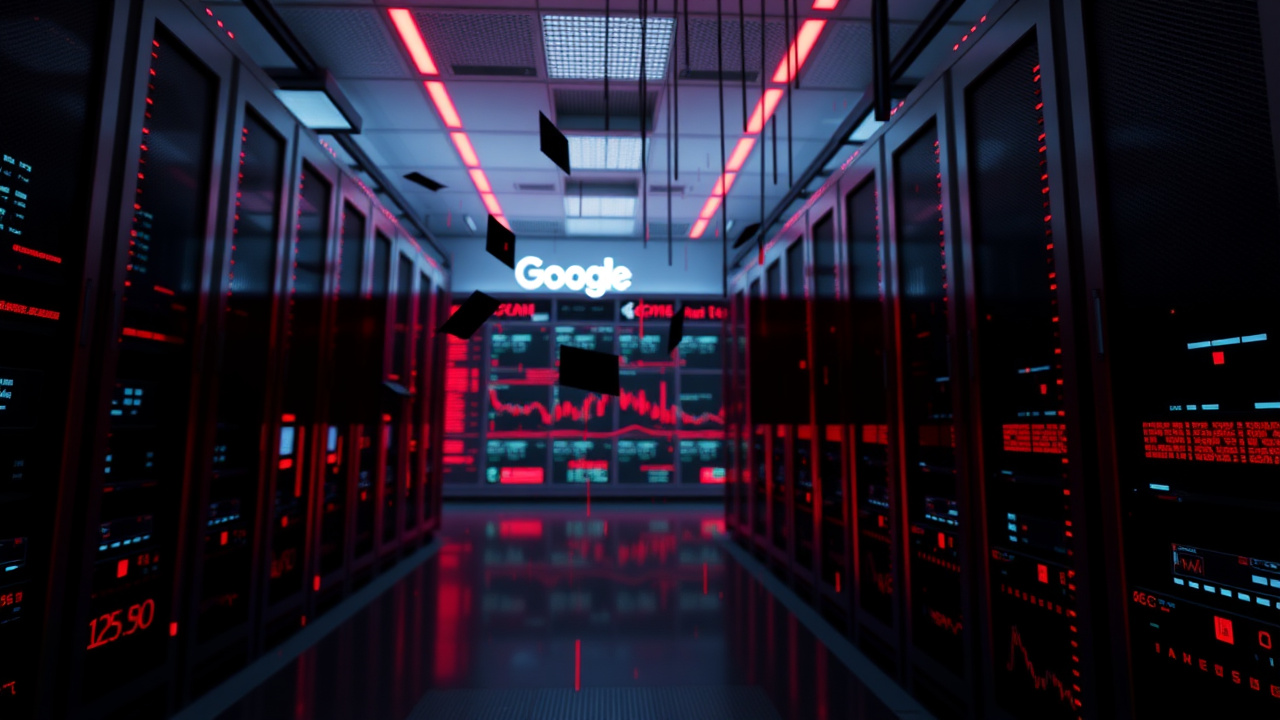
Google’s marketing machine touts impenetrable security, yet the architecture of Google Workspace remains a porous sieve for sophisticated attackers. The disparity between vendor promises and the harsh reality of enterprise vulnerability is costing organizations millions.
- Google accounts are at risk due to vulnerabilities that could cost organizations millions, particularly from MFA bypass attacks and shadow IT exploits.
- Cisco Talos reports that half of their 2024 incident responses involved MFA bypass attacks.
- Tech professionals must prioritize phishing-resistant MFA and address shadow IT to mitigate potential compliance costs averaging $4.2 million per incident.
The $4.2 Million Shadow IT Risk Exposed by Google Workspace Vulnerabilities
Shadow IT presents significant compliance risks, with nearly 42% of company apps falling outside IT’s knowledge, exposing businesses to an average of $4.2 million in remediation costs per incident. This statistic is not merely a reflection of poor policy but a structural failure of Google Workspace’s native governance capabilities to monitor third-party API access. The platform’s default architecture allows OAuth tokens to be granted with broad scopes, creating a massive blind spot where sensitive data flows to unvetted SaaS applications without triggering internal alerts.
Kris Bondi, CEO of Mimoto, highlights that unvetted applications can lead to sensitive data breaches because the authorization mechanisms are often opaque to end-users. Employees routinely click “Allow” on prompts that request read/write access to their entire contact list or email history, unknowingly creating a privileged pathway for attackers. Google Admin Console lacks the automated heuristics to flag these high-risk OAuth grants as anomalies, leaving security teams in the dark until data exfiltration is already underway.
The scale of this hidden infrastructure is staggering, with reports indicating organizations have around 975 unknown cloud services in use, far surpassing the only 108 known to IT departments. This 9-to-1 ratio of unknown to known assets represents a catastrophic failure of asset inventory within the Google ecosystem. Attackers exploit this obscurity by registering malicious applications that mimic legitimate productivity tools, harvesting credentials and data through the very OAuth framework Google relies on for integration.
While Google promotes five helpful tools to keep accounts safe, these native features often fail to address the systemic architecture flaws in third-party integrations. The security model assumes all connected apps are benign until proven otherwise, a reactive stance that is insufficient against modern supply chain attacks. Without continuous discovery mechanisms that operate independently of the Google Admin Console, organizations remain perpetually exposed to the shadow IT economy.
The MFA Bypass Crisis: Outdated Protections in a Modern Threat Landscape
Many organizations still rely on legacy MFA systems, which are increasingly ineffective against sophisticated phishing attacks, as noted by experts like Jasson Casey. The industry narrative that Multi-Factor Authentication is a silver bullet is a dangerous myth that lures enterprises into a false sense of security. Attackers have evolved beyond simple credential stuffing and now routinely bypass MFA using techniques like Adversary-in-the-Middle (AiTM) proxies, session hijacking, and token theft.
Roger Grimes from KnowBe4 argues that the commonly touted 99% effectiveness of MFA is misleading, with real-world performance often much lower. He estimates that MFA stops only 30% to 50% of attacks in realistic scenarios, a statistic that starkly contradicts the marketing materials pushed by major vendors. This discrepancy arises because most MFA implementations validate the user during login but fail to protect the session cookie post-authentication. Once an attacker steals a valid session token through malware or a phishing kit, the MFA gate is rendered irrelevant.
The mechanics of these bypasses are technically straightforward yet devastatingly effective. AiTM phishing kits sit between the victim and the legitimate service, relaying credentials and real-time MFA codes to the target site while capturing the session token. This method completely bypasses the cryptographic verification intended by protocols like FIDO2, reducing MFA to a mere speed bump. Cisco Talos found that half of their 2024 incident responses involved MFA bypass attacks, confirming that this is no longer a theoretical threat but a dominant attack vector.
Jasson Casey, CEO of Beyond Identity, asserts that mandatory MFA is necessary but not sufficient for enterprise security because MFA is not created equal. The reliance on “something you have” (like a phone) or “something you know” (like a code) is fundamentally flawed when those factors can be intercepted or socially engineered. True security requires binding the authentication to the device and the session, a capability lacking in standard Google Workspace implementations without significant third-party augmentation.
The Phishing-Resistant MFA Debate Ignored by Many Businesses
The consensus is shifting towards the necessity of phishing-resistant MFA, yet many companies still use SMS-based authentication, which is among the weakest forms. SMS codes are vulnerable to SIM swapping attacks and SS7 protocol interception, rendering them obsolete in an era of state-sponsored cybercrime. Despite this, convenience continues to trump security, with organizations clinging to SMS because it requires no hardware distribution and offers low user friction.
Experts from NIST and CISA advocate for hardware security keys (FIDO2/WebAuthn) as the only reliable MFA method against phishing. These standards utilize public-key cryptography to ensure that the private key never leaves the hardware device, making it impossible for a remote attacker to intercept or replay a login attempt. Google has been a proponent of FIDO2, but adoption rates remain sluggish outside of the technology sector, leaving the majority of businesses vulnerable to credential harvesting.
The resistance to phishing-resistant MFA is often framed as a cost issue, but this is a shortsighted financial calculation. The operational expense of deploying hardware keys is negligible compared to the $4.2 million average cost of a data breach caused by compromised credentials. Furthermore, the user experience of physical keys is often superior to the friction of repeatedly typing six-digit codes, debunking the myth that security must come at the cost of productivity.
Google’s roadmap includes enforcement of mandatory MFA for all users by the end of 2025, but this mandate lacks specificity regarding the strength of the factor. If the requirement merely mandates “any MFA,” including SMS or voice codes, it will do little to stem the tide of AiTM attacks. A mandate without technical teeth is merely security theater, giving the illusion of action while leaving the fundamental vulnerability intact.
The Compliance Dilemma: Google Workspace’s Inherent Limitations
Google Workspace’s inability to effectively manage Shadow IT and provide visibility into third-party apps creates compliance vulnerabilities, counteracting its security features. Regulatory frameworks like CMMC and NIST 800-171 require strict control over data residency and access, yet Google’s multi-tenant architecture often obscures the physical location of data at rest. This opacity makes it nearly impossible for defense contractors or highly regulated industries to prove compliance without expensive add-on solutions.
A report indicated that organizations have around 975 unknown cloud services in use, far surpassing the only 108 known to IT departments. This massive gap in visibility is a direct violation of core compliance principles that mandate an accurate asset inventory. Auditors are increasingly scrutinizing this “shadow sprawl,” and Google’s native logs are often insufficient to satisfy the rigorous evidence requirements of a SOC 2 Type II audit or ISO 27001 certification.
Legacy protocols further complicate the compliance landscape. Protocols like IMAP and POP are still enabled by default in Google Workspace in some configurations, despite Google announcing support would end in January 2025. These protocols often lack support for modern MFA flows, forcing the use of “App Passwords”—static credentials that bypass MFA entirely. These static passwords are a goldmine for attackers and a significant compliance failure, representing a regression to pre-2010 security standards.
The risk is compounded by endpoint insecurity, as 70 million smartphones are lost annually with only a 7% recovery rate, necessitating robust tracking solutions like Samsung SmartThings Find to mitigate physical breaches. When a device containing cached Google Workspace credentials is lost, the reliance on simple password protection is often inadequate. Without device-bound session credentials, a lost device equates to a compromised account, triggering a cascade of reporting obligations under GDPR and CCPA.
The Real-World Cost of Ignoring MFA and Shadow IT Risks
The financial fallout from breaches like those experienced by Uber and MGM Resorts illustrates the urgent need for robust account security measures. These were not sophisticated zero-day exploits but failures of basic security hygiene and process control. MGM Resorts’ 2023 breach, attributed to social engineering tactics, cost the company over $100 million, proving that the human element remains the weakest link in the security chain.
In the MGM case, attackers did not hack the encryption; they hacked the help desk. By using vishing techniques to convince IT support to reset MFA credentials, the attackers bypassed millions of dollars in technical controls. This incident highlights that technical architecture is useless without rigorous operational security training. The $100 million price tag includes not only the immediate remediation but the long-term reputational damage and the increase in cyber insurance premiums.
Uber suffered a similar fate in 2022 due to an “MFA fatigue” attack. Attackers bombarded a contractor with MFA push notifications until they finally approved one to stop the harassment. This psychological exploit bypassed the technical verification entirely. The breach exposed sensitive internal data and demonstrated that push notification-based MFA is susceptible to user exhaustion and manipulation.
Change Healthcare was brought down by ransomware attackers through one unprotected server with no MFA. This single point of failure crippled the US healthcare system for weeks, illustrating the catastrophic impact of inconsistent policy enforcement. Even with advanced MFA in place, a single unmonitored shadow server can serve as the entry point for a network-wide compromise. The cost of these incidents is never just the ransom payment; it is the operational downtime, the legal fees, and the lost revenue.
The Bottom Line
Organizations must take a proactive stance against evolving security threats by adopting robust, phishing-resistant MFA and thoroughly managing Shadow IT. The current reliance on legacy authentication factors and blind trust in third-party apps is a strategic failure waiting to happen. Even with advanced hygiene, relying solely on credentials is a failure strategy, leading experts to recommend top-tier password managers as a baseline defense rather than a primary security control.
Implementing phishing-resistant MFA solutions and establishing a continuous discovery process for third-party apps are the only viable paths to security maturity. Google’s roadmap for 2025, including Device Bound Session Credentials (DBSC), offers a glimmer of hope, but enterprises cannot afford to wait for vendor defaults to catch up to threat realities. The cost of inaction is measured in millions, and the attackers are already counting on your complacency.
Methodology and Sources
Related Articles
- $125,000/Hour: Is Your Jobsite Bleedi
- Statin MYOPATHY Cover-Up? The
- Craftsman Just Slashed Prices By 41% But Hidden Defects Are Raising Red Flags
, “publisher”: { “@type”: “Organization”, “name”: “NovumWorld”, “logo”: { “@type”: “ImageObject”, “url”: “https://novumworld.com/images/logo.png" } } }
