Curling's AI Apocalypse: Curly The Robot Is Coming For Your Olympic Gold
NovumWorld Editorial Team
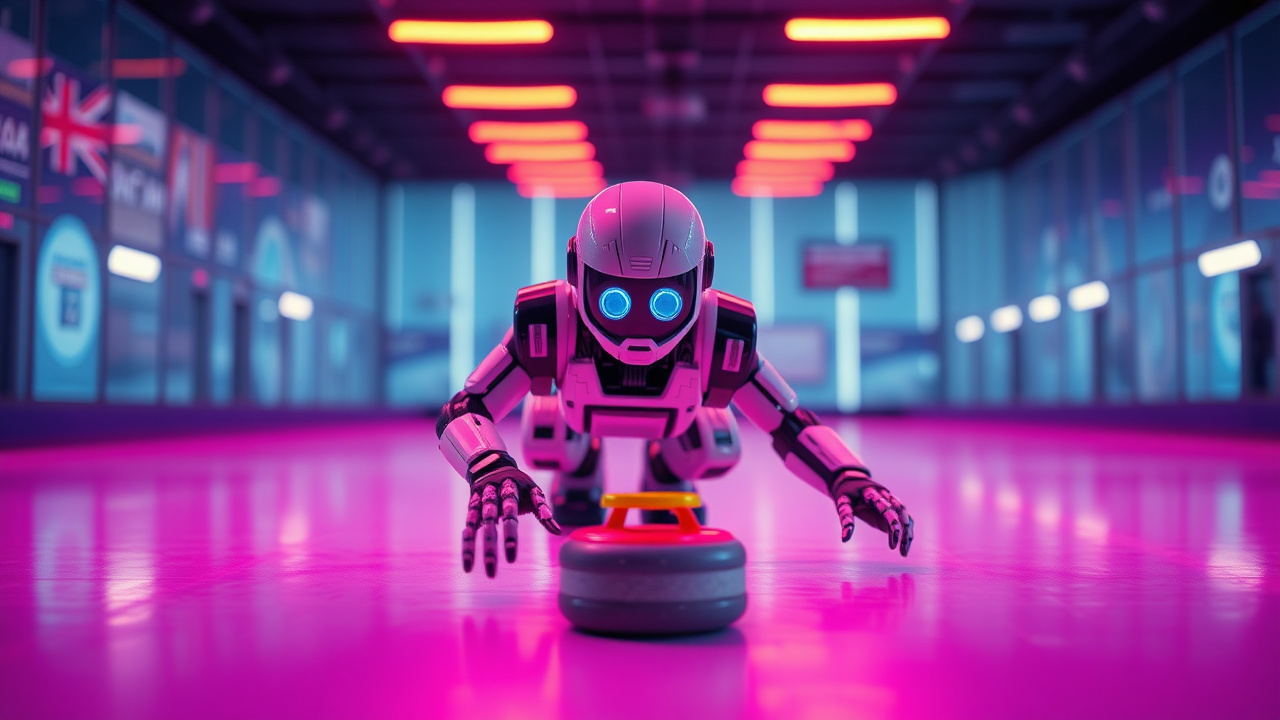
Curling’s AI Apocalypse: “Curly” The Robot Is Coming For Your Olympic Gold
AI is poised to disrupt the niche world of curling, threatening to unseat human champions.
- An AI-powered curling robot named “Curly” demonstrated its potential by winning three out of four official matches against professional South Korean curling teams.
- Curling Canada faced backlash on Reddit for using AI to generate logos, sparking debate over the ethics of AI art and its potential impact on human artists.
- The integration of AI in curling, spanning from automated robots to predictive shot analysis, portends a significant disruption to traditional roles and strategies, compelling players, coaches, and ice technicians to adapt swiftly.
The Ice is Melting: Why “Curly” the Curling Robot Rattles Olympic Dreams
The rise of “Curly,” the AI-powered curling robot, poses a credible threat to human dominance in the sport. “Curly” achieved a milestone by winning three out of four official matches against professional South Korean teams, as reported by Smithsonian Magazine, signaling a potential shift in competitive dynamics.
The victory isn’t just a novelty; it represents a tangible demonstration of AI’s capability to master the intricacies of curling. The robot, designed by researchers like Seong-Whan Lee from Korea University and Klaus-Robert Müller from Berlin Institute of Technology, embodies the potential for AI to optimize and execute complex physical tasks. Their sentiment was the game of curling can be considered a good testbed for studying the interaction between artificial intelligence systems and the real world.
This raises a fundamental question: Will human curlers be able to compete against increasingly sophisticated AI opponents? The precision and consistency of a robot like “Curly” could eliminate human error, a critical factor in high-stakes curling matches. While the human element of strategy and teamwork will likely remain, the execution of shots may become increasingly dominated by AI, potentially altering the very nature of the sport.
Sweeping Controversy: How Curling Canada’s AI Logo Fumbled the Stone
Curling Canada’s foray into AI-generated logos reveals a deeper tension between technological innovation and artistic integrity. The organization faced criticism on Reddit after it was revealed that AI was used to generate logos, as seen in this Reddit thread, sparking a debate over the ethics of AI art and its potential impact on human artists.
The controversy highlights a growing concern about the appropriation and devaluation of human creative work in the age of AI. While AI tools can generate images quickly and efficiently, they often do so by scraping existing artwork, potentially infringing on copyrights and undermining the livelihoods of artists. The user who posted on Reddit noted that it was an egregious example of a quick and “good enough for me” job which devalues the need for the work from human artists.
This incident serves as a cautionary tale for organizations considering using AI for creative tasks. While the allure of cost savings and efficiency may be tempting, the potential for backlash and damage to reputation should not be ignored. A more ethical approach would involve collaborating with human artists and using AI as a tool to augment, rather than replace, their creative abilities.
The Broom and the Algorithm: The Skills Gap No One Is Talking About
The integration of AI into curling is creating a skills gap that extends beyond the players themselves. Women’s curling leads demonstrate an exceptional average shot accuracy, scoring 3.33 out of 4 points, according to Medium, highlighting the human element that AI might struggle to replicate perfectly. This accuracy is critical in setting up the end for their team.
As AI systems like CurlingHunter (ResearchGate) become more prevalent, coaches and ice technicians will need to develop new skills to effectively utilize and interpret the data they provide. The ability to analyze complex data sets, identify patterns, and translate them into actionable strategies will become increasingly valuable.
Mike Dupolo, Head Ice Technician at Nutmeg Curling Club, encapsulates the sentiment that curling is largely self-policing, and players are responsible for reporting their own violations. If curling teams fail to bridge this skills gap, they risk being left behind in an increasingly data-driven sport. The challenge lies in finding a balance between embracing technological advancements and preserving the human element that makes curling unique.
Double-Touching Doubt: The Unseen Risks of Algorithmic Officiating
The potential for algorithmic officiating in curling raises concerns about fairness, transparency, and the integrity of the sport. Allegations of “double-touching” during the 2026 Winter Olympics (9News) underscore the challenges of fair play, even with technological advancements.
While technology can provide objective measurements and analysis, it is not immune to errors or biases. The algorithms used to detect violations could be flawed, leading to inaccurate or unfair calls. Moreover, the reliance on technology could diminish the role of human umpires and officials, who bring valuable experience and judgment to the game. Marc Kennedy responded to the allegations of double-touching with an expletive demonstrating human emotion and frustration.
Ensuring the integrity of curling in the age of AI will require careful consideration of the ethical and practical implications of algorithmic officiating. Transparency in the design and implementation of these systems is essential, as is the ongoing evaluation of their accuracy and fairness. A balanced approach that combines technological tools with human oversight is likely the best way to safeguard the spirit of the game.
The Future of the Hack: How AI Will Reshape (or Ruin) the Sport
AI’s integration into curling has the potential to reshape the sport in profound ways, but its ultimate impact remains uncertain. The CurlingHunter AI system (ResearchGate) achieved high accuracy (30 ± 3 cm) in predicting stone trajectories, potentially changing strategy and analysis.
On one hand, AI could enhance the strategic and analytical aspects of the game, providing players and coaches with valuable insights to improve their performance. AI-powered tools could be used to analyze opponents’ weaknesses, optimize shot selection, and develop more effective game plans. This could lead to a more sophisticated and competitive sport, attracting new fans and participants.
On the other hand, over-reliance on AI could diminish the human element of curling, transforming it into a sterile and predictable exercise. The spontaneity, creativity, and emotional connection that make curling unique could be lost if AI dictates every move. If the sport becomes too reliant on data and algorithms, it may alienate fans and lose its appeal.
The challenge lies in finding a way to harness the power of AI without sacrificing the essence of curling. This will require careful consideration of the ethical, social, and cultural implications of technological innovation, as well as a commitment to preserving the human values that underpin the sport.
The Verdict Is In: Curling, Prepare to Compute
Curling faces a crossroads where it must decide how deeply to integrate AI. Coaches should invest in training on AI-assisted analysis to gain a competitive edge.
Embrace AI as a tool to enhance, not replace, human skill and strategy. The future of curling depends on it.