In-N-Out's $5.8 Million Secret: Can Anyone Beat The Burger King?
NovumWorld Editorial Team
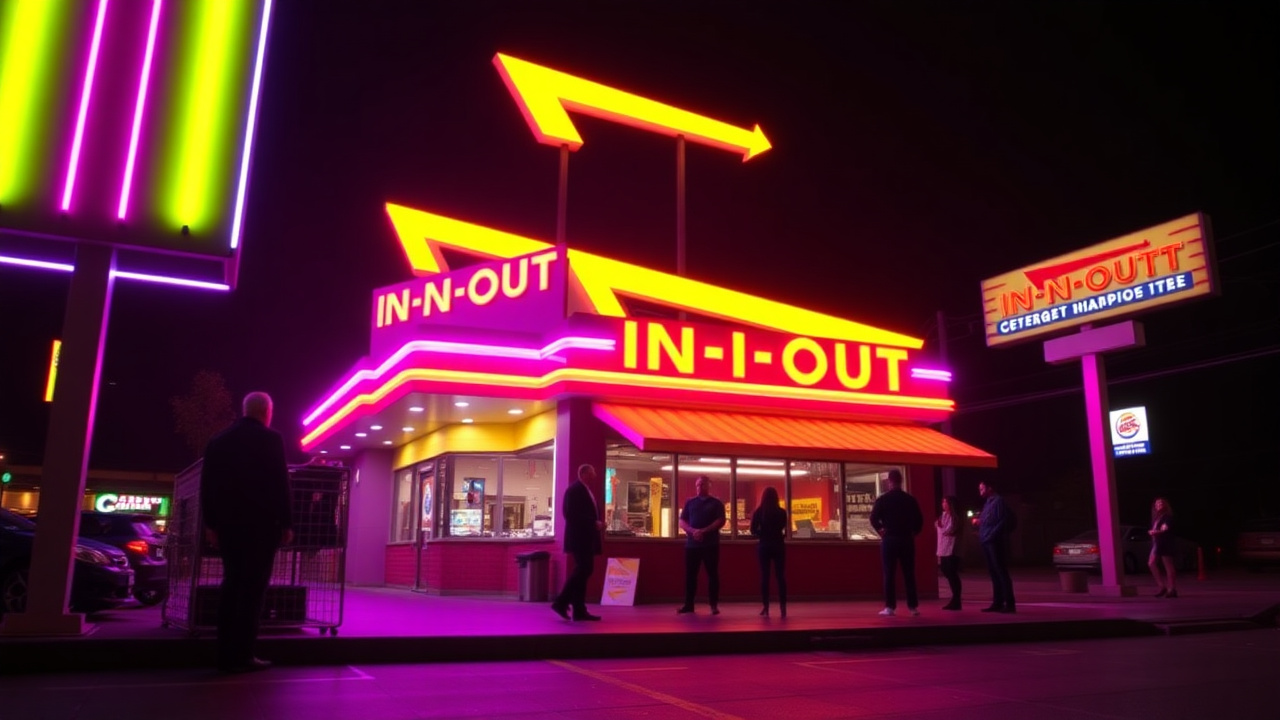
In-N-Out Burger’s cult following isn’t just hype; it’s a masterclass in operational effectiveness. The double-double always wins.
- In-N-Out Burger’s focus on quality and operational excellence yields an average unit volume (AUV) of $5.8 million, positioning it as a major competitor to fast-food giants like Burger King.
- Chris Kempczinski, CEO of McDonald’s, acknowledges the shift towards affordability in the fast-food sector due to rising prices (McDonald’s Earnings Call, 2024).
- Fast-food chains must prioritize supply chain resilience and strategic pricing to maintain profitability and customer loyalty amidst rising costs and market volatility.
The $5.8 Million AUV Question: Is Simplicity Superior?
Can In-N-Out Burger’s streamlined menu and operational model truly challenge the sprawling franchise networks of giants like Burger King, or is its appeal geographically limited? The burger chain, known for its unwavering commitment to quality and a refreshingly simple menu, boasts an average unit volume (AUV) of $5.8 million across its 415 locations as of the end of 2024. This figure isn’t just impressive; it’s a statement about the power of focus in a fast-food landscape often cluttered with endless menu options and fleeting trends. In-N-Out’s success prompts a critical question: has the industry overcomplicated itself, and is there a growing consumer appetite for straightforward, high-quality fast food? The $5.8 million AUV isn’t just a number; it’s a potential blueprint for sustainable success.
Consider the contrast with other major players. While McDonald’s locations average around $2.6 million annually, In-N-Out stores consistently generate around $4.5 million, significantly outperforming many franchisees. This substantial difference suggests that In-N-Out’s operational model—characterized by owning most of its restaurant properties, vertical integration into distribution, and a relentless focus on quality control—creates a significant competitive advantage. Furthermore, their commitment to employee retention, achieved through above-average wages and promotion from within, fosters a more engaged and skilled workforce, translating directly into better customer service and operational efficiency. Can larger chains replicate this model, or are they too entrenched in franchise agreements and sprawling supply chains to adapt?
Burger King’s “Reclaim the Flame” Gamble: Menu vs. Margins, according to Reuters
Burger King’s “Reclaim the Flame” program aims to revitalize the brand through menu improvements and accelerated refranchising, but will it be enough to reignite consumer interest and boost profits in a rapidly evolving market? The fast-food giant faces an uphill battle. Restaurant Brands International (RBI), Burger King’s parent company, is committed to becoming a simpler, 99% franchised business over the next few years, a move designed to streamline operations and reduce corporate overhead. However, this transition is fraught with challenges, particularly in a market where consumer preferences are shifting and competition is intensifying. Burger King’s strategy hinges on two key pillars: menu innovation and operational efficiency.
The “Reclaim the Flame” initiative seeks to upgrade core menu items, such as the Whopper, to compete in the premiumization trend, while also deploying AI-powered tools like “Patty” to assist workers and manage stockouts. The goal is to balance value offerings with premium upgrades to cater to a broad range of consumer demands. However, the success of this strategy depends on Burger King’s ability to execute consistently across its franchised locations. The risk lies in whether franchisees will fully embrace the changes and invest in the necessary upgrades, or if the brand will struggle to maintain a uniform standard of quality and service. Moreover, can Burger King successfully navigate the rising costs of labor and ingredients without alienating its value-conscious customer base?
The Contrarian Crack: Are Premium Upgrades a Mirage?
Is the fast-food industry’s obsession with premiumization a genuine response to consumer demand, or a desperate attempt to boost margins in a saturated market, and are consumers truly willing to pay more for perceived upgrades amidst rising inflation? In 2024, Chris Kempczinski, CEO of McDonald’s, noted a shift towards affordability in the fast-food sector, with low-income consumers increasingly choosing to eat at home due to rising prices. This observation challenges the conventional wisdom that premiumization is the key to growth. If a significant portion of the consumer base is prioritizing affordability, then chasing the premium trend may be a misallocation of resources.
The question then becomes: how can fast-food chains balance the desire for higher margins with the need to cater to price-sensitive consumers? Is it possible to offer both value and quality without compromising profitability? In-N-Out Burger’s success suggests that it is. By focusing on a limited menu of high-quality ingredients and maintaining efficient operations, the company has managed to deliver a compelling value proposition that resonates with a broad customer base. Perhaps the industry’s fixation on premium upgrades is a mirage, distracting from the more fundamental challenge of delivering consistent quality and value at an affordable price.
AI’s False Start: Taco Bell’s Lesson in Automation Overreach
Does the rush to implement AI in fast-food operations risk sacrificing customer experience and operational efficiency in pursuit of cost savings, as highlighted by Taco Bell’s struggles with its AI-powered voice ordering system? While AI holds immense potential to transform the fast-food industry, its implementation must be approached with caution and a clear understanding of its limitations. The implementation of AI in fast-food, such as Taco Bell’s AI-powered voice ordering system, has faced issues including prank orders and customer frustration. This has led to a reassessment of AI strategies and a move towards hybrid AI-human models.
The lessons learned from Taco Bell’s experience underscore the importance of careful planning and ongoing assessment when adopting new technologies. It’s not enough to simply replace human workers with AI systems; the technology must be seamlessly integrated into existing operations and designed to enhance, not detract from, the customer experience. Moreover, the ethical implications of AI deployment must be carefully considered, particularly in areas such as data privacy and job displacement. The future of AI in fast-food lies not in wholesale automation, but in creating a symbiotic relationship between humans and machines, where AI augments human capabilities and improves overall efficiency.
Weathering the Storm: Supply Chain Resilience as the Deciding Factor
In an era of increasing global instability and extreme weather events, will supply chain resilience become the single most important factor determining the success or failure of fast-food chains? Jena Santoro, Senior Manager of Intelligence Solutions at Everstream Analytics, emphasized that extreme weather events are likely to be the biggest global supply chain issue in the second half of 2024, potentially causing disruptions to citrus, produce, coffee, and sugar supplies. These disruptions can lead to shortages, price increases, and ultimately, a decline in customer satisfaction. Fast-food chains, with their complex global supply chains, are particularly vulnerable to these risks.
Companies are urged to diversify transport routes and secure alternative sources to ensure continuity. Those that can effectively manage these challenges will be best positioned to maintain their competitive advantage. Consider the impact of geopolitical tensions, such as the Russia-Ukraine war, on global food supplies. These events can disrupt supply chains, increase pricing volatility, and even lead to shortages of key ingredients. The ability to adapt quickly and find alternative sources is crucial for survival in this volatile environment. The future of fast-food depends not only on menu innovation and operational efficiency but also on building robust and resilient supply chains that can withstand the shocks of a rapidly changing world. The question is, how many chains are genuinely prepared for the next global crisis?
The Bottom Line
In-N-Out’s focused approach proves that operational efficiency and consumer satisfaction beat out menu complexity every time. Stop chasing trends, focus on the core: Quality, service, and value.
The double-double always wins.