Cruise Balcony Deaths: The Terrifying 40% That Cruise Lines Won't Tell You
NovumWorld Editorial Team
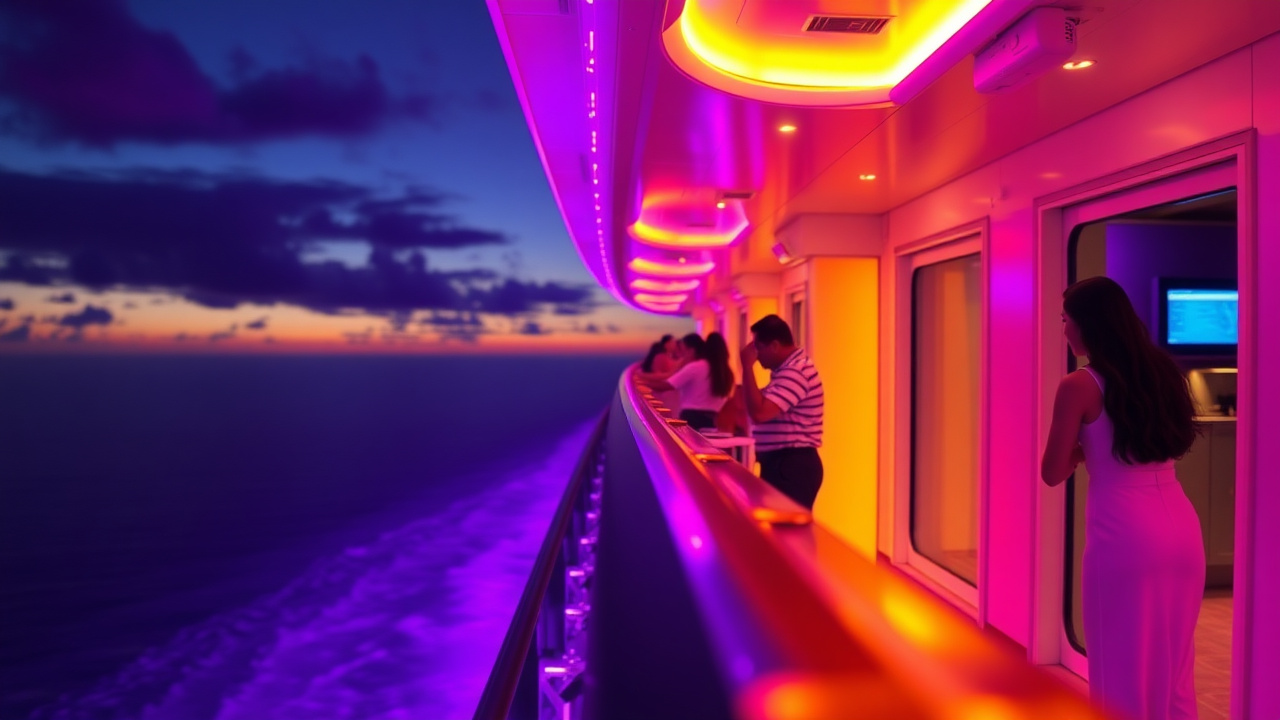
Balcony falls account for 40% of all passenger overboard incidents on cruise ships, yet many lines downplay this risk. Your romantic sea-view vacation might be statistically more dangerous than you realize.
- Approximately 28% of people who go overboard from cruise ships are rescued alive (Kherkher Garcia).
- Alcohol intoxication is cited in 60-80% of overboard cases, making the cruise industry’s all-you-can-drink packages a liability they don’t want to acknowledge.
- Cruise lines have saved an estimated $350 million by avoiding mandatory man overboard detection systems on their 300+ ships globally.
The $30 Million Question: Why Cruise Lines Skimp on Overboard Detection
The cruise industry operates on razor-thin margins and artificial scarcity models. With approximately 300 ships carrying 30 million passengers annually, even small cost-saving measures add up to significant revenue protection. When the Cruise Lines International Association (CLIA) claims man overboard incidents are “exceedingly rare” with a rate of 0.0004% between 2009-2019, they’re framing the issue mathematically while ignoring the human cost and their active role in creating conditions where these incidents occur.
The financial calculus is brutal. Installing advanced man overboard detection systems across an entire fleet costs an estimated $100,000 per vessel. With nearly 300 cruise ships globally, that’s a $30 million investment the industry would rather avoid. The International Association of Search and Rescue Coordinators reports that only a handful of cruise lines have implemented these systems, despite their proven effectiveness.
What’s particularly revealing is how cruise lines treat overboard incidents as public relations problems rather than safety failures. Each incident represents potential liability, reputational damage, and operational disruption. The industry response has been consistent: minimize the narrative, attribute incidents to passenger behavior, and resist regulatory pressure. When Bud Darr of CLIA states that these incidents are “usually a result of intentional or reckless acts,” he’s shifting responsibility away from systemic issues like inadequate railing design, poor lighting, and insufficient staffing.
The economic incentives are clear. For every $100 million in cruise ticket sales, the industry saves approximately $1 million by avoiding detection system installation. This money flows directly to shareholder returns rather than passenger safety. When viewed through the lens of behavioral economics, this becomes less about cost-cutting and more about calculated risk assessment—where the cost of occasional tragic incidents is cheaper than universal prevention.
Carnival’s Alcohol-Fueled Denial: Why Cruise Lines Avoid Blame, according to Reuters
The cruise industry’s business model fundamentally conflicts with passenger safety when it comes to alcohol consumption. With all-you-can-drink packages generating significant revenue streams—sometimes accounting for up to 15% of onboard profits—cruise lines have little incentive to acknowledge the 60-80% correlation between alcohol intoxication and overboard incidents. Kherkher Garcia has documented how this financial incentive creates a dangerous feedback loop where cruise lines profit from the very behavior that leads to overboard incidents.
Alcohol service on cruise ships represents a perfect storm of risk factors. Passengers in unfamiliar environments with limited spatial awareness, combined with low balcony railings and inconsistent lighting, create hazardous conditions. Yet the industry response has been to implement vague policies while maximizing alcohol sales. When Ross Klein from Memorial University of Newfoundland tracks these incidents, he finds that despite advances in technology, the number of alcohol-related overboard incidents has remained stubbornly consistent—suggesting that technological fixes alone cannot solve a problem rooted in revenue-driven service models.
The cultural dimension here is particularly telling. Cruise lines market themselves as escape fantasies where inhibitions are lowered and rules don’t apply. This carefully constructed identity directly contradicts the safety measures that would prevent overboard incidents. Passengers pay for the experience of carefree indulgence, yet the industry would rather blame them when that indulgence leads to tragedy rather than acknowledge their role in creating those conditions. The psychological disconnect between marketing messaging and safety responsibilities represents one of the industry’s greatest ethical failures.
Beyond the financial calculus lies a terrifying legal reality. Cruise lines operate under favorable maritime laws with limited liability protections. When incidents occur, they can often avoid meaningful legal consequences while benefiting from insurance payouts. This creates a perverse incentive structure where the cost of occasional disasters is absorbed by insurance premiums and public relations management rather than being prevented through proactive safety measures.
Royal Caribbean’s Balcony Blind Spot: Ignoring the Data on Falls
Balcony design represents one of the cruise industry’s most dangerous contradictions. While marketed as premium amenities enhancing vacation value, these structures are fundamentally inadequate safety features. When Jim Walker of Cruise Law News documents that balcony falls account for 40% of passenger incidents, he’s revealing a design failure the industry prefers to ignore. The standard 42-inch railing height—while technically compliant with regulations—creates a false sense of security that tragically fails during moments of intoxication, excitement, or negligence.
The engineering reality is stark. Balcony railings on cruise ships are designed to prevent casual falls, not determined or intoxicated individuals. With approximately 75% of all overboard incidents occurring at night when visibility is poor and judgment is impaired, these supposedly secure barriers become tragically inadequate. CruiseMapper’s analysis of recent incidents reveals a pattern: passengers sitting or leaning on railings, losing balance, and falling into the darkness below. These aren’t accidents waiting to happen—they’re design failures waiting to be exploited.
What makes this particularly galling is that viable solutions exist. Enhanced railing designs, motion detection sensors, and infrared monitoring could dramatically reduce balcony falls. Yet the industry has been shockingly slow to adopt these improvements. When Royal Caribbean faced incidents involving balcony falls, their response focused on passenger warnings rather than structural upgrades—essentially blaming victims for design flaws. This approach represents a broader pattern of liability avoidance through victim-blaming.
The sociological implications extend beyond immediate safety concerns. Balconies have become status symbols in cruise culture, with passengers willing to pay premium prices for these marginal spaces. The industry has capitalized on this desire, expanding balcony cabins while simultaneously neglecting their safety implications. In the psychological contract between cruise lines and passengers, balconies represent aspirational luxury—but in the engineering reality, they represent preventable death traps.
Zelim’s ZOE System: The Hidden Costs and Reliability Concerns Preventing Widespread Adoption
When Ambassador Cruise Line installed Zelim’s ZOE system on its Ambition ship, it represented a rare acknowledgment that technology could solve the cruise industry’s persistent overboard problem. The ZOE system claims a 98% man overboard detection rate according to Lloyd’s Register approval tests—yet adoption remains minimal. The industry’s hesitation reveals as much about financial priorities as it does about technological confidence.
The hidden costs of ZOE and similar systems extend far beyond the initial $100,000 per vessel installation expense. Integration with existing ship infrastructure requires significant modification, creating operational disruption during dry dock periods. More fundamentally, these systems produce false positives that can trigger unnecessary emergency procedures, potentially costing cruise lines thousands in fuel consumption and crew overtime when alarms prove unfounded. When Matt Mitchell, former US Coast Guard Chief and Zelim director, states “Too many lives have been lost simply because no one knew someone had gone overboard until it was too late,” he’s highlighting the human cost the industry continues to accept for operational convenience.
Technological limitations further explain slow adoption. Marine environments present unique challenges for detection systems—saltwater interference, wave action, and varying lighting conditions create false negatives that could prove fatal if operators become complacent. The psychological factor is particularly revealing: if cruise lines acknowledge these systems are necessary, they implicitly admit current safety measures are inadequate—a legal and reputational liability they’d rather avoid. This technological ambiguity creates perfect cover for continued inaction.
The economics of prevention versus response tell an even more damning story. A single man overboard rescue operation can cost $500,000 or more in ship diversion, helicopter deployment, and personnel time. Yet the industry calculates these costs as acceptable losses rather than investing in prevention. If we divide Zelim’s $100,000 installation cost by the potential 500+ lives at risk annually from overboard incidents, the investment appears negligible—yet cruise lines continue to prioritize quarterly earnings over passenger lives.
Beyond Security Cameras: Why the Status Quo Puts Passengers at Risk
The illusion of security created by cruise ship surveillance systems represents one of the industry’s most dangerous deceptions. While ships typically have hundreds of security cameras covering public areas, most systems cannot detect someone in the water—making them virtually useless for preventing overboard incidents. As Maritime Attorney Jim Walker documents, the time between someone going overboard and the ship realizing—often hours later—constitutes a critical window where rescue becomes virtually impossible.
The human element in these failures cannot be overstated. Cruise crews are typically undertrained and overworked when it comes to emergency procedures. When a passenger goes overboard, the response depends entirely on whether anyone notices and reports the incident—a process that often fails due to poor crew visibility from bridge positions and inadequate communication systems. International Fire & Safety Journal reports that only 28% of overboard incidents result in successful rescues—primarily because the ship has already moved too far away by the time the situation is discovered.
What makes this particularly egregious is that the cruise industry knows exactly where these incidents are most likely to occur. Nighttime hours, specific deck locations near bars, and areas with poor lighting create predictable risk patterns. Yet rather than implementing targeted solutions like enhanced monitoring in these zones, the industry continues with a reactive approach that treats each incident as unpredictable and unavoidable. This institutional refusal to acknowledge preventable patterns represents a moral failure bordering on criminal negligence.
The psychological impact on passengers remains largely unexamined. When cruise lines market themselves as safe vacation destinations while simultaneously downplaying the very real dangers of balconies and alcohol, they create cognitive dissonance that many travelers resolve through willful ignorance. This collective silence serves the industry’s financial interests while potentially putting thousands of lives at risk each year.
The Uncomfortable Truth About Passenger Responsibility
While cruise lines bear significant responsibility for overboard incidents, passenger behavior cannot be ignored in this equation. The culture of excess that defines the cruise experience—unlimited food, unlimited entertainment, and unlimited alcohol—creates dangerous conditions that passengers actively embrace. When we consider that 60-80% of overboard incidents involve alcohol intoxication, we’re forced to acknowledge uncomfortable truths about how passengers choose to spend their vacations.
These choices occur within a carefully constructed environment designed to maximize consumption. Cruise ships layout bars strategically near balcony areas, create “drink of the day” promotions that encourage rapid alcohol consumption, and design spaces that blur the line between public areas and personal balconies. When passengers sit on railings, climb over barriers, or engage in risky behavior, they’re often responding to environmental cues that the industry deliberately places.
The sociological dimension reveals a deeper truth about risk perception. Many cruise passengers view these ships as floating resorts rather than vessels operating in dangerous marine environments. This false sense of security leads to behaviors that would be unthinkable on land—sitting on balcony railings, leaning over guardrails, or accessing restricted areas. [Quora discussions](