McDonald's CEO's $26.9 Billion Lie: Here's Who Pays The Price.
NovumWorld Editorial Team
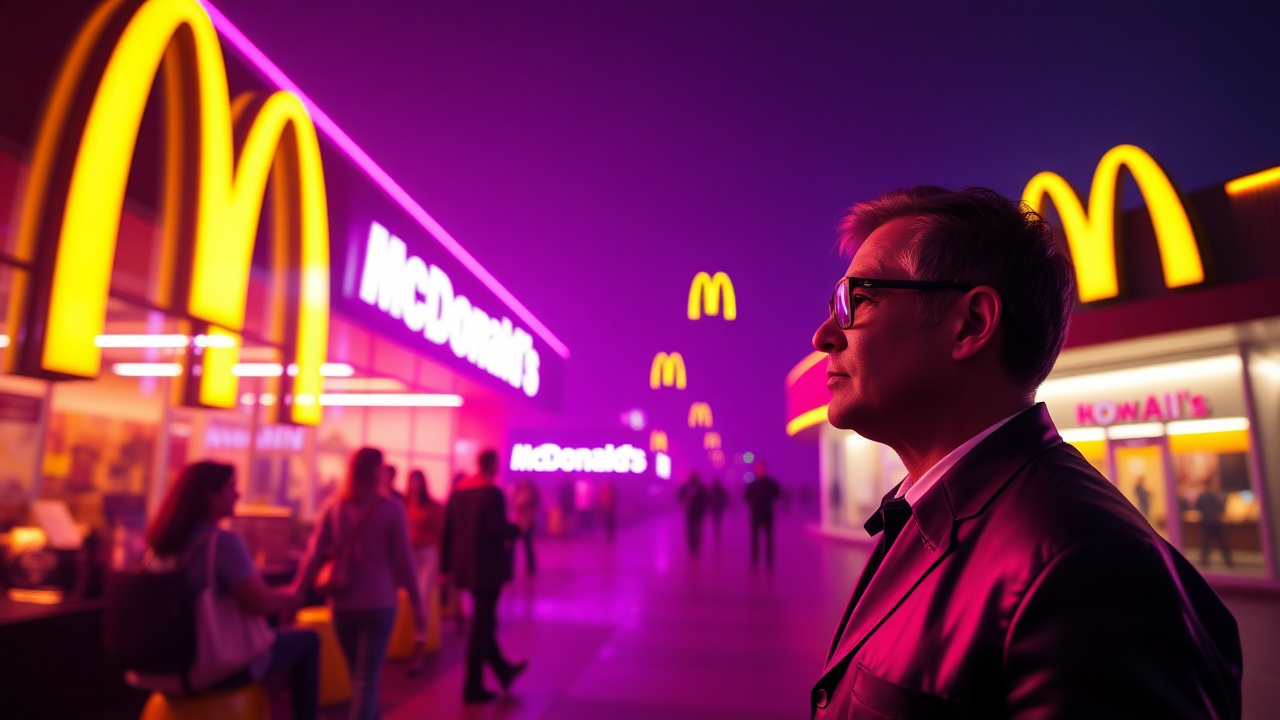
The McDonald’s CEO’s $26.9 billion revenue figure is a carefully constructed illusion masking a fundamental crisis of affordability in American fast food. This financial success story hides a painful truth: lower-income consumers are increasingly priced out of the drive-thru lane.
- McDonald’s $26.9 billion in revenue for 2025 masks a growing affordability problem impacting lower-income consumers, with CEO Chris Kempczinski acknowledging that lower-income consumers are cutting back on quick-service restaurant visits.
- Burger King’s parent company RBI faces a $12 billion debt burden while attempting to compete on value, creating financial fragility beneath the surface of their 5.3% system-wide sales growth.
- The fast-food industry’s “value menu” arms race is eroding profit margins, with Wendy’s relying on 4 for $4 bundles that may not be sustainable long-term for anyone except the consumer.
The $1.08 Billion Deception: How McDonald’s Revenue Hides a Consumer Crisis
McDonald’s delivered $26.9 billion in full-year revenue in 2025, up 4.0% from 2024, painting a picture of robust financial health. This impressive figure, however, obscures a brutal reality playing out in restaurants across America. The chain’s nearly $140 billion in system-wide sales represents not broad-based prosperity but increasingly polarized consumption patterns. The numbers reveal a stark divide: upper-income consumers continue to dine freely, while lower-income customers tighten their belts and skip meals entirely.
The deception lies not in the math but in interpretation. When Kempczinski declares that McDonald’s value strategy “lifted traffic and affordability scores,” he’s speaking in corporate euphemism. What he means is that the company has successfully extracted more revenue from those who can still afford it while acknowledging that their most vulnerable customers are disappearing. The 8.0% increase in global systemwide sales sounds impressive until you realize it’s built on the backs of fewer overall customers spending more per visit.
McDonald’s operating margin in the mid- to high-40% range for 2026 further exposes the disconnect. These aren’t struggling margins; they’re record profits that should translate directly to lower prices. Instead, they’re being funneled into shareholder returns and CEO compensation. The $3.04 EPS in Q4 2025, up 7.8% year-over-year, represents value extraction from an increasingly squeezed consumer base, not genuine market growth.
This revenue figure isn’t a victory—it’s the financial embodiment of America’s widening inequality crisis. McDonald’s isn’t serving more people; it’s serving the same number of wealthier customers while pushing out everyone else. To put it bluntly, the Golden Arches are becoming gilded, accessible only to those with thicker wallets. The company’s success is, in effect, a reflection of the struggles of a significant portion of the American population.
Kobza’s Complaint: Why RBI’s “Basics” Aren’t Enough, according to Reuters
Josh Kobza’s assertion that RBI’s 2025 results reflected “staying focused on the basics” sounds reasonable until you examine the underlying tensions. The CEO of Restaurant Brands International sounds almost apologetic for his company’s performance, as if modest growth is somehow noble in this environment. His observation that “stronger traffic patterns within middle and higher-income groups, with weaker trends among lower-income groups” inadvertently exposes the uncomfortable truth: the fast-food industry has become a luxury good.
Patrick Doyle, Executive Chairman of RBI, offers even more candor in describing “2025 as a demanding year for restaurant operators. The consumer was under pressure, costs were elevated, and macro and geopolitical uncertainty weighed on confidence.” This isn’t the language of an industry thriving on innovation; it’s the language of an industry in survival mode, propping up broken business models with financial engineering.
What’s particularly revealing is RBI’s strategic positioning. With approximately $12 billion in debt hanging over the company, they can’t afford the aggressive discounting that might actually bring back lower-income customers. Their “Reclaim the Flame” turnaround plan focuses on “national offers and sharper bundle pricing”—executivespeak for the same value menu gimmicks that aren’t solving the underlying affordability crisis. Burger King’s 2.6% U.S. same-store sales growth sounds positive until you realize it’s barely keeping pace with inflation.
This isn’t about basic business fundamentals. It’s about an industry failing to adapt to its own success. The “basics” that Kobza references—food quality, service, cleanliness—are table stakes, not competitive advantages in an era where the basic need for affordable nourishment is being pushed out of reach. RBI’s predicament highlights a larger issue: the fast-food industry’s reliance on financial maneuvering rather than genuine value creation. The company’s debt burden limits its ability to invest in meaningful improvements, trapping it in a cycle of cost-cutting and promotional gimmicks.
The Beef Bubble: Why Everyone’s Ignoring Elevated Commodity Costs
The industry consensus treats commodity costs as a cyclical inconvenience, a temporary headwind that will eventually pass. This is dangerously naive. Elevated beef prices aren’t just another input cost—they’re a structural threat to the entire fast-food value proposition. When McDonald’s and RBI both cite beef inflation as a “cost concern,” they’re admitting that the very product that defines their category is becoming prohibitively expensive.
What makes this particularly insidious is how these costs are being absorbed. Rather than transparently passing increases to consumers (which would reveal the true cost of their products), companies are quietly reducing portion sizes, using cheaper ingredients, and increasing menu complexity to obscure price hikes. The viral spat between Kempczinski’s tiny Big Arch Burger bite and Curtis’s hearty Whopper wasn’t just marketing theater—it was a microcosm of this tension between value perception and reality.
The real scandal isn’t that beef costs are rising—it’s that the industry built its entire business model on unsustainable pricing. For decades, fast food positioned itself as the ultimate affordable option for time-pressed families. Now, as real wages stagnate and inflation outpaces menu price increases, that promise is breaking. The “value menu” has become a carefully constructed illusion, with limited-time offers masking permanent price increases on core items.
This isn’t temporary volatility. It’s the bursting of a bubble that was never sustainable to begin with. The fast-food industry has enjoyed decades of artificially low commodity prices and labor costs, creating a pricing structure that never reflected true market value. The chickens are coming home to roost, and consumers are finally seeing the emperor has no clothes. The industry’s reluctance to acknowledge this fundamental shift is a sign of denial, not strategic foresight.
The Value Menu Mirage: Hidden Costs and Execution Hurdles at Wendy’s
Wendy’s reliance on its 4 for $4 and Biggie Bag bundles represents the industry’s most desperate gambit yet. These value offerings aren’t sustainable business solutions—they’re tactical retreats in a losing battle for the budget-conscious consumer. When you examine the economics of these bundles, the fragility becomes immediately apparent. A $4 meal might bring customers in the door, but it often comes at the expense of profitability, forcing companies to cut corners elsewhere to maintain margins.
The execution hurdles are even more revealing. Value menu success depends on operational precision that most fast-food chains simply can’t maintain. Limited-time offers create kitchen complexity, while constant discounting trains consumers to wait for deals rather than pay full price. This creates a vicious cycle: companies need promotions to drive traffic, but promotions destroy perceived value and erode long-term pricing power.
What Wendy’s strategy misses is that the value proposition has fundamentally changed. Today’s consumers aren’t just looking for cheap calories—they’re looking for genuine value that extends beyond price tags. The 4 for $4 bundle might win a transaction, but it doesn’t build loyalty or address the deeper anxiety driving consumers away from fast food in the first place: the feeling that even a cheap meal is becoming an unaffordable luxury.
The hidden cost of these value wars extends beyond balance sheets. When companies prioritize low prices over quality, they accelerate a race to the bottom that ultimately destroys the category’s core appeal. Fast food was once a symbol of American abundance; now it’s increasingly becoming a symbol of American struggle. The value menu isn’t solving this problem—it’s making it worse. Wendy’s predicament serves as a cautionary tale for the entire industry: short-term gains at the expense of long-term sustainability are a recipe for disaster.
The “So What?”: The Real Impact of the Burger Wars on Your Wallet
The financial theater playing out between McDonald’s, Burger King, and Wendy’s isn’t happening in some distant corporate boardroom—it’s happening in your wallet, every single time you consider eating out. Those 5.3% system-wide sales growth figures and 4.0% revenue increases translate directly to what you pay for a meal. When executives talk about “value resets” and “sharper bundle pricing,” they’re describing a battlefield where your budget is the ultimate prize.
McDonald’s attempt to regain traffic among lower-income consumers through revamped Extra Value Meals represents not generosity but desperation. These “value resets” are admission that their pricing strategy alienated the very customers who built their empire. The early results show “improving value scores,” but these metrics measure perception more than reality. What they’re really tracking is how successfully companies are obscuring true price increases behind promotional theater.
The long-term implications are chilling. As the burger wars intensify, expect to see three things: more limited-time offers that create artificial scarcity, more complex menu engineering that hides price increases, and more emphasis on digital ordering apps that enable personalized price discrimination based on your willingness to pay. Your fast-food experience is becoming increasingly customized—not for your convenience, but for maximum profitability.
The fundamental shift here is from customer acquisition to customer extraction. Companies no longer compete primarily on who can serve the most people; they compete on who can extract the most value from each remaining customer. This is why McDonald’s can report record profits while simultaneously acknowledging that lower-income consumers are cutting back. The math works perfectly when you stop thinking about serving the masses and start thinking about milking the wealthy. This trend is not unique to fast food; it’s a symptom of a broader economic shift towards prioritizing shareholder value over customer well-being.
The Bottom Line: Fast Food’s Affordability Crisis
McDonald’s dominance is threatened if they don’t address affordability not as a marketing gimmick but as a fundamental business crisis. The $26.9 billion revenue figure isn’t a success story—it’s an indictment of an industry that has forgotten its core purpose. Check your local fast-food app for deals before you order, because the price you see is rarely the price you’ll pay. Value meals: Buyer beware. The fast-food industry stands at a crossroads. It can either continue down the path of financial engineering and short-term gains, or it can rediscover its original mission of providing affordable nourishment to all. The choice it makes will determine not only its own future but also the well-being of millions of Americans who rely on it for a quick and convenient meal. The current trajectory, however, points towards a future where fast food becomes increasingly inaccessible to those who need it most, exacerbating existing inequalities and undermining the industry’s long-term viability.