Shocking Ring Camera Footage Reveals Disturbing Threat: 'Where Is Your Daughter?
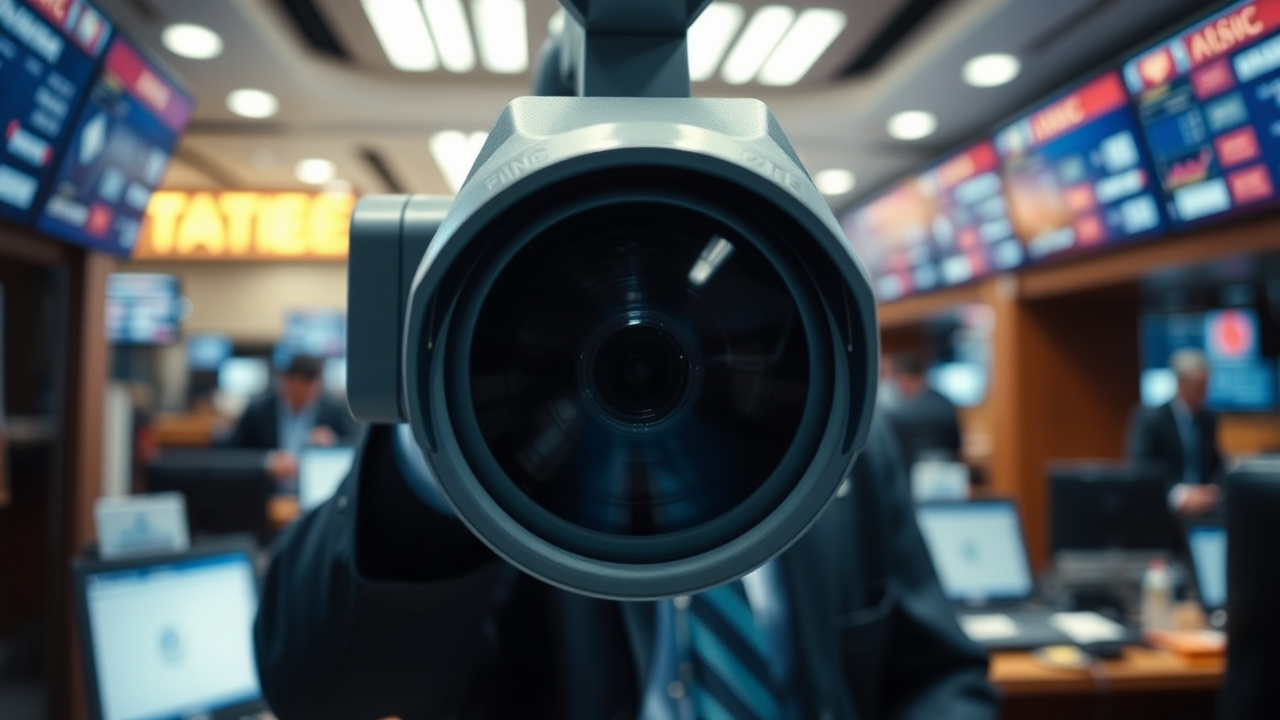
Resumen Ejecutivo
- The viral dissemination of home security footage represents a shift from private protection to public performance, where safety is commodified and fear is the primary product.
- The U.S. AI in law enforcement market is valued at $3.5 billion, driven by a 90% approval rating from police professionals, yet this growth masks significant civil liberties risks.
- The impending “deepfake defense” threatens to collapse the legal utility of video evidence, potentially rendering the current surveillance boom obsolete.
The viral footage of a gunman demanding to know a child’s location is not merely a record of a crime; it is a stress test for the surveillance economy. Safety is no longer a state of being but a subscription service.
- Ring camera footage has become a critical tool in law enforcement, helping to prevent crimes and solve cases, but it raises ethical and privacy concerns regarding the commodification of fear.
- 90% of law enforcement professionals support AI adoption in their work, according to a 2025 Police1 survey, signaling a massive shift toward automated policing infrastructure.
- The increasing sophistication of AI technologies, including deepfakes, presents a real risk of misuse that could affect civil liberties and the integrity of the justice system.
The Performance of Safety
The recent circulation of a surveillance video capturing a terrifying home invasion in Miami illustrates the visceral power of the Ring camera economy. In the clip, three men force their way into a residence, assaulting a resident in a scene that plays out like a dystopian movie trailer. This specific incident, where suspects pushed and punched a victim while covering his mouth, serves as a grim advertisement for the very products meant to prevent such chaos. The footage does not exist in a vacuum; it functions as viral marketing for a surveillance state that promises security through constant observation. As reported by local news, the video provides a narrative of victimhood that reinforces the necessity of the technology.
This dynamic reveals a troubling sociological shift: the privatization of vigilance. Homeowners are no longer passive recipients of protection but active participants in a digital panopticon. The camera is not just a lens; it is a symbol of control in a world that feels increasingly chaotic. The market for this sense of control is exploding. The U.S. “AI in Law Enforcement” market was valued at approximately $3.5 billion in 2024, with a projected compound annual growth rate of 7%. This financial growth is built on the back of human anxiety, turning the fear of the “Where is your daughter?” threat into a revenue stream for Amazon and its subsidiaries.
The cultural cross-pollination here is undeniable. Gen Z, often cited as valuing privacy, paradoxically fuels the demand for these devices by normalizing life on camera. The same generation that grew up with Snapchat now equates visibility with safety. However, this visibility comes at a cost. The data collected by these devices creates a map of private life that is vulnerable to exploitation. The narrative of safety sold by companies like Ring is a myth; it is a trap that trades civil liberties for the illusion of security.
The Infrastructure of Fear
The technological backbone of this surveillance boom relies on massive computational resources and aggressive data collection strategies. Ring cameras do not simply record video; they process it through AI models that require significant cloud computing power. These systems often rely on AWS infrastructure to handle the latency and storage requirements of continuous video streams. The cost of maintaining this infrastructure is offset by the immense value of the data harvested, which is used to train more sophisticated computer vision algorithms.
This creates a feedback loop of surveillance. The more cameras installed, the better the algorithms become at detecting “suspicious” behavior, which in turn justifies the installation of more cameras. The global AI in Video Surveillance Market was valued at USD 3.90 billion in 2024 and is projected to grow to USD 12.46 billion by 2030. This growth is not driven by a decrease in crime rates, but by the profitability of the fear industry. The hardware is merely the entry point; the real value lies in the subscription services and the data mining capabilities.
The economic model is predatory. It targets the elderly and suburban families with specific narratives of danger. The viral nature of crimes like the attack on a California home, where suspects were charged after being identified through footage, serves to validate the investment. Yet, this validation is circular. The system creates the problem (the fear of random violence) and sells the solution (the camera), while profiting from the data generated by the interaction.
Furthermore, the integration of AI into these systems introduces a layer of opacity. Users do not know how the AI decides what constitutes a “person” versus a “shadow,” nor do they have control over how their footage is used to train these models. The “black box” nature of these algorithms means that users are trusting a corporate entity with the keys to their digital lives. This is not a partnership; it is a dependency.
The Bias in the Lens
The adoption of AI in law enforcement extends beyond the home and into the courtroom, where it perpetuates systemic inequalities under the guise of objectivity. A 2025 Police1 survey found that 90% of law enforcement professionals support AI adoption, believing it will make their work more efficient. This efficiency, however, often comes at the cost of fairness. Algorithms used in recidivism prediction have been shown to amplify racial biases, creating a digital underclass.
A 2016 ProPublica study demonstrated that algorithms were predicting inflated risks of recidivism for black defendants and deflated risks for white defendants. This is not a glitch; it is a feature of datasets that reflect historical prejudices. When AI models are trained on data from a biased justice system, they learn to replicate those biases. The use of these tools in sentencing and parole decisions creates a veneer of scientific legitimacy that masks deep-seated discrimination.
Dr. Heidi S. Bonner, a researcher in the field, notes that while AI allows criminal justice systems to make more data-driven decisions, it also introduces the risk of “hallucinations.” AI models can generate false positives or misinterpret data, leading to wrongful accusations or harsher penalties. The lack of transparency in these systems makes it nearly impossible for defendants to challenge the evidence against them. You cannot cross-examine an algorithm.
The implications are profound. As law enforcement agencies increasingly rely on these tools, the margin for error shrinks. A false positive generated by a computer vision system could lead to a SWAT raid or an wrongful arrest. The human element is removed, replaced by a cold calculation that views individuals as data points. This dehumanization is the ultimate failure of the AI justice experiment.
The Deepfake Defense
The most immediate threat to the Ring camera economy is the weaponization of the very technology that powers it. Deepfakes—hyper-realistic AI-generated videos and audio—pose a catastrophic risk to the legal system. The increasing sophistication of deepfakes means that video evidence, once considered the gold standard of truth, can now be fabricated. This creates a scenario where the “Where is your daughter?” threat could be generated by an AI to frame an innocent person.
Professor Edward Delp of Purdue University is currently researching deepfake detection algorithms, highlighting the urgency of this threat. The arms race between creation and detection is escalating. Siwei Lyu of the University at Albany has shown that face-swapping creates resolution inconsistencies that can be identified, but as generative models improve, these flaws become harder to spot. The legal system is woefully unprepared for this reality.
Shehzeen Hussain, a Ph.D. student at UCSD, warns that “attacks on deepfake detectors could be a real-world threat.” It is possible to craft robust adversarial deepfakes that evade detection, even when the attacker does not know the inner workings of the detector. This means that a determined bad actor could create evidence that passes forensic scrutiny. The potential for “deepfake alibis”—fabricated video proving a suspect was elsewhere—is a nightmare for prosecutors.
The justice system may be forced to declare a moratorium on all digital evidence submissions if the rate of compromised cases becomes too high. This would collapse the current surveillance model. If video evidence is no longer admissible or trustworthy, the value of a Ring camera drops to zero. The industry is building its foundation on a material that is about to become as malleable as clay.
The Privacy Failure
Despite the promises of security, the track record of companies like Ring regarding privacy is abysmal. The architecture of these devices is inherently insecure, relying on cloud connectivity that exposes users to hacking and surveillance. Ring has faced criticism for privacy failures that led to spying and harassment through home security cameras. These are not theoretical risks; they are documented failures.
The “Neighbors” app, a social network for sharing footage, effectively turns neighborhoods into informant networks. While this can help solve petty crimes, it also fosters a culture of suspicion. Users are encouraged to report “suspicious” activity, which often translates to racial profiling. The data shared on these platforms is often accessible to law enforcement without a warrant, blurring the line between public service and private surveillance.
Karen Hao, an AI whistleblower, argues that “We Are Being Gaslit By AI Companies, They’re Hiding The Truth!” This sentiment applies directly to the home security market. Companies exaggerate the capabilities of their AI while downplaying the risks. They market peace of mind while selling user data to third parties. The recent focus by the DOJ and SEC on “AI washing”—the exaggeration of AI capabilities—suggests that the regulatory noose is tightening.
The economic model of these companies relies on the extraction of value from user data. The footage of a Louisiana family’s front door is not just a record of a scare; it is an asset that can be monetized. Users are not customers; they are the product.
The Bubble Burst
The current surveillance boom is a bubble inflated by fear and regulatory neglect. The market projections, which estimate the AI in Video Surveillance market could reach USD 13.26 billion by 2031, assume a linear trajectory of trust. This trust is fragile. A single high-profile deepfake scandal involving a major political figure or celebrity could trigger a massive backlash against digital evidence.
Furthermore, the labor market for AI development is tightening. The specialized hardware required to run these models, such as NVIDIA H100 GPUs, is expensive and in short supply. As the cost of compute rises, the margins for these subscription services will shrink. If the cost of storing and processing video exceeds the revenue from subscriptions, the business model collapses.
There is also a cultural fatigue setting in. The constant barrage of viral crime videos creates a sense of helplessness rather than security. The “Where is your daughter?” narrative loses its potency when it is seen 50 times a day on TikTok. The desensitization of the public means that companies will have to escalate the fear factor to maintain growth, which could lead to a regulatory crackdown.
The intersection of geopolitics and technology adds another layer of instability. As concerns about Chinese surveillance technology grow, domestic alternatives may face scrutiny regarding their own data practices. The narrative of “national security” could easily turn against these companies if they are perceived as vulnerabilities rather than assets.
The Verdict
The integration of AI into home security and law enforcement is a classic example of a technology solution in search of a problem. The problem—crime—is real, but the solution—ubiquitous surveillance—creates more issues than it solves. The erosion of privacy, the amplification of bias, and the risk of deepfakes outweigh the benefits of catching a few porch pirates.
The market is driven by a cynical calculation: fear sells. The $3.5 billion valuation of the AI in law enforcement sector is a bet on the continued anxiety of the American public. But anxiety is a volatile commodity. As the technology becomes more dangerous, the public will demand safeguards. The companies that have built their empires on the lack of safeguards will be the first to fail.
The future of justice cannot be automated. It requires human judgment, transparency, and accountability. The black box of the algorithm has no place in the courtroom or the living room. The “Where is your daughter?” threat is terrifying, but the response cannot be the installation of a camera that watches your every move. The response must be a society that addresses the root causes of violence rather than profiting from the fear of it.
We are trading our souls for a sense of security that is as synthetic as the video footage itself. The bubble will burst, not because the technology fails, but because the cost to our humanity is too high. The surveillance state is a pyramid scheme, and we are all at the bottom.
Methodology and Sources
Related Articles
- Temu’’s $2M FTC Fine: Your Cheap Steak Might Be More
- Trump’’s Cuba Coup: How 1.6 Million Worke
- Emma McNally Blasts SNL: Why This Tourette’’s Joke
, “publisher”: { “@type”: “Organization”, “name”: “NovumWorld”, “logo”: { “@type”: “ImageObject”, “url”: “https://novumworld.com/images/logo.png" } } }
