TikTok Review Revives Sweet 220 Bakery: Thousands of Cupcakes Fly Off Shelves
Resumen Ejecutivo
- Sweet 220 Bakery’s sales surged to between 8,000 and 10,000 cupcakes weekly after a viral TikTok review by Chow Down Detroit.
- The global ghost kitchen market is projected to reach $83.5 billion by 2026, representing nearly 10% annual growth.
- As TikTok reshapes food retail, businesses must adapt quickly to harness viral trends without compromising sustainability or supply chain integrity.
The viral economy is a lottery where the prize is often a logistical nightmare. Sweet 220 Bakery’s revival isn’t a heartwarming story of community support; it is a stress test for supply chains that were never designed to handle algorithmic velocity.
- Sweet 220 Bakery’s sales surged to between 8,000 and 10,000 cupcakes weekly after a viral TikTok review by Chow Down Detroit, overwhelming a small business infrastructure designed for local foot traffic.
- The global ghost kitchen market is projected to reach $83.5 billion by 2026, representing nearly 10% annual growth, as businesses desperately try to insulate themselves from the volatility of physical retail.
- As TikTok reshapes food retail, businesses must adapt quickly to harness viral trends without compromising sustainability or supply chain integrity, or risk collapsing under the weight of their own success.
The Algorithmic Lottery: When Code Hits the Oven
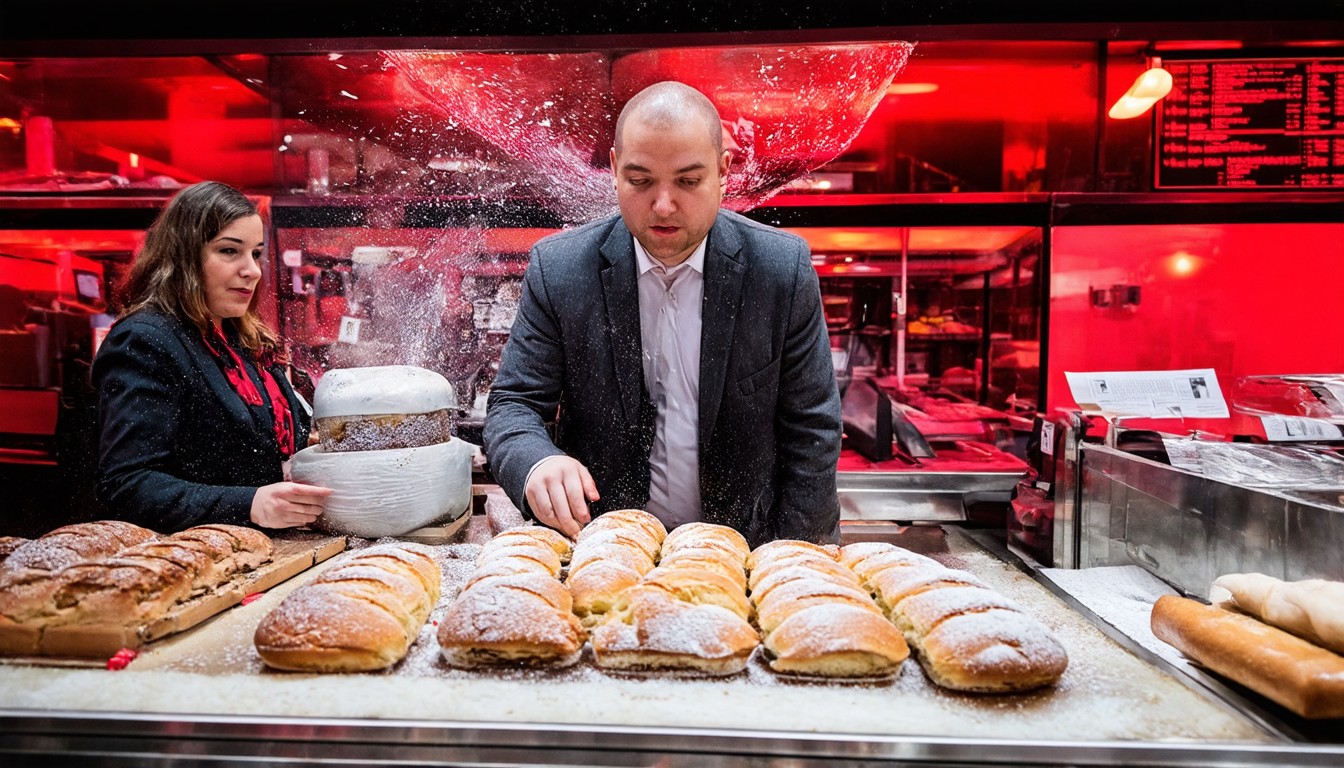
Sweet 220 Bakery in Livonia, Michigan, did not innovate its way to success; it survived a digital tsunami. Seoung Lee, the influencer behind Chow Down Detroit, posted a review declaring these cupcakes potentially the best in Detroit. This single data point triggered a demand shock that production lines could not handle. The bakery shifted from a standard local operation to producing up to 10,000 units weekly. This phenomenon exposes the fragility of small businesses in the attention economy. They are not masters of their destiny; they are subjects to the capricious nature of recommendation engines.
The mechanics of this virality are not random magic but the result of specific audio-visual triggers. Research on TikTok virality indicators suggests that content featuring high-arousal elements, such as “slapping cats” or rhythmic “bopping heads,” shares structural similarities with food content like “Oreo shakes.” The algorithm prioritizes engagement loops that bypass conscious thought, triggering a dopamine response that translates directly into consumer foot traffic. For Sweet 220, this meant the digital signal overwhelmed their physical capacity. The transition from a quiet bakery to a viral sensation highlights the disconnect between digital scalability and analog production limits.
The infrastructure supporting this viral wave is often unprepared for the latency involved in human labor. While the algorithm operates in milliseconds, baking operates in hours. This mismatch creates a bottleneck where demand outstrips supply instantaneously. The bakery’s struggle is not merely about baking more cupcakes; it is about the impossibility of scaling human labor at the same rate as digital dissemination. The “outpouring of love” mentioned by co-owner Hassan Makki is, in economic terms, a demand shock that threatens to break the operational model.
Supply Chain Fragility: The Hidden Cost of Hype
The sudden spike in demand for Sweet 220’s cupcakes reveals the brittle nature of modern food supply chains. Viral trends act as massive, unforecasted demand spikes that ripple through the logistics network. The “Dubai chocolate bar” trend serves as a cautionary tale, where viral popularity caused a 35% price increase for pistachios. Raw material suppliers cannot pivot instantly. When a niche product becomes a global sensation overnight, the procurement pipeline often runs dry or becomes prohibitively expensive. For a bakery, this means the cost of goods sold can skyrocket just as volume increases, eroding margins.
Small businesses lack the sophisticated inventory management systems of large conglomerates. They operate on lean margins with minimal safety stock. When a TikTok review drives thousands of new customers, the “Just-in-Time” inventory model becomes a liability. The bakery faces the risk of stockouts on key ingredients, leading to disappointed customers and potential reputational damage. The supply chain is not a flexible rubber band; it is a rigid series of contractual obligations and physical lead times. Disrupting this flow with viral demand creates chaos that can bankrupt the very businesses it intends to help.
The burden of this volatility shifts from the consumer to the company’s balance sheet. Overstocking perishable goods to prepare for a potential viral wave is a gamble. If the trend fades, the inventory becomes waste. This is the “trap” of the viral economy. Businesses are forced to make high-stakes bets on future demand based on algorithmic whims. The result is a landscape where food waste is an inevitable byproduct of digital marketing strategies. The supply chain strain is not an operational bug; it is a feature of an economic system that prioritizes velocity over stability.
The Ghost Kitchen Paradox: Efficiency vs. Urban Decay
The solution for many businesses facing this volatility is the ghost kitchen. The global ghost kitchen market is valued at approximately $83.5 billion in 2026. This growth is driven by the need to separate production from the physical constraints of retail space. Ghost kitchens offer lower startup and operating costs, allowing pastry professionals to focus on their craft without the burden of long-term leasing commitments. They are a low-risk way to test the market. For a business like Sweet 220, a ghost kitchen model could theoretically provide the capacity to handle 10,000 cupcakes a week without disrupting the customer experience of a storefront.
However, the rise of ghost kitchens introduces significant operational complexities and public scrutiny. City leaders are increasingly concerned about the impacts of dark stores on urban environments. These facilities often violate zoning ordinances, shifting local traffic patterns in unpredictable ways. They create barriers to food access for people using food stamps or those uncomfortable shopping online. The economic efficiency of the ghost kitchen comes at the cost of urban vitality. Foot traffic diminishes, neighborhood socialization declines, and fewer people are around to witness or intervene in criminal activity.
The “hybrid model” is the current trend, where existing brick-and-mortar restaurants use their kitchens to run secondary brands. This approach attempts to mitigate the “fly-by-night” reputation of virtual brands. Yet, it still dilutes the physical presence of the business. The ghost kitchen represents a hollowing out of the commercial landscape. It prioritizes the logistical movement of goods over the communal experience of dining. While it may solve the immediate capacity problem for a viral bakery, it contributes to the long-term degradation of the urban fabric. The efficiency gains are real, but they are extracted from the social capital of the city.
Sustainability vs. Volatility: The Environmental Toll
The rapid pace of TikTok trends creates a massive environmental footprint. The volatility of viral trends leads to increased packaging waste from single-serve convenience formats. Consumers want the viral product now, and they want it delivered, which necessitates layers of plastic and cardboard. This waste accumulates rapidly, overwhelming local recycling infrastructures. The focus on the product— the cupcake or the chocolate bar— obscures the lifecycle cost of its delivery. The packaging waste is a direct result of the algorithmic push for immediate consumption.
Food waste is another critical casualty of this volatility. Overstocked products in anticipation of a trend can become obsolete within days. The burden of disposal falls on the business. In a world where sustainability-marketed products are growing nearly three times faster than conventionally marketed products, this waste is a brand liability. Younger consumers prioritize sustainability and transparency in ingredient sourcing. They are increasingly aware of the disconnect between the “vibe” of a viral product and its environmental impact. A brand that rides a wave of hype only to be revealed as a polluter faces a severe backlash.
Sherry Frey of NielsonIQ emphasizes that brands must focus on sustainability to resonate with younger consumers. This is a difficult balancing act. The pressure to scale quickly to meet viral demand often conflicts with sustainable sourcing practices. Sourcing local, organic ingredients at a scale of 10,000 cupcakes a week is significantly harder than sourcing conventional ingredients at that volume. The viral economy incentivizes cutting corners on sustainability to maintain speed and margin. The result is a market where the most successful products are often the least environmentally friendly, hidden behind a layer of aesthetic appeal.
The Tech Stack of Virality: Why Trends Die
The lifespan of a TikTok food trend is short because the algorithm is designed for novelty. The technical parameters of the platform, such as context window sizes and recommendation latency, ensure that content churns rapidly. A study on social media analytics highlights how the platform’s architecture favors high-velocity trends over sustained engagement. The “Oreo shakes” and “slapping cats” that drive virality are ephemeral by nature. They capture attention for a brief moment before the next pattern emerges. For a business, building a strategy on this foundation is building on sand.
The “Little Moons” case study provides a blueprint for survival, but it is a difficult path. The mochi ice cream brand used consumer data to identify its true high-value demographic—affluent 30 and 40-year-olds—after going viral with a younger TikTok audience. They correctly identified the viral moment as a massive, free awareness campaign. Then, they pivoted their marketing strategy to target this more valuable customer base. This requires a level of data sophistication and marketing agility that most small bakeries lack. Without this pivot, the business is destined to crash when the trend fades.
The bubble for Sweet 220 Bakery is likely to burst within six months. The novelty of the “best cupcake in Detroit” claim will wear off as the algorithm moves to the next sensation. The customers who came for the content will leave for the next trend. The bakery is left with the overhead of a scaled-up operation and a normalized demand level. This is the “trap” of viral marketing. It creates a false sense of permanent growth. The infrastructure required to support the peak is unsustainable during the trough. The tech stack that built them up is just as capable of tearing them down.
Future-Proofing: The Need for Agile Logistics
Survival in the TikTok era requires more than just a good recipe; it requires an agile supply chain. Businesses need integration and advanced technologies to turn chaos into opportunity. This means investing in data analytics to predict demand spikes before they happen. It means establishing flexible relationships with suppliers who can ramp up production quickly. It means having a logistics strategy that can handle 10,000 units one week and 1,000 the next. The “set it and forget it” model of traditional retail is dead.
Sonya Gafsi Oblisk from Whole Foods Market indicates that curiosity and conscious consumer choices will shape the future of food retail. This suggests that the next phase of viral food will be driven by values, not just aesthetics. Brands that can align their viral moments with their core values will survive. Those that chase trends at the expense of their identity will fail. The “Norwegian Bakes” example of boosting online sales through a redesigned storefront shows the importance of a robust digital presence. A business must own its digital channel, not just rent space on a social platform.
The integration of digital storefronts with physical production is the only viable path forward. Relying solely on the organic reach of a platform like TikTok is gambling with the business’s future. The algorithm changes, the user base shifts, and the trends die. A robust e-commerce strategy, supported by technical infrastructure like social media analytics, provides a stable foundation. It allows the business to capture the demand generated by virality and convert it into a long-term relationship. Without this digital moat, the business is just another casualty of the feed.
The Bottom Line
The TikTok phenomenon presents a paradox of opportunity and ruin for local businesses. Sweet 220 Bakery’s revival is a testament to the power of the platform, but it is also a warning. The surge in sales is a mirage if it cannot be sustained without compromising the business’s operational integrity. The bakery must integrate agile supply chain solutions while prioritizing sustainability to ensure long-term success. The viral economy is a trap for the unprepared. It promises fame and fortune but delivers logistical nightmares and environmental waste.
TikTok isn’t just a platform; it is a chaotic force of nature that demands a complete rethinking of food retail. The businesses that survive will be the ones that treat virality as a temporary anomaly, not a permanent business model. They will build systems that are resilient to the shock of the algorithm. They will focus on the boring work of supply chain management and sustainable sourcing. In the end, the cupcakes will still need to be baked, the ingredients will still need to be sourced, and the waste will still need to be managed. The algorithm can bring the customers, but it cannot bake the bread.
Methodology and Sources
Related Articles
, “publisher”: { “@type”: “Organization”, “name”: “NovumWorld”, “logo”: { “@type”: “ImageObject”, “url”: “https://novumworld.com/images/logo.png" } } }
