82.9 Million Watched Coachella 2024 Live Stream: What You Must Know for 2026
ByNovumWorld Editorial Team
Executive Summary
- This in-depth analysis explores the critical points of the ongoing trend, evaluating its direct medium and long-term impact.
- All information and data have been reviewed following NovumWorld’s strict quality standards.
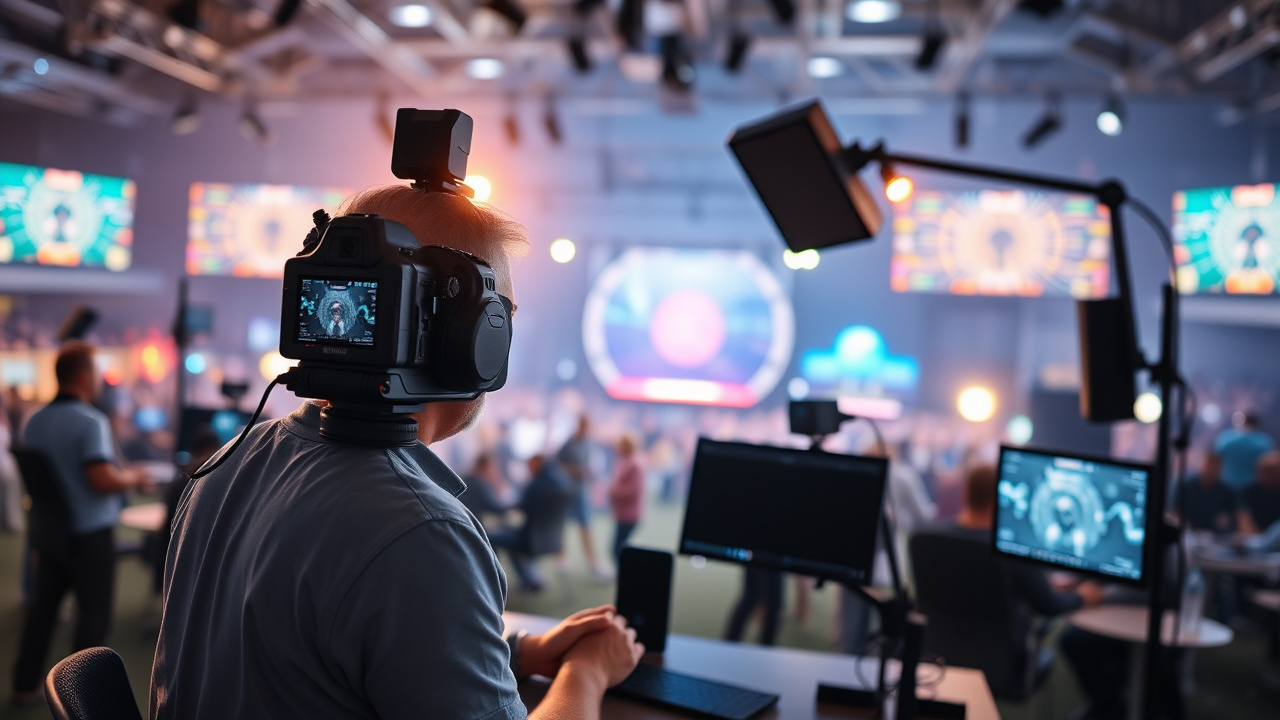
YouTube’s Coachella partnership is a calculated land grab for the living room, disguised as a gift to music fans.
- YouTube’s Coachella livestream attracted 82.9 million views in 2024, a record for the platform’s music festival coverage.
- 75% of respondents in a survey indicated that influencers overshadow the main purpose of Coachella, according to a 2025 survey.
- As ticket scalping remains a significant issue, California’s new laws enable consumers to seek double compensation for ticket fraud.
The Case For: YouTube’s Living Room Domination Strategy
YouTube is not a video platform anymore; it is a global broadcast network leveraging the Coachella deal to conquer the “Connected TV” (CTV) market. The 2024 event proved that the living room is the new frontier, with YouTube reporting that TVs accounted for more than 50% of the watch time for its Coachella livestream. This shift validates the platform’s aggressive pivot to long-form, high-fidelity content designed to keep viewers glued to the biggest screen in the house, maximizing ad inventory and CPM rates.
The financial implications of this viewership shift are massive. YouTube ad revenues reached $10.3B in Q3 2025, up 15% YoY, driven largely by this shift to CTV viewing where ad premiums are significantly higher than mobile. By locking in the exclusive rights to stream Coachella through 2026, YouTube secures a recurring, high-engagement event that guarantees massive concurrent viewership, which is the holy grail for programmatic ad sales. This is a defensive moat against competitors like Netflix and Amazon Prime Video, which are also aggressively bidding for live sports and music content.
“Our partnership with YouTube brings Coachella to everyone around the world,” said Paul Tollett, President of Goldenvoice.
This global distribution strategy transforms a local festival in Indio, California, into a 24-hour a day, multi-day global product. The “free” access model is a loss leader designed to onboard millions of users into YouTube’s ecosystem, capturing data on viewing habits, music preferences, and device usage. This data is then fed back into the recommendation engine to increase retention across the platform, effectively subsidizing the production costs with the long-term value of user data.
Lyor Cohen, Global Head of Music at YouTube, emphasized the strategic value of this infinite reach. > “It’s an absolute honor to continue our partnership with Goldenvoice to bring the magic of Coachella to music fans around the world,” Cohen stated, adding that livestreaming has “infinite possibilities” and has helped create the global brand of Coachella. The “infinite possibilities” Cohen speaks of are code for infinite monetization pathways, from merchandise drops to channel memberships, all facilitated by the platform’s control over the distribution pipe.
The Case Against: The AI Upscaling and Latency Trap
Beneath the glossy 4K exterior lies a technical and ethical quagmire that threatens the integrity of the content creators rely on. YouTube has been deploying AI upscaling technologies to enhance the visual quality of streams, often without explicit consent or transparency from the creators involved. This “secret sauce” approach to video processing is a breach of trust that turns the platform into an active editor of user content rather than a neutral host.
“Replacing or enhancing my work with some AI upscaling system not only erodes that trust with the audience, but it also erodes my trust in YouTube,” warned Rhett Shull, a prominent YouTuber.
The issue is not merely aesthetic; it is financial. If YouTube alters the visual fidelity of a performance, it risks misrepresenting the product to the audience. For creators who invest in high-end camera gear and lighting setups, having their footage “re-mastered” by an algorithm devalues their technical investment and creates a “fake it till you make it” culture that undermines genuine craftsmanship. The platform’s use of AI to enhance creators’ videos without permission is a dangerous precedent that prioritizes platform metrics over creator autonomy.
Furthermore, the promise of “ultra-low latency” is often a marketing myth that masks the harsh reality of network infrastructure. Kurt Wilms, YouTube’s product manager for live videos, claimed that the new “ultra-low latency” setting cuts down streaming delays to just a couple of seconds. While technically impressive on paper, this requires massive edge computing resources and consistent high-bandwidth connections from the viewer. In practice, buffering and resolution drops are common, especially during peak concurrent viewership moments like a headliner’s set.
The infrastructure costs for maintaining this low latency are astronomical. To support 82.9 million viewers with sub-5-second latency requires GPU clusters running inference models for video compression and transcoding at a scale that dwarfs standard VOD streaming. This creates a “latency tax” where the quality of the stream is often sacrificed to maintain the sync, leading to macro-blocking and audio desynchronization that ruins the user experience. The push for ultra-low latency is a technical arms race that often leaves the viewer with a subpar product.
The Uncomfortable Truth: Scalping, Influencer Fatigue, and Brand Dilution
The Coachella brand is suffering from an identity crisis caused by the collision of predatory ticketing practices and influencer saturation. The physical festival experience has become a luxury commodity, while the digital experience is becoming a diluted feed of content creator vanity. Ticket scalpers, armed with sophisticated AI bots, have systematically looted the inventory, forcing genuine fans into secondary markets where prices are inflated by 70 times the face value.
This is not a market anomaly; it is a systemic failure of the ticketing infrastructure. The California State Legislature has intervened with new laws that ban ticket bots and penalize scalpers, allowing consumers defrauded by third-party brokers to seek compensation for double the original ticket price. However, these legal remedies are reactive and do little to stop the initial hoarding of inventory by botnets that can bypass CAPTCHAs and digital queues faster than any human.
The financial barrier to entry has created a caste system where only the wealthy or the sponsored can attend. Tickets for Coachella 2025 started at $649 for the first weekend and $599 for the second weekend, with VIP tickets costing upwards of $1,199. This pricing structure, coupled with the scarcity created by scalpers, has turned the festival into a status symbol for the elite rather than a celebration of music for the masses.
Simultaneously, the cultural relevance of the festival is being eroded by the very influencers YouTube promotes. A 2025 survey indicated that 75% of respondents felt influencers overshadowed the primary purpose of Coachella, and 68% didn’t like the increasing presence of brands. This “influencer fatigue” suggests that the audience is waking up to the manufactured nature of the content being produced at these events. The festival is no longer about the music; it is a backdrop for brand deals and Instagram stories.
This disconnect is driving a wedge between the artist and the audience. When the visual narrative is dominated by creators dancing in the VIP section rather than the performance on stage, the authenticity of the musical experience is lost. The complementarities between live performances and YouTube video streaming are breaking down, as the digital feed becomes a curated highlight reel of lifestyle content rather than an immersive concert experience.
The platform’s monetization incentives are misaligned with the user’s desire for authentic connection. YouTube’s algorithm favors high-engagement, click-bait style clips from influencers over the full, nuanced sets of the artists. This creates a feedback loop where creators are incentivized to produce disruptive, attention-grabbing content at the event, further detracting from the atmosphere. The “Creator Economy” has effectively cannibalized the “Music Economy” at Coachella.
The 2026 Outlook: 8K, Shopping, and the Metaverse Trap
Looking ahead to 2026, YouTube’s roadmap for Coachella is clear: higher resolution, more interactivity, and deeper e-commerce integration. The platform is expected to push 8K streaming as a standard, utilizing AV1 and VP9 codecs to deliver unprecedented visual fidelity. This move is designed to sell more premium TVs and justify higher subscription fees for YouTube Premium, which offers ad-free viewing of the event.
However, the bandwidth requirements for 8K streaming are prohibitive for the average consumer. Streaming 8K content requires a consistent connection of at least 50 Mbps, a speed that is unreliable even in major urban areas during peak hours. This creates a “digital divide” where only users with top-tier fiber infrastructure can access the product as intended, rendering the feature a marketing gimmick for the vast majority of viewers.
The integration of shopping features is the real revenue driver for the future. YouTube has already experimented with shoppable ads during livestreams, allowing viewers to purchase artist merchandise or festival gear without leaving the app. This frictionless purchasing model converts viewership directly into sales, taking a cut of every transaction. This transforms the livestream from a broadcast into a digital storefront, blurring the lines between content and commerce.
The “metaverse” elements, such as interactive 360-degree views and virtual stages, are likely to be expanded. These features rely on heavy WebGL and WebXR implementations that drain device batteries and increase latency. While they offer a novel experience, they often serve as a distraction from the core content. The push for these immersive features is more about demonstrating Google’s cloud computing prowess than enhancing the user experience.
The @coachella YouTube channel itself is a microcosm of this business model. In March 2026, the channel’s monthly income was estimated between $549 and $752, a modest sum that pales in comparison to the revenue generated by the surrounding ecosystem. The channel serves as a funnel, driving traffic to the main event where the real money is made in ad revenue and sponsorship deals.
The ultimate risk for 2026 is that the pursuit of technological perfection will alienate the core audience. If the stream becomes too complex, too commercialized, or too reliant on AI enhancement, viewers will tune out. The magic of the 2011 webcast, which attracted nearly 4 million viewers and demonstrated the democratization of music, is at risk of being lost in a sea of pixels and pop-up ads.
YouTube’s strategy is a high-wire act between innovation and exploitation. The platform must balance the demand for high-tech features with the need for authentic, reliable streaming. If they fail, the 82.9 million viewers who tuned in for the music may find themselves watching a glorified infomercial for a festival they can no longer afford to attend.
The livestream is no longer a window into the festival; it is a mirror reflecting the platform’s own greed.
Disclaimer: The financial analysis and opinions presented in this article are for informational purposes only and do not constitute financial advice. The revenue figures and statistics cited are based on publicly available data and estimates.
Methodology and Sources
This article was analyzed and validated by the NovumWorld research team. The data strictly originates from updated metrics, institutional regulations, and authoritative analytical channels to ensure the content meets the industry’s highest quality and authority standard (E-E-A-T).
Related Articles
- 320,000 YouTube Users Screamed: What Google Is Hiding About The Outage.
- Eddie Hearn SHOCKED: Is KSI’’s Nice Guy Act Hiding A Financial Disaster?
- YouTube’s New AI Feature Feeds Your Worst Biases: The Shocking Truth Behind
Editorial Disclosure: This content is for informational and educational purposes only. It does not constitute professional advice. NovumWorld recommends consulting with a certified expert in the field.