YouTube’s New Likeness Detection Tech Is A Game Changer For Celebrity Rights Protection
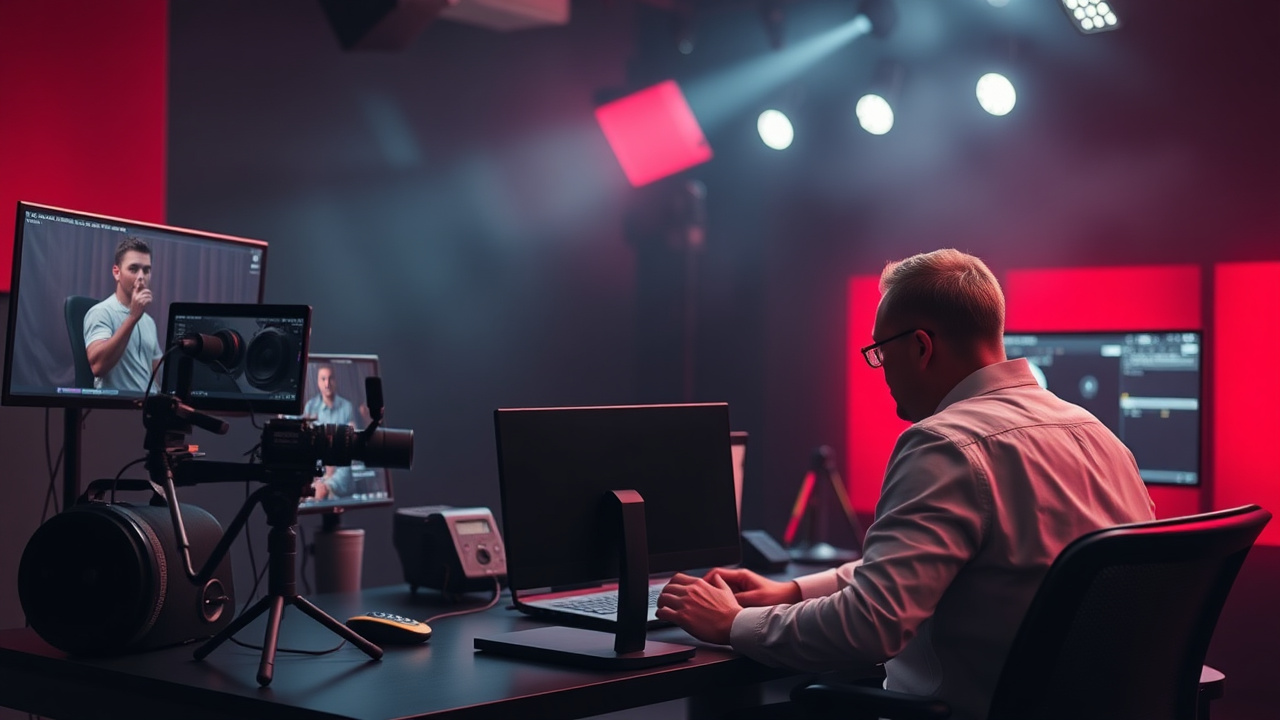
YouTube’s rollout of likeness detection is a calculated liability shield designed to protect the platform’s most valuable assets—high-profile celebrities—from the chaotic ecosystem of generative AI.
- YouTube’s likeness detection is now available to entertainment industry giants like CAA, UTA, and WME, expanding beyond the initial pilot for politicians and journalists.
- The system functions similarly to Content ID by scanning for visual matches of simulated faces, yet current removal statistics remain “very small” according to TechCrunch.
- Future updates promise audio likeness detection, while YouTube simultaneously lobbies for the NO FAKES Act to federalize digital identity protections.
Resumen Ejecutivo
- YouTube is expanding its “likeness detection” technology to the entertainment industry, partnering with major agencies like CAA, UTA, and WME to automate the takedown of unauthorized AI deepfakes.
- The technology mirrors the Content ID system but targets biometric data rather than intellectual property, allowing rights holders to block or monetize simulated content.
- Despite the hype, YouTube admits removal volumes are currently “very small,” suggesting the technology is either in its infancy or the deepfake threat is overblown.
- The platform is pushing for federal legislation via the NO FAKES Act to offload the legal burden of policing digital identity onto the government.
The Celebrity Rights Crisis: Protecting Identities in the Age of AI
The explosion of generative AI has turned celebrity likeness into a volatile, unregulated asset class. High-profile figures are increasingly finding their faces grafted onto scam advertisements or unauthorized content, creating direct financial liabilities for their personal brands. YouTube’s expansion of its likeness detection technology is a direct response to this escalating digital fraud. The platform announced on Tuesday that this tool, previously limited to politicians and journalists, is now accessible to the entertainment sector. This move is not merely about safety; it is about preserving the commercial integrity of the platform’s top earners.
The economic stakes are massive. When a celebrity’s image is hijacked for a crypto scam or a dubious product endorsement, the trust equity they have built over decades is eroded in seconds. YouTube is effectively offering a premium firewall service to the entertainment industry to prevent this brand dilution. The company has secured backing from major talent agencies including CAA, UTA, WME, and Untitled Management. These agencies represent the most lucrative intellectual property in the world, and their involvement signals a shift from passive moderation to active brand protection. The platform is treating celebrity faces as copyrighted content, a legal gray area that YouTube is attempting to solidify through technology.
Flawed Protection Mechanisms: The Limitations of Existing Systems
Current copyright frameworks are woefully inadequate for handling the nuances of AI-generated impersonation. Traditional copyright law protects specific works of art or performances, not the biometric data of a human face. YouTube’s new likeness detection attempts to bridge this gap by treating facial features as a unique identifier similar to a digital fingerprint. The system operates by scanning uploaded videos for visual matches of an enrolled participant’s face against a database of known likenesses. This is a significant technical leap, but it relies heavily on the premise that the AI can distinguish between a protected face and a generic lookalike.
The technology parallels YouTube’s existing Content ID system, which has been the industry standard for detecting music and video copyright infringements for years. However, detecting a simulated face is infinitely more complex than matching a hash of an audio file. AI models can alter lighting, angles, and facial expressions to evade detection, creating a constant cat-and-mouse game between content moderators and bad actors. YouTube admits that the tool will not remove all content, as parody and satire remain protected under its policies. This exception creates a significant loophole that scammers can exploit by framing their deepfakes as “satire” to bypass automated takedowns. The system is a strong first step, but it is far from the impenetrable shield the entertainment industry desires.
Ignoring the Bigger Picture: Industry Skepticism on AI Solutions
While the press releases tout a victory for celebrity rights, industry insiders remain skeptical about the efficacy of these automated tools. Talent agencies provided feedback during the development process, yet their public support is likely a pragmatic move rather than an endorsement of the technology’s perfection. The reality is that deepfakes are becoming indistinguishable from reality, and detection tools are often reactive rather than proactive. By the time a deepfake is flagged and removed, it may have already been viewed millions of times, causing irreversible damage to a celebrity’s reputation. The “very small” number of removals reported by YouTube in March suggests that the system is either catching very little or that the scope of the problem is being underestimated.
There is also the issue of access. Currently, this high-level protection is reserved for the entertainment industry and political figures. The average creator, who might face harassment or impersonation but lacks a CAA agent, is left vulnerable. This creates a tiered system of justice on the platform where the rich and famous get premium protection while the rest of the creator economy fends for themselves. The focus on celebrity likeness ignores the broader epidemic of non-consensual deepfake pornography targeting private individuals, which is arguably a more harmful and pervasive issue. YouTube’s strategy prioritizes the liability of its corporate partners over the safety of its general user base, a classic Silicon Valley move that protects the bottom line at the expense of the community.
Technical Hurdles: The Reality of Implementation Challenges
Deploying likeness detection at YouTube’s scale is a computational nightmare. The platform processes over 500 hours of video every minute, requiring massive GPU compute power to analyze every frame for potential biometric matches. This requires scanning video streams against a database of enrolled faces in near real-time, a task that demands low latency and high accuracy. The infrastructure costs for running these inference models at scale are astronomical, likely requiring clusters of NVIDIA H100s or B200s to handle the throughput. This technical burden explains why the rollout is gradual and limited to high-value clients first; the cost-benefit analysis only makes sense when protecting assets that generate millions in revenue.
The technology currently focuses on visual matches, but the next frontier is audio. Voice cloning technology has advanced rapidly, allowing bad actors to replicate a celebrity’s voice with just a few seconds of sample audio. YouTube has announced that future developments will support audio likeness detection, which adds another layer of complexity. Analyzing audio waveforms for synthetic markers requires different neural network architectures than analyzing video frames. Furthermore, the context window for these models must be large enough to process long-form content without missing subtle cues of manipulation. The technical debt of building this system is massive, and YouTube is essentially building a new Content ID stack from the ground up to handle the nuances of generative AI.
The Road Ahead: Long-term Implications for Celebrity Rights
The expansion of likeness detection signals a new era where digital identity is treated as a managed asset. YouTube is effectively positioning itself as the gatekeeper of digital truth, a role that carries immense responsibility and regulatory risk. The company is actively advocating for the NO FAKES Act in Washington, D.C., which would create a federal right of action for individuals whose likeness is used without consent. This legislative push is crucial because technology alone cannot solve the problem; without legal backing, takedown requests are merely voluntary platform policies rather than enforceable rights. By supporting federal regulation, YouTube is trying to standardize the rules of the game across the entire internet, not just on its own platform.
The long-term implication is that creators will need to register their biometric data with platforms to ensure protection. This creates a new data privacy paradigm where you must give your face to the platform to keep it safe from thieves. It is a cynical trade-off that centralizes digital identity control in the hands of a few tech giants. As AI technology evolves, the distinction between real and synthetic will blur entirely, making these detection tools essential infrastructure for the internet. However, relying on proprietary algorithms owned by Google to determine what is “real” is a dangerous precedent. The future of celebrity rights will be defined by who controls the detection algorithms, and right now, that power rests squarely with YouTube.
The Bottom Line
YouTube’s likeness detection is a defensive moat for the elite, offering a Band-Aid solution to a gaping wound in digital identity law while leaving the broader creator ecosystem exposed to the coming wave of AI exploitation.
Methodology and Sources
Related Articles
- 73% Quit: The Dark Side Of YouTube’’s Creator Burnout Crisis
- The Hidden Truth Behind YouTube’s Shorts Algorithm: 2 Billion Users Affected
- YouTube’’s Cre
, “publisher”: { “@type”: “Organization”, “name”: “NovumWorld”, “logo”: { “@type”: “ImageObject”, “url”: “https://novumworld.com/images/logo.png" } } }
